How to Optimize Your Website for Answer Engines in 2027: A Complete Guide
Learn how to optimize your website for answer engines in 2027 with simple AEO strategies. Discover how helpful content, AI search optimization, structured data, and SEO techniques can improve your website's visibility in AI-powered search results.
Introduction
The way people search for information online is changing. Earlier, users mostly depended on traditional search engines like Google to find websites, compare information, and get answers. Today, many people are also using AI-powered platforms to ask questions and receive direct answers.
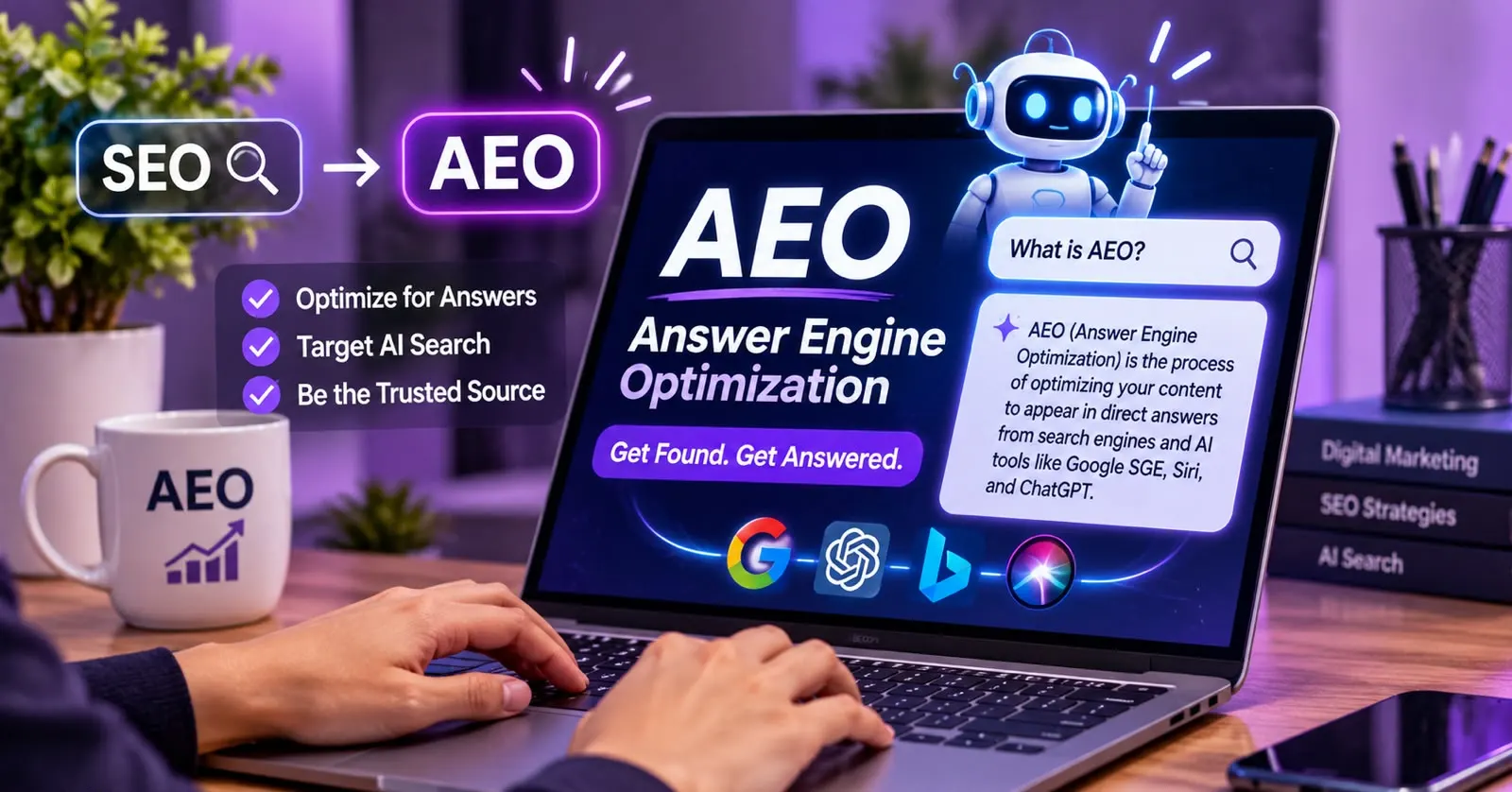
Answer Engine Optimization 2027 is becoming an important part of digital marketing as businesses prepare for changing AI-powered search experiences.
Tools such as ChatGPT, Google AI Overviews, and other AI-powered search experiences are changing how users discover information. Instead of visiting several websites, people can often get a summarized answer based on information from different online sources.
This change has made Answer Engine Optimization (AEO) an important part of modern digital marketing. AEO focuses on making website content clear, helpful, trustworthy, and easy for answer engines to understand and potentially reference.
For businesses, this creates a new opportunity to improve online visibility and reach people who are searching for relevant information.
In this guide, we'll explain how to optimize your website for answer engines in 2027 using a question-based content strategy, direct answer optimization, website content organization, and structured data for SEO.
Table of Contents
What Is Answer Engine Optimization (AEO)?
How Answer Engines Are Changing Online Search
Understand Your Target Audience
Identify Search Intent
Find Relevant Questions and Keywords
Create Helpful and High-Quality Content
Provide Direct Answers
Use Clear Headings and Content Structure
Optimize Your Website for Traditional SEO
Add Relevant Structured Data
Improve Website Content Readability
Optimize Images and Other Media
Improve Website Speed
Make Your Website Mobile-Friendly
Build Website Authority and Trust
Use Internal and External Links
Keep Your Content Updated
Add a Helpful FAQ Section
Track and Measure AEO Performance
Common AEO Mistakes to Avoid
Key Takeaways
Frequently Asked Questions
Conclusion
About the Author
What Is Answer Engine Optimization (AEO)?
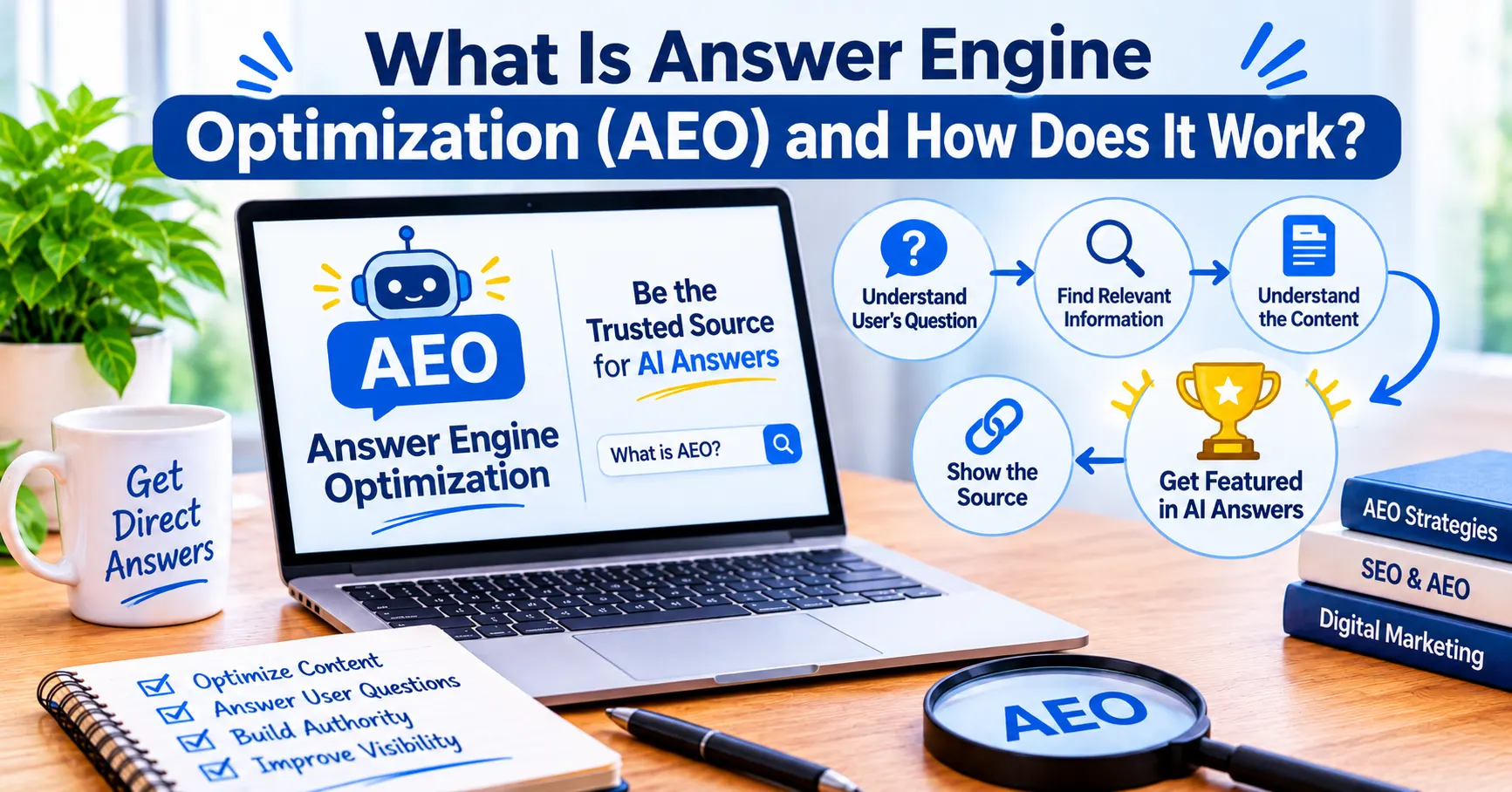
Answer Engine Optimization (AEO) is the process of improving website content so that answer engines and AI-powered search platforms can understand, identify, and potentially use it when responding to users' questions.
Traditional SEO mainly focuses on improving website visibility in search engine results. AEO focuses more on providing clear and useful answers that match users' questions.
For example, if someone searches, "How can I improve my website speed?" an answer engine may look for reliable pages that explain the steps clearly.
A well-structured page with useful information, descriptive headings, and accurate answers may be easier for these systems to understand.
Traditional SEO | Answer Engine Optimization |
|---|---|
Focuses on search rankings | Focuses on clear and useful answers |
Targets search keywords | Targets questions and search intent |
Encourages website clicks | Helps content become understandable and reference-worthy |
Uses SEO-friendly content | Uses answer-focused content structure |
Improves search visibility | Supports visibility across AI-powered search experiences |
AEO does not replace traditional SEO. Both work together to help websites become more useful and discoverable online.
How Answer Engines Are Changing Online Search
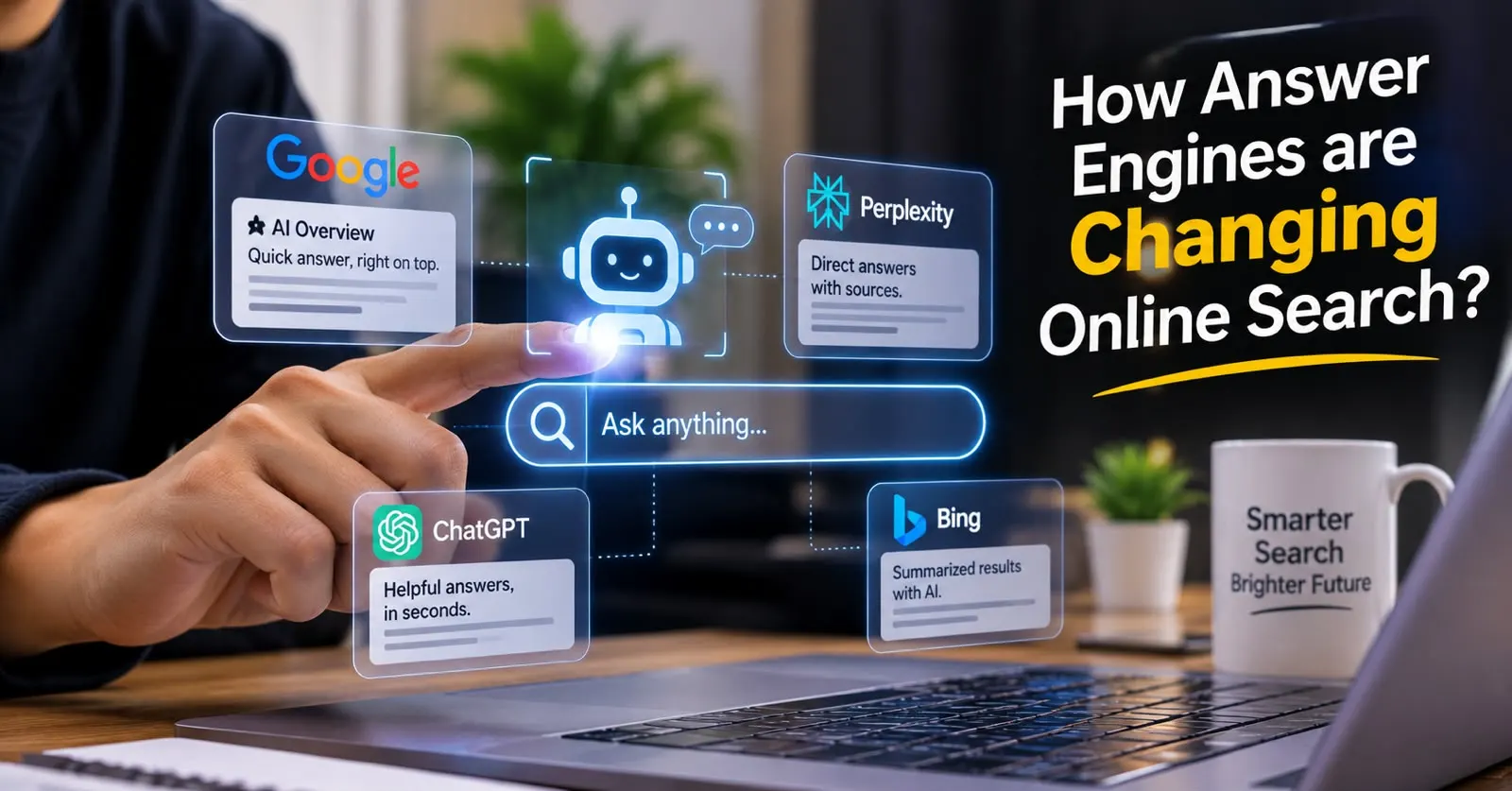
People are increasingly asking complete questions instead of searching with only a few keywords. They expect quick, relevant, and easy-to-understand answers.
For example, instead of typing "best digital marketing agency," a user may ask, "How do I choose the right digital marketing agency for my small business?"
Answer engines try to understand the meaning behind these questions and provide relevant information.
This creates three important changes:
1. Question-Based Searches
Users are searching through natural language and conversational questions. Websites should cover the questions their target audience actually asks.
2. Helpful and Direct Answers
Content should explain topics clearly instead of using unnecessary words just to increase its length.
3. Trust and Content Quality
Accurate information, relevant examples, expert knowledge, and reliable sources help build trust with readers and support content quality.
Businesses that focus on useful information and strong website foundations can prepare for these changing search experiences.
Understand Your Target Audience
The first step in Answer Engine Optimization is understanding who your audience is and what information they need.
Before creating content, think about the problems your potential customers face and the questions they may ask online.
For example, a small business owner may search for:
How can I promote my business online?
Which social media platform is best for my business?
How much does digital marketing cost?
How can I get more website visitors?
Understanding these questions helps you create content that matches real user needs.
Expert tip
Talk to your customers, review their common questions, and use those questions as ideas for your website content.
Identify Search Intent
Search intent means understanding the reason behind a user's search. People search online for different reasons, such as learning something, comparing products, finding a service, or making a purchase.
There are four common types of search intent:
Search Intent | Meaning | Example |
|---|---|---|
Informational | Looking for information | What is SEO? |
Navigational | Finding a specific website | HubSpot login |
Commercial | Comparing available options | Best SEO tools for small businesses |
Transactional | Ready to take action | Hire an SEO agency |
Understanding search intent helps you create content that answers the right questions.
For example, someone searching "What is email marketing?" needs an educational explanation, while someone searching "Email marketing services for small businesses" may be comparing service providers.
Find Relevant Questions and Keywords
Keyword research is an important part of both SEO and AEO. However, answer engine optimization also requires understanding the complete questions people ask.
Instead of focusing only on short keywords, find question-based and long-tail keywords related to your topic.
Useful research methods include:
Google autocomplete suggestions
People Also Ask questions
Google Search Console
Keyword research tools
Customer feedback and frequently asked questions
Online communities and discussion forums
For example, if your main topic is website optimization, related questions may include:
How do I optimize my website for AI search?
What is Answer Engine Optimization?
How does structured data help SEO?
Why is website speed important?
Use your primary keyword naturally and include relevant secondary keywords where they fit the content.
Expert tip
Do not add keywords unnecessarily. Focus on answering the user's question in a natural and useful way.
Create Helpful and High-Quality Content
High-quality content is one of the most important parts of AEO. Your website should provide information that genuinely helps visitors instead of simply repeating keywords.
When writing content, focus on:
Providing accurate and useful information
Explaining topics in simple language
Adding relevant examples
Supporting important claims with reliable sources
Covering the topic in sufficient detail
Avoiding unnecessary repetition
For example, if you are writing about website speed, explain why it matters, what affects it, and how website owners can improve it.
Content should be written for people first. AI tools can help with research and drafting, but the final information should be checked and improved by a human.
Provide Direct Answers
Answer engines are designed to respond to users' questions. Therefore, make important answers easy to find within your content.
Start relevant sections with a short and direct explanation before adding more details.
For example:
Question: What is Answer Engine Optimization?
Answer Engine Optimization is the process of improving website content so answer engines can better understand and potentially use it when responding to users' questions.
After providing the direct answer, explain the topic with examples, steps, and additional information.
This structure helps readers understand the main point quickly without searching through long paragraphs.
Use Clear Headings and Content Structure
A well-organized website makes information easier for visitors to read and understand.
Use heading tags properly:
H1: Main title of the page
H2: Main sections of the content
H3: Subsections under an H2 heading
For example:
H1: How to Optimize Your Website for Answer Engines
H2: Create Helpful Website Content
H3: Answer Common Customer Questions
Also, use short paragraphs, bullet points, numbered lists, and tables wherever they improve readability.
Avoid using headings only to insert keywords. Each heading should describe the information that follows.
Optimize Your Website for Traditional SEO
Answer Engine Optimization and traditional SEO work together. AEO should not be treated as a replacement for basic SEO practices.
You can also read our guide on Website Optimization for AI Search to learn how to improve your website for AI-powered search experiences.
Make sure your website has:
Search-friendly page titles
Clear meta descriptions
Relevant keywords
Descriptive URLs
Proper heading structure
XML sitemap
Correct indexing settings
Useful internal link
You should also check whether important pages can be accessed and crawled by search engines.
A technically healthy website gives search systems a better opportunity to discover and understand your content. However, good SEO does not guarantee that an answer engine will select your page.
Add Relevant Structured Data
Structured data is a type of code that helps search engines understand specific information on a webpage.
It uses a standardized format, commonly Schema.org vocabulary, to describe information such as articles, products, organizations, and local businesses.
Some useful schema types include:
Schema Type | Purpose |
|---|---|
Article | Describes an article or blog post |
Organization | Provides information about a business or organization |
Product | Describes a product |
LocalBusiness | Provides details about a local business |
BreadcrumbList | Shows the page's position within website navigation |
Structured data for SEO helps search engines understand the information available on a webpage. It provides additional context about articles, products, and business details.
For example, Article schema can help describe a blog's headline, author, and publication date.
You can use Google's Rich Results Test and Schema Markup Validator to check your structured data.
Expert tip
Use only schema that accurately represents the visible content of your page. Adding structured data does not guarantee an AI citation or special search result.
Improve Website Content Readability
Content readability is important because visitors should be able to understand information without difficulty.
Long paragraphs, complicated language, and unclear explanations can make a page difficult to read.
To improve readability:
Use simple and familiar words.
Keep paragraphs short.
Explain technical terms when necessary.
Use bullet points for important details.
Add examples to explain complex ideas.
Avoid unnecessary sentences.
For example, instead of writing a long technical explanation of SEO, explain the main idea first and then add more details.
Clear writing improves the reading experience and makes your information easier to follow.
Optimize Images and Other Media
Images, videos, and other visual elements can make website content more useful and engaging.
However, they should be relevant to the topic and properly optimized.
Follow these practices:
Use descriptive image file names.
Add meaningful alt text to important images.
Compress images to reduce file size.
Choose suitable image formats.
Add captions when they provide useful context.
Include transcripts or captions for videos when appropriate.
For example, an image explaining the steps of website optimization should have alt text that describes what the image actually shows.
Avoid adding unrelated images just to make a page look attractive. Every visual element should support the content.
Improve Website Speed
Website speed affects how quickly visitors can access your content. A slow website can create a frustrating experience, especially for people using mobile devices or slower internet connections.
You can improve website performance by:
Compressing large images
Reducing unnecessary plugins
Using browser caching
Choosing reliable hosting
Minifying CSS and JavaScript where appropriate
Using a content delivery network (CDN) when needed
Google PageSpeed Insights can help identify performance issues and suggest improvements.
Pay attention to Core Web Vitals, including loading performance, responsiveness, and visual stability.
A faster website provides a better user experience and supports a strong technical SEO foundation.
Make Your Website Mobile-Friendly
Many people browse websites through smartphones, so your website should work properly on smaller screens.
A mobile-friendly website makes it easier for visitors to read content, navigate pages, and interact with important elements.
Check that:
Text is readable without zooming.
Buttons are easy to tap.
Images fit the screen.
Menus work properly.
Forms are simple to complete.
Pages load smoothly on mobile devices.
You can test your website on different screen sizes and use Google's mobile-friendly development guidance to identify usability problems.
A good mobile experience helps visitors access your information comfortably.
Build Website Authority and Trust
Trust is important when people are looking for reliable information. Your website should clearly communicate who created the content and why visitors should trust it.
You can improve trust by:
Adding an About Us page.
Providing clear author information.
Including relevant experience and expertise.
Linking to reliable sources.
Sharing genuine customer reviews.
Keeping business contact details updated.
Correcting outdated or inaccurate information.
For example, a digital marketing agency can publish useful case studies, explain its services, and share practical marketing insights.
Avoid making unsupported claims or publishing misleading information. Trust should be built through transparency and consistent quality.
Use Internal and External Links
Links help visitors explore related information and understand the connection between different topics.
Internal Links: These links connect one page of your website to another. For example, a blog about AEO can link to your related SEO, content marketing, or website design articles.
External Links: These links point to useful information on other websites. You can link to reliable sources when explaining technical concepts or supporting important facts.
Good linking practices include:
Use descriptive anchor text.
Link to relevant pages.
Avoid unnecessary links.
Check for broken links.
Use trustworthy external sources.
A clear linking structure improves navigation and helps search engines discover related website content.
Keep Your Content Updated
Online information changes over time. A blog that was accurate a year ago may need updates to remain useful.
Review your important website pages regularly and check whether the information is still correct.
During a content update:
Check statistics and facts.
Replace outdated information.
Update broken links.
Add new examples where useful.
Remove unnecessary or repeated content.
Review screenshots and images.
Update publication dates only when the content has genuinely been revised.
For example, an article about AI search optimization should be reviewed as search platforms introduce new features and guidelines.
Regular updates help maintain content quality and accuracy.
Add a Helpful FAQ Section
A Frequently Asked Questions (FAQ) section helps answer common questions related to your topic.
It also gives readers a quick way to find specific information without reading the entire article.
For example, a blog about Answer Engine Optimization can include questions such as:
What is Answer Engine Optimization?
Is AEO different from SEO?
How do answer engines understand website content?
Does structured data help with AEO?
How can small businesses improve AI search visibility?
Keep each answer direct, accurate, and relevant.
Do not add unrelated questions just to increase the number of FAQs. Also, remember that adding FAQ content does not guarantee that it will appear as a special result in Google or an AI answer.
17. Track and Measure AEO Performance
Optimizing your website is not a one-time task. You should regularly check whether your content is reaching the right audience and supporting your business goals.
Some useful performance indicators include:
Metric | What It Helps You Understand |
|---|---|
Organic Traffic | How many visitors reach your website through search |
Search Impressions | How often your pages appear in search results |
Click-Through Rate | How often users click after seeing your page |
Engagement | How visitors interact with your content |
Conversions | Whether visitors complete important actions |
Referral Traffic | Visitors coming from other websites or platforms |
You can use Google Analytics 4 and Google Search Console to monitor website performance.
For AI-powered search visibility, also review referral traffic where available, branded search activity, and relevant mentions or citations in answer platforms. Some AI platforms do not provide complete reporting, so measurement may not always be straightforward.
Use the information you collect to improve pages, answer missing questions, and make your website more useful.
Common AEO Mistakes to Avoid
While working on Answer Engine Optimization, some website owners make mistakes that can reduce content quality.
Avoid these common problems:
Keyword Stuffing: Repeating the same keyword unnaturally can make content difficult to read.
Publishing Unverified AI Content: AI-generated information should always be checked for accuracy.
Ignoring Search Intent: Content should match what users actually want to know.
Using Unnecessary Structured Data: Schema should accurately describe the page.
Writing Very Long Paragraphs: Break information into smaller and clearer sections.
Ignoring Technical SEO: Crawling, indexing, speed, and mobile usability still matter.
Forgetting Content Updates: Review important information regularly.
The goal is not to create content only for AI platforms. The goal is to publish reliable information that genuinely helps people.
Key takeaways
Answer Engine Optimization helps make website content easier for answer engines to understand and potentially reference.
AEO and traditional SEO should work together.
Understand your audience and focus on real questions.
Create helpful, accurate, and easy-to-read content.
Use clear headings, direct answers, and relevant structured data.
Improve website speed, mobile usability, and technical SEO.
Build trust through reliable information and transparent author details.
Review website performance and update content regularly.
Frequently Asked Questions
1. What is Answer Engine Optimization (AEO)?
Answer Engine Optimization is the process of improving website content so answer engines and AI-powered search platforms can understand and potentially use it when responding to users' questions.
2. Is AEO different from SEO?
Yes. SEO focuses on improving visibility in traditional search results, while AEO focuses on making content clear and useful for direct answers. Both strategies can work together.
3. Why is Answer Engine Optimization important in 2027?
As more people use AI-powered search experiences to find information, businesses need content that answers questions clearly and provides reliable information. AEO helps prepare websites for these changing search habits.
4. How can I optimize my website for answer engines?
Start by understanding your audience, researching common questions, creating helpful content, using clear headings, adding relevant structured data, and improving technical SEO.
5. Does structured data help with Answer Engine Optimization?
Structured data helps search engines understand specific information on a webpage. It supports content understanding, but it does not guarantee that an answer engine will use or cite the page.
6. Can small businesses use AEO strategies?
Yes. Small businesses can start with simple steps such as answering customer questions, publishing useful blogs, improving website structure, and keeping business information accurate.
7. Does AEO replace traditional SEO?
No. AEO complements traditional SEO. A strong website should continue focusing on quality content, technical performance, relevant keywords, and a good user experience.
8. How long does it take to see results from AEO?
There is no fixed timeline. Results depend on your website, content quality, competition, technical health, and how different search platforms discover and use your information.
Conclusion
Answer Engine Optimization is becoming an important part of modern website optimization as people explore new ways to find information online. Businesses can prepare for these changes by creating helpful content, answering common questions, improving website structure, and building trust.
However, AEO is not about using shortcuts or adding keywords everywhere. It is about understanding what people need and providing accurate, clear, and useful information.
By combining traditional SEO with practical AEO strategies, businesses can build a stronger online presence and improve their chances of being discovered across different search experiences in 2027 and beyond.
About the author
Arena Infosolution is a digital marketing agency helping businesses build stronger online visibility through SEO, GEO, AEO, performance marketing, and digital growth strategies. Explore our digital marketing services to discover how we can help your business grow online.
Want this done for your business?
Get a free growth consultation
Tell us what you're working on and a senior strategist will map your next move.