How to Build a Brand Strategy from Scratch
Learn how to build a strong brand strategy from scratch with practical steps for defining your audience, positioning, brand identity, messaging, and marketing goals.

Turn Your Business Idea Into a Brand People Remember
A clear brand strategy helps you understand your audience, build a unique identity, communicate your value, and create a brand that people can recognize and trust.
TABLE OF CONTENTS
Brand Strategy A Quick Overview
Here is what you need to know
What is a Brand Strategy
Why Brand Strategy Matters
The B.R.A.N.D. Framework for Building a Brand Strategy
How to Avoid These Brand Strategy Mistakes
How to Measure Brand Strategy Success
Key Takeaways for Building a Strong Brand
Brand Strategy vs Branding
Step-by-Step Brand Strategy
Brand Strategy Mistakes to Avoid
Brand Strategy Checklist
Keep Your Customer at the Center
Key takeaways
Conclusion
Frequently Asked Questions
Brand Strategy: A Quick Overview
Brand strategy is a long-term plan that defines how a business wants to be recognized and remembered by its customers.
It brings together important elements such as brand purpose, target audience, positioning, values, personality, messaging, and visual identity.
A good brand strategy helps businesses create a consistent experience across their website, social media, advertising, content, and customer service.
Here is what you need to know:
Brand strategy defines who your brand is and what it stands for.
A clear target audience helps you create relevant marketing messages.
Brand positioning explains why customers should choose your brand.
Consistent messaging helps build recognition and trust.
A strong visual identity makes your brand easier to remember.
Regularly reviewing your strategy helps your brand stay relevant.
What Is a Brand Strategy?
A brand strategy is a structured plan that explains how a business will build its identity and connect with its target audience.
It answers important questions such as:
Who are we?
Who are our customers?
What problem do we solve?
What makes us different?
What do we want customers to remember about us?
How should we communicate with our audience?
Brand strategy is not only about design. It connects your business goals with customer expectations and creates a clear direction for your marketing activities.
Why Brand Strategy Matters
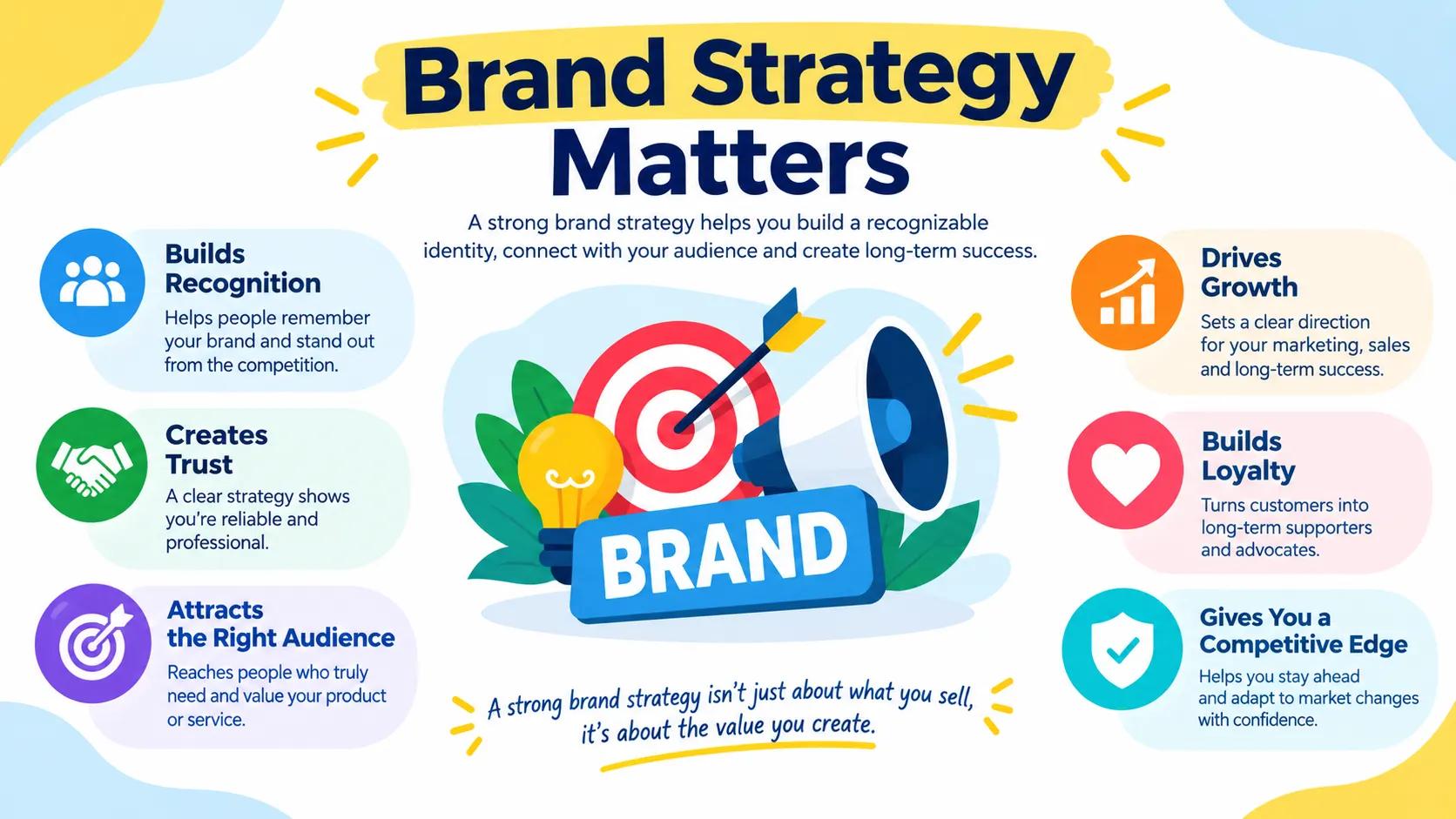
A strong brand strategy gives your business a clear direction and helps create a recognizable identity. It makes it easier to communicate your value and connect with the right customers. A well-planned strategy can also improve marketing efforts and build long-term customer relationships. In digital marketing, a strong brand strategy helps maintain a consistent brand identity across online channels.
It Builds Brand Recognition
A strong brand strategy also supports brand awareness by helping customers recognize and remember a business across different platforms. Consistent branding, messaging, and customer experiences can make a brand more familiar to its target audience. Consistent branding also influences customer perception by creating a clear and professional image of the business.
It Builds Customer Trust
A clear brand strategy helps businesses communicate consistently and professionally. When customers receive the same quality experience across your website, social media, and customer service, they are more likely to trust the brand. Consistency and transparency can strengthen long-term customer relationships.
It Helps You Stand Out
A strong brand strategy clearly communicates what makes your business different from competitors. By identifying your unique value and communicating it effectively, you can give customers a clear reason to choose your brand. Good positioning helps create a stronger presence in the market.
It Makes Marketing More Effective
When you understand your target audience, brand message, and goals, your marketing becomes more focused. You can create relevant content, advertisements, and campaigns that speak directly to your ideal customers. This helps your marketing efforts become more consistent and effective. A clear marketing strategy helps a brand choose the right channels and content to reach its target audience.
The B.R.A.N.D. Framework for Building a Brand Strategy
The brand development process becomes easier when businesses follow a clear framework and build each part of their brand step by step.
B — Brand Purpose
Start by defining why your brand exists.
Ask yourself:
What problem does the business solve?
Who does it help?
What value does it provide?
Why should customers care?
Your purpose should be simple and meaningful.
A clear purpose is an important foundation for business brand development, helping a business build a meaningful and consistent identity.
R — Research Your Audience
Understanding your target audience is one of the most important parts of brand strategy.
Research:
Customer needs
Problems and challenges
Interests
Buying Behavior
Preferred platforms
Expectations
Competitors they already use
Example
A digital marketing agency targeting small businesses may focus on business owners who want more leads, better online visibility, and measurable marketing results.
The better you understand your audience, the more relevant your brand communication becomes.
A — Analyze Your Competitors
Competitor research helps you understand how other brands are positioned in the market.
Look at:
Their websites
Social media
Products and services
Pricing
Content
Customer reviews
Brand messaging
Strengths and weaknesses
The goal is not to copy competitors.
Instead, find gaps in the market and identify opportunities to make your brand different.
N — Nail Your Brand Positioning
Brand positioning explains how you want customers to perceive your business compared with competitors.
A simple positioning formula is:
For target audience our brand provides product service that helps them benefit because unique reason.
Example
“For small businesses, our agency provides practical digital marketing solutions that help improve online visibility and generate qualified leads through customized strategies.”
A clear positioning statement gives your marketing a consistent direction.
D — Develop Your Brand Identity
Your brand identity includes the elements customers use to recognize your business.
It can include:
Logo
Colour
Fonts
Images
Brand voice
Brand personality
Messaging
Design style
Your identity should reflect your positioning and appeal to your target audience.
How to Avoid Common Brand Strategy Mistakes
Building a strong brand takes more than choosing a logo, colour, or a catchy name. Businesses also need a clear direction and a consistent approach. However, many businesses make common mistakes while developing their brand strategy. These mistakes can create confusion, reduce customer trust, and make it harder for the brand to stand out.
1. Not Defining the Target Audience
One of the most common mistakes is trying to communicate with everyone. When a business does not clearly understand its target audience, its messages may become too general and fail to connect with the right customers.
Before creating your brand strategy, identify who your ideal customers are, what problems they face, what they need, and what influences their buying decisions. A clear understanding of your audience helps you create more relevant content, messages, and customer experiences.
2. Inconsistent Branding
Consistency is important for building a recognizable brand. Using different logos, colour, fonts, tones, or messages across different platforms can make a business look unprofessional and difficult to remember.
Your website, social media profiles, advertisements, blogs, emails, and other marketing materials should communicate a consistent brand identity. A simple brand guideline can help your team maintain the same visual style and communication across different channels.
3. Copying Competitors
Looking at competitors can help a business understand the market, but directly copying another brand is not a good strategy. A copied brand may struggle to create its own identity and give customers a clear reason to choose it.
Instead, study your competitors to identify gaps and opportunities. Then focus on your own strengths, values, expertise, and customer needs. Your brand should have a clear point of difference that customers can understand.
4. Having Unclear Brand Messaging
If customers cannot quickly understand what a business offers or why it is different, the brand message needs improvement. Complicated or inconsistent messaging can create confusion and weaken communication.
Keep your brand messaging simple and focused. Clearly explain what you offer, who you help, what problem you solve, and why customers should consider your business. Strong and consistent messaging makes it easier for customers to understand your value.
5. Ignoring Customer Feedback
Customer feedback can provide valuable information about how people see your brand. Ignoring reviews, comments, questions, and suggestions can cause businesses to miss important opportunities for improvement.
Regularly review customer feedback and look for repeated concerns or positive comments. This can help you understand customer expectations, improve your products or services, and make your brand strategy more customer-focused.
How to Measure Brand Strategy Success
Creating a brand strategy is only the beginning. Businesses should also measure whether their strategy is helping them achieve their goals. Regular measurement helps identify what is working, what needs improvement, and how customers are responding to the brand.
1. Track Brand Awareness
Brand awareness shows how familiar customers are with your business. You can monitor website visits, social media reach, branded searches, mentions, and engagement to understand whether more people are discovering and remembering your brand.
2. Monitor Customer Perception
Customer perception reflects how people think and feel about your brand. Reviews, ratings, comments, surveys, and direct feedback can help you understand whether customers see your business as trustworthy, professional, useful, and different from competitors.
3. Check Website Traffic
Your website can provide useful information about how people interact with your brand online. Monitor overall traffic, important landing pages, traffic sources, and the actions visitors take after reaching your website. This can help you understand which channels are bringing relevant visitors.
4. Measure Customer Engagement
Customer engagement can be measured through social media interactions, comments, shares, email responses, content engagement, and other meaningful actions. Higher-quality engagement can indicate that your content and brand messaging are connecting with your audience.
5. Collect Customer Feedback
Customer feedback is one of the most useful sources of information for improving a brand strategy. Pay attention to repeated comments, common questions, positive feedback, and complaints. These insights can help businesses improve their communication, products, services, and overall customer experience.
6. Monitor Repeat Customers
Repeat customers can be an important sign of customer satisfaction and trust. If customers continue to return to a business, recommend it to others, or engage with the brand over time, it may indicate that the brand is creating a positive experience.
7. Compare Results With Your Goals
Before measuring performance, set clear goals for your brand strategy. For example, a business may want to improve awareness, increase customer engagement, strengthen its online presence, or build greater customer trust. Compare your actual results with these goals regularly and adjust your strategy when needed.
A successful brand strategy should be reviewed regularly rather than treated as a one-time activity. By tracking awareness, customer perception, engagement, feedback, website performance, and customer loyalty, businesses can make better decisions and continue improving their brand over time.
Key Takeaways for Building a Strong Brand
The best way to avoid these mistakes is to create a clear plan before implementing your brand strategy. Define your target audience, establish consistent branding, identify your unique strengths, create simple messaging, and regularly listen to customer feedback.
A brand strategy should not remain the same forever. As customer needs, market conditions, and business goals change, businesses should review their strategy and make improvements when necessary. This helps the brand remain relevant, consistent, and valuable to its audience.
Brand Strategy for Small Businesses
Small businesses may not have the same budget or resources as large companies, but they can still build a strong and recognizable brand. A clear brand strategy helps small businesses communicate their value, understand their customers, and create a consistent experience across different channels.
Start With a Clear Brand Purpose
Begin by understanding why your business exists and what value it provides to customers. A simple and meaningful purpose gives your business a clear direction and helps customers understand what makes your brand valuable.
Know Your Ideal Customers
Small businesses should have a clear understanding of the people they want to serve. Identify their needs, problems, expectations, and preferences. This information can help you create relevant products, services, content, and marketing messages.
Create Consistent Branding
Use consistent colour, fonts, visuals, language, and messaging across your website, social media profiles, advertisements, and other customer touchpoints. Consistency makes your business easier to recognize and helps create a professional impression.
Focus on What Makes You Different
Small businesses should identify their unique strengths instead of trying to compete with larger brands on everything. Your experience, service quality, local knowledge, personal support, product quality, or specialized expertise can become an important part of your brand positioning.
Build Trust Through Customer Experience
Every interaction with a customer can influence how people see your brand. Respond to questions, provide helpful information, solve problems professionally, and pay attention to customer feedback. A positive customer experience can encourage trust, recommendations, and long-term relationships.
Use Digital Channels Consistently
A small business can use its website, social media, search engines, email, and online advertising to reach potential customers. However, all these channels should communicate the same core brand message and maintain a consistent identity.
Review and Improve Your Strategy
Your brand strategy should change when your business, customers, or market changes. Review your results regularly, listen to customer feedback, and identify areas that need improvement. Small, consistent improvements can help your brand remain relevant and competitive over time.
For small businesses, effective branding is not about spending the most money. It is about having a clear purpose, understanding customers, communicating consistently, and delivering a reliable experience. A focused brand strategy can help a small business build recognition and stronger relationships with its audience.
Brand Strategy vs Branding
Aspect | Brand strategy | Branding |
|---|---|---|
Main Purpose | Defines direction | Represents the brand |
Focus | Purpose, audience, positioning | Visual and verbal identity |
Includes | Research and planning | Logo, colour, fonts, messaging |
Goal | Create a clear brand direction | Create recognition and consistency |
Timeframe | Long-term | Used across customer touchpoints |
Brand strategy is the plan. Branding is how that plan is expressed.
Step-by-Step Brand Strategy
Step 1: Define Your Brand Purpose
Clearly explain why your business exists and what problem it solves.
Step 2: Identify Your Target Audience
Create a clear profile of your ideal customer and understand their needs and expectations.
Step 3: Research the Market
Study competitors, customer feedback, industry trends, and market gaps.
Step 4: Define Your Unique Value
Strong brand positioning helps a business clearly communicate why customers should choose its brand over competitors.
Step 5: Create Your Mission and Vision
Your mission explains what you do today, while your vision explains what you want to achieve in the future.
Step 6: Define Your Brand Values
Choose principles such as honesty, quality, innovation, transparency, or customer focus that genuinely guide your business.
Step 7: Develop Your Brand Personality
Decide whether your brand should feel professional, friendly, energetic, premium, educational, innovative, or trustworthy.
Step 8: Create Your Brand Voice
Define how your brand communicates with customers across social media, websites, emails, advertisements, and other platforms.
Step 9: Build Your Visual Identity
Create consistent logos, Colour, typography, imagery, and design guidelines.
Step 10: Create Your Brand Messaging
Clear brand messaging helps customers understand your value and connect with your brand.
Step 11: Choose Marketing Channels
Select platforms based on where your target audience spends time
Brand Strategy Mistakes to Avoid
Trying to Target Everyone
A brand that tries to communicate with everyone may struggle to connect strongly with anyone.
Copying Competitors
Your strategy should identify your own strengths instead of simply copying another brand.
Focusing Only on the Logo
A logo is only one part of a brand identity. Strategy, positioning, messaging, and customer experience are equally important.
Using Inconsistent Messaging
Different messages across your website and social media can confuse customers.
Ignoring Customer Feedback
Customer feedback can reveal how people actually perceive your brand.
Changing Your Brand Too Often
Constantly changing your message, design, or positioning can make it difficult for customers to recognize your brand.
Brand Strategy Checklist
Use this checklist before launching your strategy:
☐ Brand purpose is clearly defined
☐ Target audience is identified
☐ Customer problems are understood
☐ Competitor research is completed
☐ Unique value proposition is created
☐ Brand positioning is defined
☐ Mission and vision are written
☐ Brand values are selected
☐ Brand personality is defined
☐ Brand voice is established
☐ Logo and visual identity are ready
☐ Brand messaging is prepared
☐ Marketing channels are selected
☐ Brand guidelines are documented
☐ Customer experience is consistent
Keep Your Customer at the Center
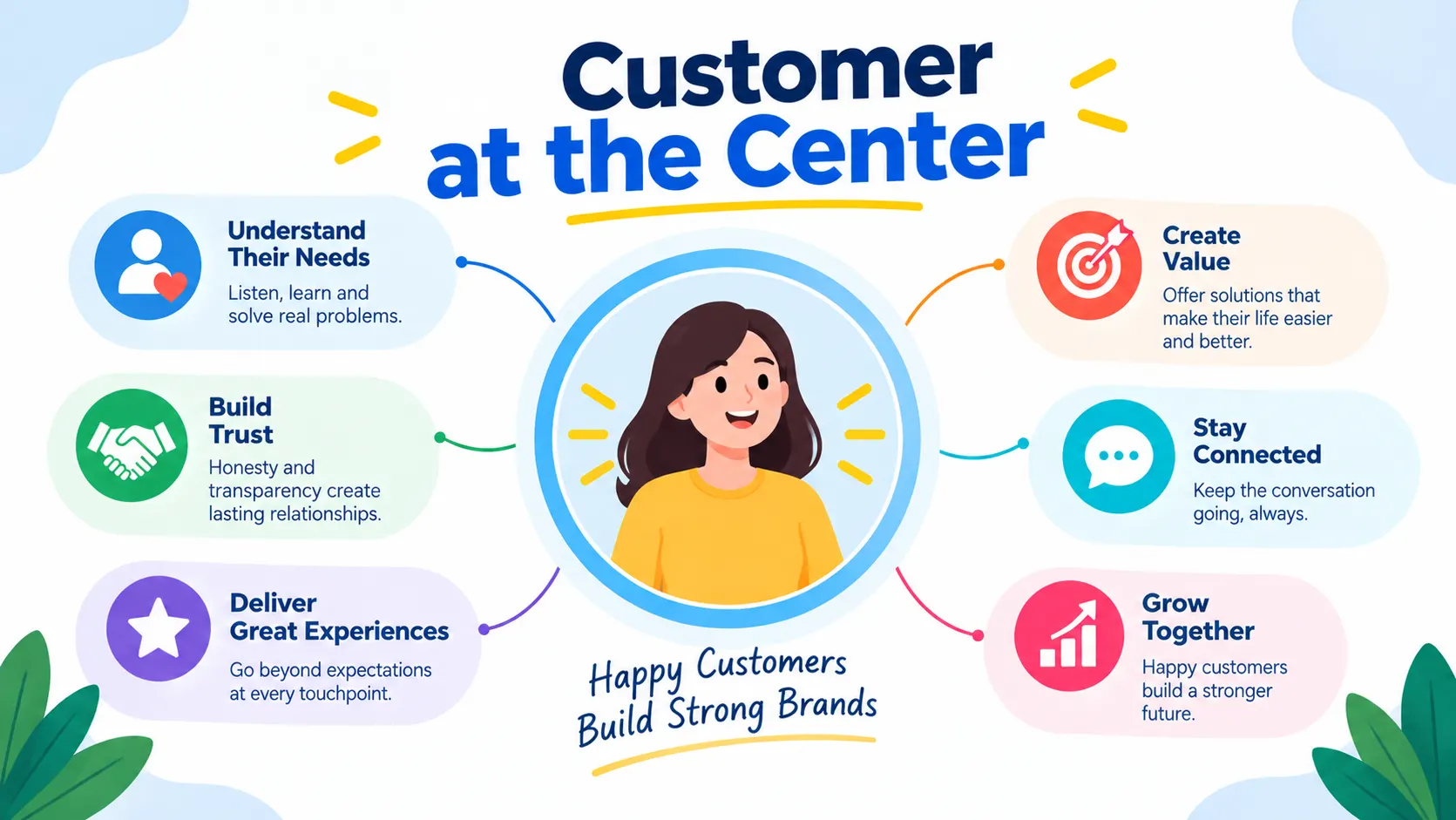
Understand your customers’ needs, problems, and expectations before creating your brand strategy.
A customer-focused brand is more likely to build trust and long-term relationships. A well-planned brand growth strategy can help businesses build stronger customer relationships and grow over time.
Be Consistent
Use the same brand message, visual style, and tone across your website, social media, and marketing channels.
Consistency makes your brand easier to recognize and remember.
Focus on Differentiation
Clearly communicate what makes your brand different from competitors.
Give customers a strong reason to choose your products or services over other options.
Keep Your Message Simple
Use clear and easy-to-understand language when communicating with your audience.
Customers should quickly understand what your business offers and how it can help them.
Review Your Strategy Regularly
Customer needs, competitors, and market trends can change over time.
Review your brand strategy regularly and make improvements to keep your brand relevant.
Key takeaways
A strong brand strategy helps a business stand out from competitors.
Understanding your target audience is important for building the right strategy.
Clear brand messaging creates consistency across different platforms.
A good brand strategy helps build trust and long-term customer relationships.
Regularly reviewing your strategy helps keep the brand relevant.
Conclusion
Building a strong brand strategy from scratch starts with understanding your brand purpose, target audience, competitors, and unique value. A clear strategy helps businesses create consistent messaging, build customer trust, and stand out in a competitive market.
By defining your positioning, brand voice, visual identity, and marketing approach, you can create a brand that customers recognize, trust, and remember.
Short version:
A strong brand strategy is not just about how your brand looks—it is about how your brand is understood, experienced, and remembered by customers.
Frequently Asked Questions
What is a brand strategy?
A brand strategy is a long-term plan that defines a brand's purpose, audience, positioning, personality, messaging, and overall direction.
How do I build a brand strategy from scratch?
Effective brand planning helps businesses define their goals, understand their audience, and maintain a consistent brand direction..
What are the main elements of a brand strategy?
The main elements include brand purpose, target audience, competitor research, positioning, mission, vision, values, personality, voice, visual identity, and messaging.
Is a logo part of brand strategy?
A logo is part of your brand identity, but brand strategy goes beyond the logo. It defines the purpose, audience, positioning, communication, and customer experience behind the brand.
Why is brand positioning important?
Brand positioning helps customers understand what makes your business different and why they should choose your products or services.
How often should I review my brand strategy?
You should review your brand strategy regularly, especially when your target market, competitors, products, or business goals change.
Ready to grow with AI-powered marketing?
Book a free 30-minute strategy call with the Arena Infosolution team.
About the Author
Arena Infosolution is a digital marketing and technology company helping businesses build stronger online visibility and sustainable digital growth through SEO, content, branding, and performance marketing.
We share practical, research-driven insights to help businesses and marketers understand digital marketing and make better growth decisions.
Get a free growth consultation
Tell us what you're working on and a senior strategist will map your next move.