How to Create a Social Media Marketing Strategy
Learn how to create a successful social media marketing strategy by setting clear goals, understanding your target audience, choosing the right platforms, planning content, and measuring results.

Build a Social Media Strategy That Works
Learn how to build a clear social media strategy that helps your business reach the right audience, create meaningful content, and achieve measurable results. From choosing the right platforms to planning content and tracking performance, this guide covers the practical steps you need to turn social media into an effective marketing channel.
TABLE OF CONTENTS
Social Media Marketing Strategy
Here is what you need to know
Why Social Media Strategy Matters for Your Business
Social Media Strategy: Practical Numbers
How to Set Clear Social Media Goals
How to Understand Your Target Audience
How to Choose the Right Social Media Platforms
How to Plan Content Around Customer Needs
How to Create a Social Media Content Calendar
how to create a weekly social media workflow
How to Build Engagement and Community
Organic vs Paid Social Media Marketing
How to Measure Social Media Performance
Expert Tip for Social Media Success
How to Improve Your Strategy Using Data
Social Media Strategy for Different Types of Businesses
Social Media Marketing Strategy Mistakes to Avoid
Social Media Marketing Strategy Checklist
Social Media Strategy Example
Social Media Strategy vs Social Media Marketing
Key Takeaways
Frequently Asked Questions
Glossary
Conclusion
Social Media Marketing Strategy
A social media marketing strategy is a structured plan for using social media platforms to achieve specific business goals. Instead of posting randomly, businesses use a strategy to decide what to post, where to post, who to target, and how to measure results.
A strong strategy connects business objectives with audience needs. It can help a business increase brand awareness, generate leads, build customer relationships, drive website traffic, and support sales.
The most effective approach is not to be active on every platform. It is to focus on the platforms where your target audience is most likely to engage and create content that provides a clear reason to follow, interact, or take action.
Here Is What You Need to Know
Before creating a social media strategy, keep these points in mind:
- Start with a clear business goal.
- Understand your target audience and their needs.
- Select platforms based on audience behavior.
- Create useful and relevant content.
- Maintain a consistent posting schedule.
- Respond to comments and messages.
- Use paid advertising when it supports your goals.
- Track meaningful performance metrics.
- Use data to improve future content and campaigns.
A successful social media strategy is an ongoing process. You plan, publish, measure, learn, and improve.
Why Social Media Strategy Matters for Your Business
Social media gives businesses a direct way to communicate with existing and potential customers. However, simply having social media accounts does not guarantee results.
A clear social media strategy helps businesses use their time and resources more effectively. It gives every post and campaign a purpose instead of creating content only because it is time to post.
Builds Brand Awareness
Consistent and useful content can help people become familiar with your business. Over time, repeated exposure can make your brand easier to recognize and remember.
Helps Reach the Right Audience
Social media platforms provide targeting and audience insights that can help businesses understand who is interacting with their content and reach relevant people.
Builds Customer Relationships
Social media is also a communication channel. Replying to comments, answering questions, and responding to messages can make customers feel heard and supported.
Supports Leads and Sales
When content is connected to a clear customer journey, social media can help move people from awareness to consideration and eventually toward an enquiry or purchase.
Social Media Strategy: Practical Numbers
2–3 Clear Goals Set 2–3 measurable goals for your social media strategy.
3–5 Content PillarsOrganize your content around 3–5 consistent topics.
4 Key MetricsTrack reach, engagement, clicks, and conversions to measure overall performance.
How to Set Clear Social Media Goals
Your social media strategy should begin with a clear goal. Without a goal, it becomes difficult to know whether your efforts are producing useful results.
For example, a business may want to:
- Increase brand awareness
- Generate qualified leads
- Drive website traffic
- Increase enquiries
- Improve engagement
- Build an online community
- Support product or service sales
Use Specific Goals
Instead of saying:
“I want more followers.”
Set a more useful goal:
“Increase relevant Instagram followers by 20% over the next three months.”
Your goal should be specific enough to measure and connected to a real business outcome.
Choose the Right KPI
Different social media goals require different metrics. Choose KPIs that directly reflect the outcome you want to achieve.
Goal | Useful KPIs |
|---|---|
Brand Awareness | Reach, impressions, profile visits |
Engagement | Comments, shares, saves, engagement rate |
Traffic | Link clicks, website sessions, click-through rate |
Lead Generation | Form submissions, enquiries, qualified leads |
Sales | Purchases, conversion rate, revenue |
Community Building | Comments, replies, returning users, active followers |
How to Understand Your Target Audience
Good social media content starts with understanding the people you want to reach.
You need to know what your audience wants, what problems they face, what questions they ask, and what type of content they prefer.
Identify Your Audience
Consider:
- Age group
- Location
- Interests
- Job or industry
- Buying behavior
- Common problems
- Content preferences
- Platforms they use
For example, a digital marketing institute may target students, fresh graduates, business owners, and working professionals who want to develop practical marketing skills.
Focus on Customer Problems
Instead of only talking about your business, create content around customer questions.
For example:
Customer problem: “I don't know how to run Meta Ads.”
Content idea: “5 Common Meta Ads Mistakes Beginners Should Avoid.”
This approach makes your content more useful and relevant.
How to Choose the Right Social Media Platforms
You do not need to use every social media platform. Choose platforms according to your audience, content format, and business objectives.

Platform | Best For | Key Content Formats | Primary Strength |
|---|---|---|---|
Visual brands, creators, and consumer businesses | Reels, carousels, Stories | Visual discovery & engagement | |
Communities, local businesses, and broad audiences | Posts, videos, Groups | Community building & reach | |
B2B brands, professionals, and service businesses | Posts, articles, industry insights | Professional authority & networking | |
YouTube | Educational, entertainment, and video-led brands | Long-form videos, Shorts | Search-driven video discovery |
TikTok | Creators, consumer brands, and short-form content | Short-form videos, trends | Discovery & engagement |
X | Industry conversations, creators, and real-time updates | Short posts, threads, discussions | Real-time conversations |
Start With the Platforms That Matter
If your audience is highly active on Instagram and LinkedIn, it may be better to manage those two platforms properly than to create weak content across five platforms.
The right platform is the one where your audience is active and where your business can consistently create useful content.
How to Plan Content Around Customer Needs
A strong social media content strategy helps businesses organize content around customer needs, business goals, and different stages of the customer journey. Content should have a purpose. Instead of creating every post from scratch, organize your ideas into content categories.
Educational Content
Teach your audience something useful.
Examples:
- SEO tips
- Social media marketing guides
- Advertising mistakes
- Industry trends
- How-to tutorials
Problem-Solving Content
Address common customer problems.
Examples:
- Why your ads are not generating leads
- Why your Instagram reach is falling
- Common SEO mistakes
Trust-Building Content
Show evidence that helps people understand and trust your business.
Examples:
- Client results
- Testimonials
- Case studies
- Team expertise
- Behind-the-scenes content
Promotional Content
Promote your products, services, offers, or important announcements.
A good strategy should balance promotional posts with content that educates, helps, or engages the audience.
How to Create a Social Media Content Calendar
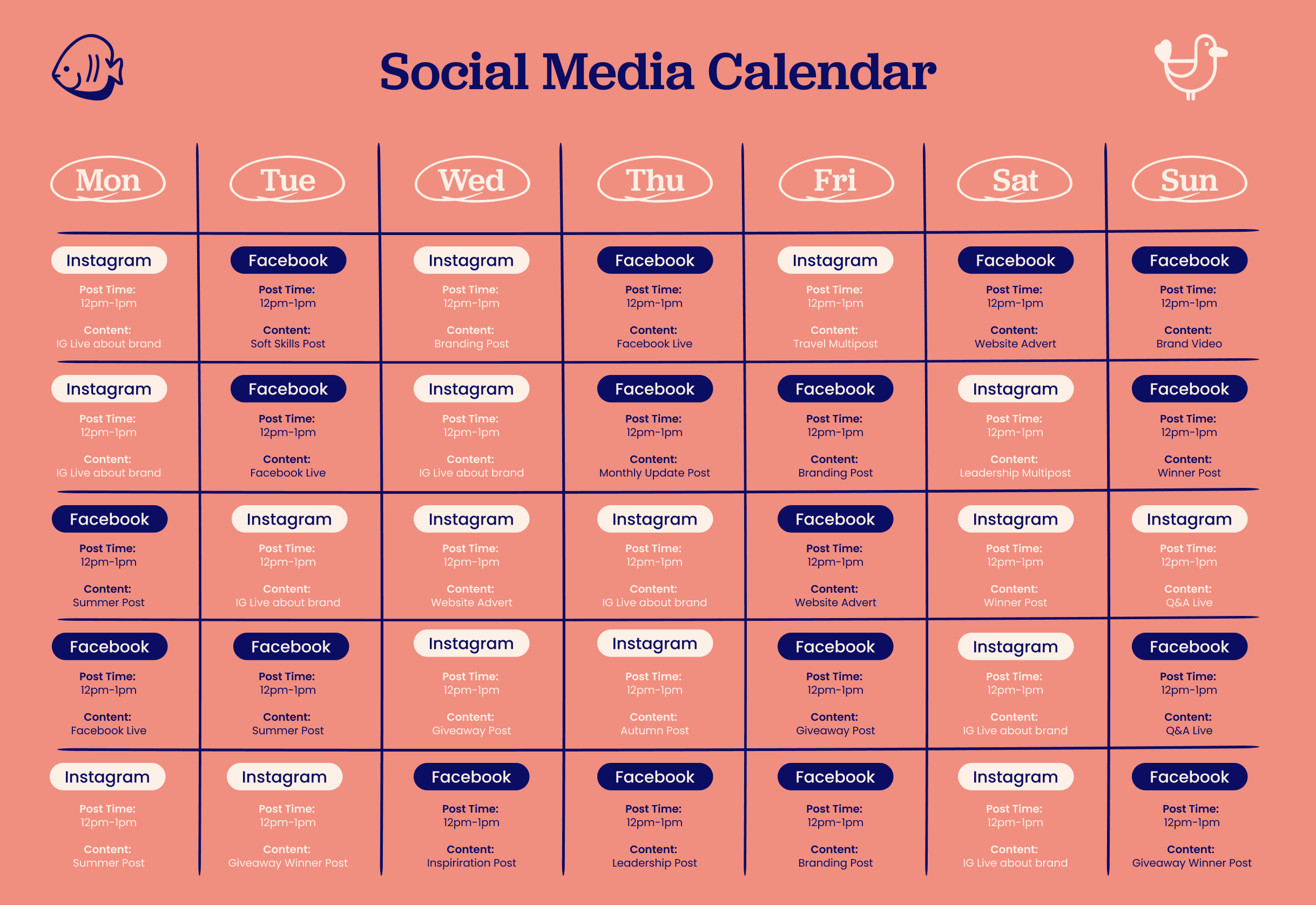
Social Media Content Calenda A content calendar helps you organize what will be published and when.
A simple calendar can include:
Day | Platform | Content Goal | Topic | Format | CTA |
|---|---|---|---|---|---|
Monday | Education | SEO Basics | Carousel | Save this post | |
Wednesday | Thought Leadership | Marketing Trend | Text Post | Share your perspective | |
Friday | Engagement | Marketing Quiz | Reel | Comment your answer |
Plan Content in Advance
Planning content weekly or monthly can reduce last-minute work. It also helps maintain consistency and gives you time to review the quality of each post before publishing.
Your calendar should remain flexible enough to include relevant trends, announcements, or timely conversations.
Practical Numbers for a Social Media Strategy
Set 2–3 clear social media goals.
Create 3–5 content pillars for your content plan.
Track at least 4 key metrics: reach, engagement, clicks, and conversions.
Review your performance every 30 days.
How to Create a Weekly Social Media Workflow
A weekly social media workflow helps businesses manage content creation, publishing, and audience engagement in an organized way. Instead of preparing every post at the last minute, divide your work into small tasks throughout the week.
Monday: Plan Your Content
Start the week by reviewing your social media goals. Decide which topics you want to cover and select the content formats you will use, such as images, videos, carousels, reels, or text posts. Make sure every content idea is connected to your audience’s needs.
Tuesday: Create Content
Prepare the visuals, captions, videos, and other creative materials. Use a consistent brand style, including similar Colour, fonts, and messaging. Write clear captions and include a useful call to action when required.
Wednesday: Review and Schedule
Check every post before publishing it. Review spelling, design quality, links, hashtags, and brand information. After checking the content, schedule the posts according to your content calendar.
Thursday: Engage With Your Audience
Spend time replying to comments, answering messages, and responding to relevant mentions. Engagement helps build trust and shows your audience that the business values their opinions and questions.
Friday: Check Performance
Review important metrics such as reach, engagement, clicks, and conversions. Identify which posts performed well and which posts need improvement. Use these observations to plan better content for the following week.
Weekend: Improve and Prepare
Use the weekend to collect new ideas, study competitors, and prepare content topics for the next week. You can also review customer questions and turn them into future posts, videos, or frequently asked questions.
A consistent weekly workflow makes social media management easier and more effective. It reduces last-minute work, improves content quality, and helps businesses maintain regular communication with their audience.
How to Build Engagement and Community
Social media should not be treated as a one-way broadcasting channel.
When people comment, ask questions, or send messages, respond to them naturally.
Ways to Increase Engagement
- Ask relevant questions.
- Reply to comments.
- Respond to direct messages.
- Encourage opinions.
- Create polls and quizzes.
- Share customer experiences.
- Respond to feedback professionally.
- Join relevant conversations.
For example, instead of ending every post with “Contact us today,” you can ask:
“Which digital marketing skill do you want to learn first?”
This creates an easier opportunity for people to participate.
Organic vs Paid Social Media Marketing
Businesses can use both organic and paid social media marketing.
Organic Social Media
Organic marketing refers to content and interactions that do not require direct advertising spend.
Examples include:
- Regular posts
- Reels
- Stories
- Comments
- Community discussions
- Educational content
Organic content is useful for building long-term visibility and relationships.
Paid Social Media
Paid social media uses advertising budgets to reach selected audiences.
Paid campaigns can be useful for:
- Lead generation
- Website traffic
- Product promotion
- Remarketing
- Brand awareness
- Sales campaigns
Organic + Paid Together
Organic content can help build trust and understand what resonates with your audience, while paid campaigns can help amplify specific business objectives.
The right balance depends on your goals, audience, budget, and campaign performance.
How to Measure Social Media Performance
Followers are only one part of social media performance. A better approach is to track metrics that connect with your goals.
Important Social Media Metrics
Reach: Number of people who saw your content.
Impressions: Number of times your content was displayed.
Engagement: Interactions such as likes, comments, shares, and saves.
Engagement Rate: Measures how actively people interact with content compared with the relevant audience or reach.
Click-Through Rate (CTR): Measures how often people click a link after seeing the content or advertisement.
Leads: Potential customers generated through social media.
Conversions: Desired actions such as purchases, registrations, or enquiries.
Expert Tip for Social Media Success
How to Improve Your Strategy Using Data
Publishing content is only the first step. The next step is understanding what happened after publication.
Review your performance regularly and identify:
- Which posts received the most engagement?
- Which topics generated the most clicks?
- Which formats performed best?
- Which posts generated enquiries?
- Which campaigns produced useful leads?
- Which content received little response?
If educational carousel posts consistently receive more saves than promotional posts, you can create more educational content while testing different promotional approaches.
Test and Improve
You can test:
- Different headlines
- Content formats
- Posting times
- CTAs
- Visual styles
- Audience segments
- Ad creatives
Use the results to make your next content and campaign decisions.
Expert tip
A successful social media strategy should focus on consistent content, audience engagement, and measurable business goals. Review your performance regularly and improve your strategy based on real results.
Social Media Strategy for Different Types of Businesses
Different businesses may need different social media approaches based on their audience, goals, and business model.
Business Type | Strategy Focus |
|---|---|
Local Business | Local awareness, offers, reviews, and community engagement |
E-commerce | Product content, UGC, product education, and paid campaigns |
Education | Educational content, success stories, expertise, and lead generation |
B2B | Industry insights, expertise, thought leadership, and LinkedIn content |
Service Business | Trust-building, case studies, expertise, and problem-solving content |
Personal Brand | Expertise, opinions, educational content, and audience engagement |
Social Media Marketing Strategy Mistakes to Avoid
Posting Without a Goal
Posting regularly without knowing what you want to achieve can make your strategy directionless.
Being Active on Too Many Platforms
Managing too many platforms can reduce content quality and consistency.
Focusing Only on Promotion
If every post tries to sell something, the audience may lose interest.
Ignoring Comments and Messages
Engagement is a conversation. Ignoring customers can weaken relationships.
Copying Competitors
Competitor research is useful, but copying their content does not create a unique brand presence.
Not Measuring Results
Without performance data, you cannot clearly understand what is working.
Social Media Marketing Strategy Checklist
Before implementing your strategy, check the following:
Business goals are clearly defined.
Target audience is identified.
Relevant social media platforms are selected.
Content categories are planned.
posting frequency is decided
Content calendar is prepared.
Engagement process is defined.
Organic and paid activities are planned.
KPIs are selected.
Performance is reviewed regularly.
Strategy is updated based on data.
Social Media Strategy Example
Imagine a digital marketing institute wants to generate more student enquiries.
Goal
Generate qualified course enquiries through Instagram and LinkedIn.
Audience
Students, fresh graduates, working professionals, and business owners interested in digital marketing.
Content Plan
The institute can create:
- Digital marketing tips
- SEO tutorials
- Meta Ads tips
- Student success stories
- Course-related FAQs
- Trainer insights
- Practical project examples
Engagement
The team responds to comments and messages and answers questions about courses, learning, and career opportunities.
Paid Campaign
The institute can run a lead-generation campaign
Measurement
The team tracks:
Reach → Engagement → Clicks → Leads → Enquiries
This creates a measurable process instead of simply posting content every day.
Social Media Strategy vs Social Media Marketing
Social Media Strategy | Social Media Marketing |
|---|---|
Defines the overall plan | Executes marketing activities |
Focuses on goals and direction | Focuses on content, campaigns, and promotion |
Defines audience and platforms | Publishes and promotes content |
Determines KPIs | Tracks campaign performance |
Long-term planning | Ongoing execution |
In simple words, social media strategy defines what you want to achieve and how you will achieve it. Social media marketing focuses on putting that plan into action.
Key takeaways
A clear social media strategy helps businesses achieve specific marketing goals.
Understanding your target audience helps you create useful content.
Choosing the right social media platforms improves reach and engagement.
A content calendar keeps social media posting consistent.
Tracking performance helps improve future social media campaigns.
Frequently Asked Questions
What is a social media marketing strategy?
A social media marketing strategy is a planned approach for using social media platforms to achieve business goals such as awareness, engagement, leads, traffic, or sales.
Why is a social media strategy important?
It gives your social media activities a clear direction and helps you create relevant content, reach the right audience, and measure performance.
How do I choose the right social media platform?
Choose platforms based on where your target audience is active, the type of content you can create, and your business goals.
How often should I post on social media?
There is no universal posting frequency. Choose a schedule that you can maintain consistently while producing useful, high-quality content.
What should I include in a social media content calendar?
Include the publishing date, platform, topic, content format, content category, and CTA. You can also include the person responsible and status.
Should a business use paid social media advertising?
Paid advertising can be useful when a business wants to reach a specific audience, generate leads, drive traffic, or promote products and services.
How can I measure social media success?
Measure performance using metrics related to your goals, such as reach, engagement, clicks, leads, conversions, and revenue.
Glossary
Social Media Strategy: A structured plan for achieving business goals through social media.
Target Audience: The specific group of people a business wants to reach.
Content Calendar: A schedule that organizes social media content before publication.
Organic Social Media: Social media activity that does not rely on paid advertising.
Paid Social Media: Advertising activity where businesses pay platforms to reach selected audiences.
Engagement: Interactions such as likes, comments, shares, saves, and replies.
Reach: The number of people who see your content.
.Impressions: The number of times your content is displayed.
Conclusion
Creating a social media marketing strategy is not simply about deciding what to post each day. It requires clear goals, audience understanding, platform selection, useful content, consistent execution, and regular performance analysis.
A practical strategy helps businesses focus on the platforms and activities that can create the most value. By understanding what your audience needs and using data to improve your decisions, you can turn social media from a simple posting channel into a meaningful part of your overall marketing strategy.
The best social media strategy is one that is clear, consistent, customer-focused, and continuously improved through real performance data.
Ready to grow with AI-powered marketing?
Book a free 30-minute strategy call with the Arena Infosolution team.
About the Author
Arena Infosolution — The team shares practical insights on social media marketing, content planning, audience research, platform selection, and digital marketing strategies to help businesses build a strong online presence and achieve their marketing goals.
Get a free growth consultation
Tell us what you're working on and a senior strategist will map your next move.