
How to Create a Strong Brand Identity for Your Business
Learn how to create a strong brand identity with simple steps, key elements, common mistakes, examples, and practical tips for building a clear and consistent brand.

What makes people recognize a brand even before they see its name? Is it the logo, colours, the way the brand communicates, or the overall experience it creates?
A strong brand identity brings all these elements together and gives a business a clear and recognizable way to look, communicate, and present itself.
Introduction
Learning how to create a strong brand identity starts with understanding what makes a brand clear, recognizable, and memorable. A brand is more than just a logo, colours, or social media posts. It represents how a business looks, communicates, and connects with its audience..
Brand identity is more than just creating an attractive logo or choosing a few colours. It is about creating a clear way for your business to look, sound, and communicate with its audience. From your website and social media posts to packaging, advertisements, and customer interactions, every touchpoint can contribute to how people recognize and understand your brand.
Creating a strong brand identity starts with knowing who your audience is, what your business stands for, what makes you different, and how you want people to remember your brand. Once these things are clear, you can build the right visual style, brand voice, messaging, and overall personality for your business.
A consistent brand identity can make your business easier to recognize across different platforms and can help create a more connected experience for your audience. Whether you are starting a new business or improving an existing one, having a clear brand identity gives your branding a stronger and more organized direction.
Key Takeaways
Brand identity is how a business looks, sounds, and presents itself.
A strong identity starts with understanding your target audience.
Your brand purpose, values, personality, and messaging should be clearly defined.
Visual elements such as logo, colours, fonts, and imagery should work together.
A consistent brand voice helps keep communication clear.
Your branding should remain consistent across your website, social media, packaging, and other platforms.
A strong brand identity should be recognizable, clear, and relevant to the right audience.
Table of Contents
What Is Brand Identity?
Why Is Brand Identity Important for a Business?
Brand Identity vs Brand Image: What’s the Difference?
How to Understand Your Target Audience
How Are Brand Identity and Brand Image Connected?
Common Brand Identity Mistakes to Avoid
10 Steps to Build a Strong Brand Identity
How to Keep Your Brand Identity Consistent
Brand Identity Examples by Business Type
Brand Identity Checklist
Quick Brand Identity Check
Frequently Asked Questions
Key Takeaways
Conclusion
What Is Brand Identity?
A strong brand identity helps a business look consistent, communicate clearly, stand out from competitors, and create a memorable experience for customers These brand identity elements work together to create a consistent look and feel for the brand. Each element plays a role in showing the personality and style of the business.
Brand identity is not limited to just a logo or colours. It can include the logo, colour palette, fonts, packaging, photography, graphics, tagline, website design, social media style, and tone of voice. Together, these elements create a consistent look and feel for the brand.
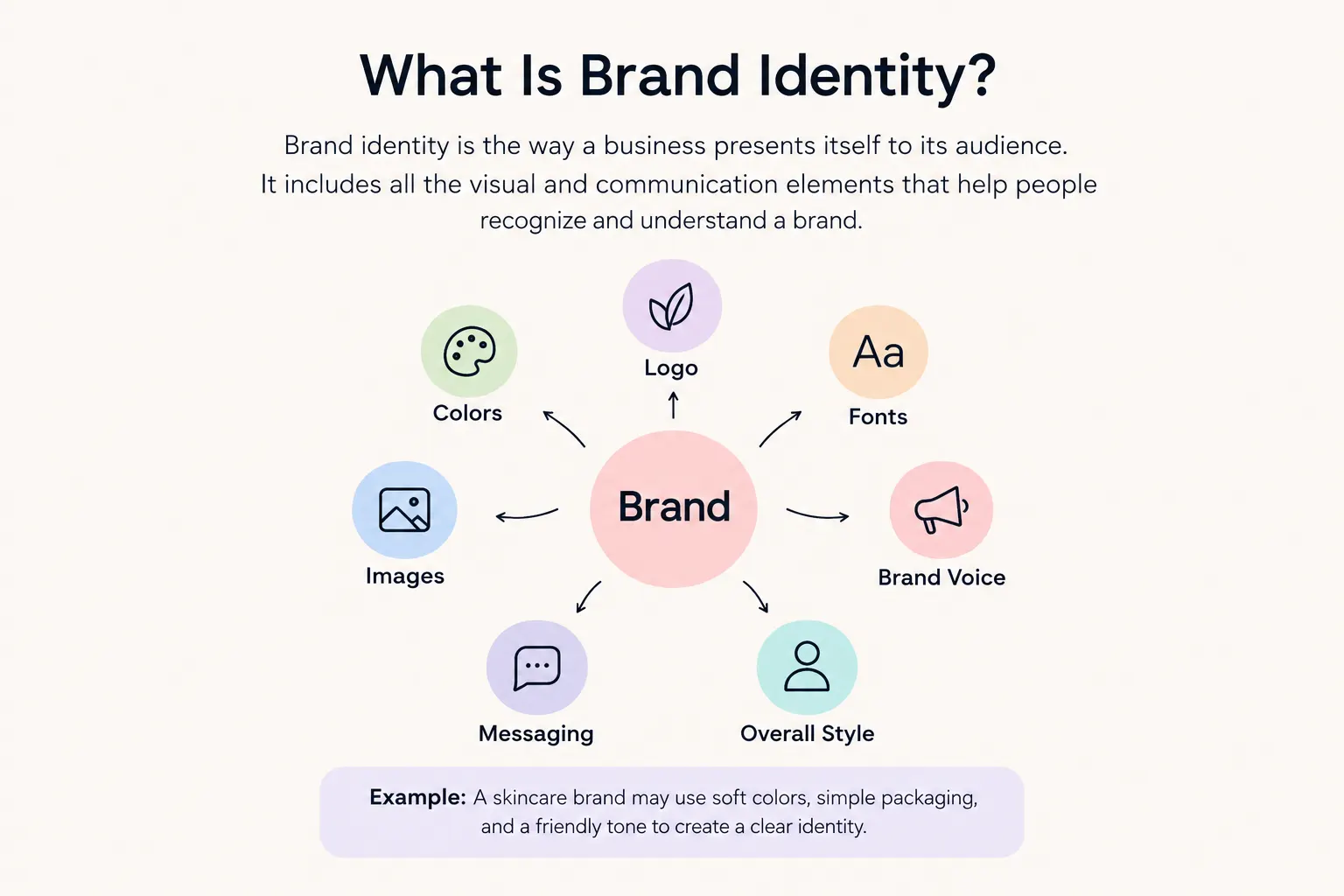
Brand identity is not limited to just a logo or colours. It includes the logo, colour palette, fonts, packaging, photography, graphics, tagline, website design, social media style, and tone of voice. Together, these elements create a consistent look and feel for the brand.
The American Marketing Association also explains brand identity through visual and symbolic elements that help make a brand recognizable.
Why Is Brand Identity Important for a Business?
Understanding the importance of brand identity helps businesses create a recognizable presence and communicate more clearly with their audience. It includes more than just a logo or colours. The way a brand looks, sounds, communicates, and presents itself all work together to create its identity.
A strong brand identity helps people understand who the business is, what it offers, and what makes it different from other brands. When these elements are used consistently, customers can recognize the brand more easily and build familiarity with it over time.
1. Helps People Recognize Your Brand
A consistent logo, colours palette, fonts, images, and communication style make a brand easier to recognize. When customers see the same visual style across a website, social media, packaging, or advertisements, they can connect it with the same business.
2. Makes Your Business Look Professional
A well-planned brand identity gives a business a more organized and professional appearance. When all brand elements follow a similar style, customers may find the business easier to understand and interact with.
3. Helps Your Business Stand Out
Customers see many businesses offering similar products or services. A clear brand identity helps a business show what makes it different.
For example, two skincare brands may sell similar moisturizers, but one may use a simple and friendly style for beginners while another may focus on a premium and luxurious image. Their brand identities help communicate these differences.
4. Builds Trust Over Time
Consistency can make a brand feel more familiar and reliable. When customers repeatedly see the same brand style and receive a similar experience across different platforms, they know what to expect from the business.
Brand identity does not create trust by itself, but a clear and consistent identity can support the overall customer experience.
5. Makes Communication Easier
A strong brand identity gives a business a clear way to communicate with its audience. Brand voice, tone, visuals, and messaging can guide how the business creates social media posts, blogs, advertisements, emails, and website content.
This helps the brand communicate its message in a more consistent way.
6. Creates a Memorable Brand
People interact with many brands every day, so being memorable can be important. A recognizable visual style and a clear brand message can make it easier for customers to remember a business after seeing its content or interacting with it.
Brand Identity vs Brand Image
Brand Identity | Brand Image |
|---|---|
How the business presents itself | How customers perceive the business |
Created by the brand | Formed by the audience |
Includes visuals, voice, and messaging | Influenced by experiences and interactions |
Can be planned and managed by the business | Cannot be completely controlled by the business |
Shows what the brand wants to communicate | Shows what customers actually understand and feel |
Brand Identity vs Brand Image: What’s the Difference?
Brand identity and brand image are closely connected, but they are not the same thing. Brand identity is how a business wants to present itself, while brand image is how customers actually see and understand the brand.
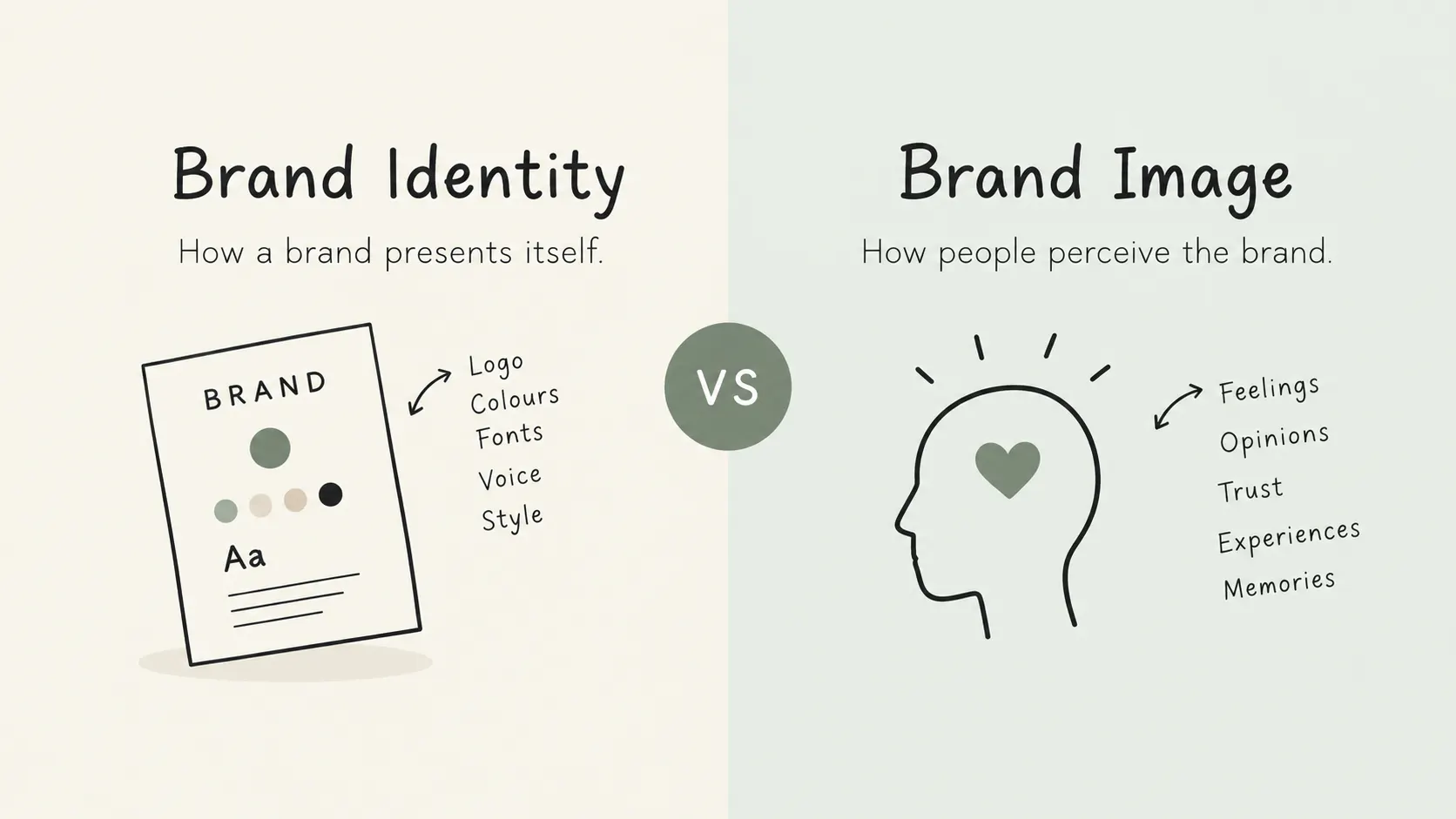
A business can control and develop its brand identity through its colours, fonts, messaging, brand voice, and visual style. Brand image, on the other hand, is formed by customers through their experiences, interactions, reviews, and overall impression of the business.
Brand Identity
Brand identity is the way a business presents itself to its audience. It includes the visual and communication elements that make a brand recognizable and give it a particular personality.
It can include:
Logo
Brand colours
Fonts and typography
Packaging
Brand voice
Tagline
Images and graphics
Website design
Social media style
For example, a skincare brand may choose soft colours, clean packaging, simple designs, and a friendly tone to present itself as simple and approachable.
Brand Image
Brand image is the perception customers have about a brand. It develops from everything customers experience when they interact with the business.
This can include:
Product or service experience
Customer service
Online reviews
Social media interactions
Website experience
Advertising
Word of mouth
Overall customer satisfaction
For example, a skincare brand may want customers to see it as affordable and beginner-friendly. If customers consistently find the products easy to use, helpful, and reasonably priced, they may develop that image of the brand.
How to Understand Your Target Audience
Before creating a strong brand identity, you need to understand who your brand is speaking to. Your target audience is the group of people who are most likely to need, use, or be interested in your products or services. Understanding them helps you decide how your brand should look, sound, and communicate.
Start by learning about their age, location, interests, lifestyle, needs, problems, and buying behaviour. You can gather this information through customer feedback, surveys, social media comments, website analytics, and competitor research. These insights can help you understand what your audience expects from a brand and what type of communication they respond to.
For example, if you are creating a skincare brand for young people who are new to skincare, you might use simple visuals, clean colours, easy language, and educational content. This makes the brand easier to understand and more relatable to the audience.
Once you clearly understand your target audience, you can make better decisions about your brand colours, visual style, tone of voice, messaging, and content. This helps create an identity that feels relevant and connects with the right people.
Simple takeaway:
A strong brand identity starts with knowing your audience. The better you understand their needs and preferences, the easier it becomes to create a brand they can relate to and remember.
How Are Brand Identity and Brand Image Connected?
Brand identity and brand image are closely connected because one influences how the other develops. A business creates its brand identity to show customers who it is and what it wants to be known for. This includes its visual style, brand voice, messaging, values, and overall way of presenting itself.
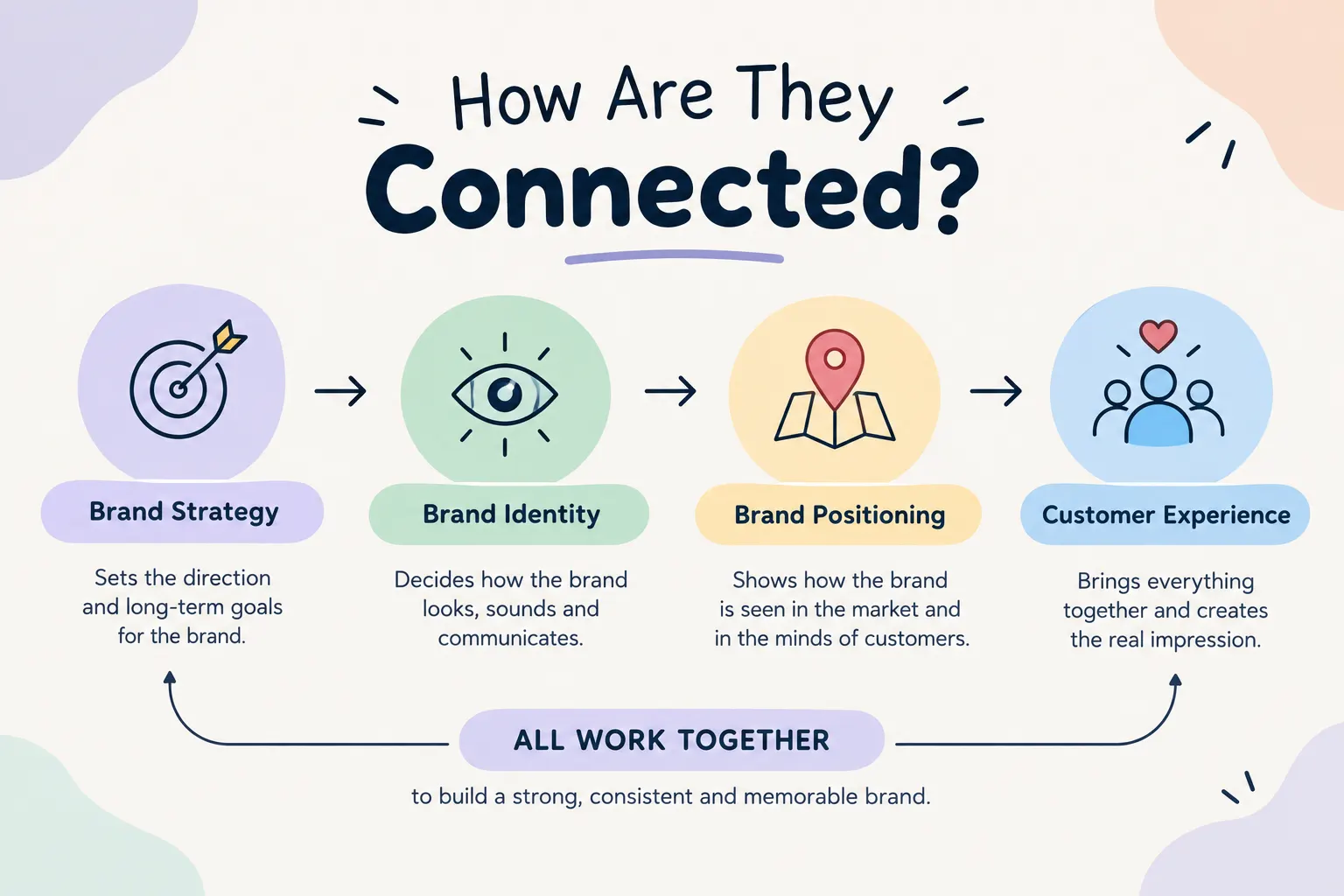
Customers then experience the brand through its products, services, website, social media, advertisements, customer support, and other interactions. Based on these experiences, they form their own brand image or perception of the business.
For example, a skincare brand may create a simple and friendly identity by using clean designs, easy language, and educational content. If customers consistently have positive experiences with the brand and find its communication helpful, they may also see the brand as simple, friendly, and trustworthy.
Common Brand Identity Mistakes to Avoid
Creating a strong brand identity takes more than choosing a good logo or attractive colours. A brand needs a clear style, message, and personality that can be used consistently across different platforms. Some common mistakes can make a brand look confusing or less memorable.
Here are some mistakes businesses should avoid when creating their brand identity:
1. Focusing Only on the Logo
A logo is an important part of brand identity, but it is not the whole identity. A brand also needs consistent colours, fonts, images, messaging, and communication style.
Instead: Create a complete brand identity where all the elements work together.
2. Changing the Brand Style Too Often
Frequently changing your logo ,colours, fonts, or overall visual style can make it difficult for people to recognize the brand. Customers may see a different style every time they interact with the business.
Instead: Choose a clear visual style and use it consistently across your website, social media, packaging, and other marketing materials.
3. Trying to Appeal to Everyone
A brand that tries to speak to everyone can end up with a message that is too general. Without a clear target audience, it becomes harder to create a personality and communication style that feels relevant.
Instead: Understand who your ideal customers are and create your brand identity around their needs, interests, and expectations.
4. Ignoring the Brand Voice
Some businesses focus heavily on visuals but do not think about how their brand should communicate. Using a different tone in every post, email, or advertisement can make the brand feel inconsistent.
Instead: Decide whether your brand voice should be friendly, professional, simple, informative, playful, or another style, and keep it consistent.
5. Copying Other Brands
Taking too much inspiration from competitors can make a brand look similar to others in the same industry. Customers may find it difficult to understand what makes the business different.
Instead: Research competitors, but use that information to identify opportunities to create your own distinct style and message.
6. Not Being Consistent Across Platforms
Using different logos, colors, fonts, or messaging on different platforms can create confusion. A customer should be able to recognize the same brand whether they visit its website, Instagram page, or see an advertisement.
Instead: Keep your main brand elements consistent across all customer touchpoints.
10 Steps to Build a Strong Brand Identity
Knowing how to build a brand identity starts with understanding your audience, defining your brand purpose and values, and deciding how you want your business to be presented. Once these foundations are clear, you can develop the visual and communication elements of your brand.
Know Your Target Audience – Understand your customers, their needs, interests, and expectations.
Define Your Brand Purpose – Clearly understand why your brand exists and what value it provides.
Set Your Brand Values – Decide the values and principles that your brand wants to represent.
Research Your Competitors – See how similar brands communicate and present themselves in the market.
Find Your Difference – Identify what makes your brand different from other businesses.
Create Your Brand Personality – Decide whether your brand should feel friendly, professional, modern, simple, or premium.
Choose Visual Elements – Select a suitable logo, colors, fonts, images, and other design elements.
Develop Your Brand Voice – Choose a clear and consistent way to communicate with your audience.
Keep Your Branding Consistent – Use the same visual style and message across your website, social media, and marketing.
Review and Improve – Regularly check your brand identity and make improvements based on customer needs and feedback.
How to Keep Your Brand Identity Consistent
A clear brand identity strategy helps a business maintain the A business also needs to use that identity consistently customers can easily recognize the brand across different platforms. Whether someone sees your website, Instagram post, advertisement, or packaging, the brand should have a similar look, voice, and message.
Here are some simple ways to keep your brand identity consistent:
1. Use the Same Visual Style
Keep your main logo, brand colours, fonts, and design style consistent across your marketing materials. This helps customers recognize your brand more easily.
2. Keep Your Brand Voice Consistent
Use a similar tone when writing website content, social media posts, emails, and advertisements. For example, if your brand uses a friendly and simple tone, keep that style across different platforms.
3. Create Brand Guidelines
A simple brand guideline can explain which logo, colors, fonts, images, and communication style should be used. It helps everyone follow the same brand style while creating content.
4. Maintain Consistency Across Platforms
Your website, social media accounts, packaging, emails, and advertisements should feel like they belong to the same brand. Small differences are fine, but the main identity should remain recognizable.
5. Keep Your Brand Message Clear
Make sure your main message and values remain clear in your content. Avoid changing your brand message too often, as this can make it harder for customers to understand what your business represents.
6. Review Your Branding Regularly
Check your website and marketing materials from time to time to make sure they still follow your brand guidelines. If something looks different or outdated, update it while keeping the core identity intact.
In simple words, brand consistency means giving customers a familiar brand experience wherever they find your business. When your visuals, voice, and message work together consistently, your brand becomes easier to recognize and remember.
Brand Identity Examples by Business Type
Brand identity can look different depending on the type of business and the audience it wants to reach. The colours, fonts, visuals, messaging, and brand voice should match the business and create a consistent experience for customers.
1. Skincare Brand
A skincare brand may use clean colours, simple packaging, soft visuals, and a friendly tone to create a fresh and trustworthy identity. Its content may focus on skincare education, simple tips, and product information.
2. Fitness Brand
A fitness brand may use bold visuals, energetic colours, strong typography, and an motivating tone. Its social media and website can include workout tips, fitness information, and motivational content.
3. Professional Service Business
A business offering services such as consulting, marketing, or accounting may use simple colours, professional fonts, clear messaging, and a confident brand voice. This can help communicate professionalism and make the business easier to recognize.
Brand Identity Checklist
Before considering your brand identity complete, it is useful to check whether all the important elements are clearly defined. This simple checklist can help businesses review their brand identity:
Target Audience: Do you clearly know who your ideal customers are?
Brand Purpose: Is your brand's purpose clearly defined?
Brand Values: Have you identified the values your business represents?
Brand Personality: Is your brand personality clear?
Logo: Do you have a clear and recognizable logo?
Brand colours: Have you selected a consistent colour palette?
Typography: Are your fonts suitable and used consistently?
Brand Voice: Do you have a clear communication style?
Brand Message: Can customers easily understand what your brand offers?
Visual Style: Do your images and designs follow a similar style?
Consistency: Does your branding look and feel similar across different platforms?
Customer Experience: Does the experience customers receive support what your brand communicates?
Quick Brand Identity Check
Purpose → Audience → Personality → Visuals → Voice → Message → Consistency → Customer Experience
If these elements work together, your brand identity is more likely to feel clear, recognizable, and consistent.
Frequently Asked Questions (FAQs)
1. What is brand identity?
Brand identity is the way a business presents itself to its audience through visual elements, communication, and messaging. It includes the logo, colours, typography, imagery, packaging, website design, and brand voice. Together, these elements create a consistent image that helps customers recognise and understand a brand.
2. Why is brand identity important for a business?
A strong brand identity helps businesses build recognition, establish credibility, and differentiate themselves from competitors. It also creates a consistent experience across websites, social media, advertisements, and other customer touchpoints. Over time, consistency can help customers become more familiar with and confident in a brand.
3. What are the main elements of brand identity?
The main elements of brand identity include the logo, colour palette, typography, imagery, tagline, packaging, and brand voice. Website design, social media visuals, and marketing materials also contribute to how a brand is perceived. These elements should work together to communicate the business's personality, values, and positioning.
4. How can a business create a strong brand identity?
A business can build a strong brand identity by first understanding its target audience, market position, and core values. It should then develop a suitable visual style, including a logo, colours, fonts, and imagery, along with a consistent tone of communication. Applying these elements across all marketing channels helps create a recognisable and consistent brand presence.
5. Is brand identity only about a logo?
No. A logo is only one component of brand identity. It also includes colours, typography, imagery, messaging, packaging, website design, and tone of voice. A logo helps people recognise a business, while the complete brand identity communicates its personality and creates a consistent impression across different customer interactions.
6. What is the difference between brand identity and brand image?
Brand identity refers to how a business wants to present itself through its visual elements, messaging, and values. Brand image is how customers actually perceive the business based on their experiences, interactions, and opinions. A business develops its identity, but its audience forms its brand image over time.
Conclusion
A strong brand identity helps a business create a clear, recognizable, and consistent presence. It is not limited to a logo or colour palette. It includes your visual style, brand voice, messaging, personality, and the overall way your business presents itself.
Creating a strong identity starts with understanding your target audience, brand purpose, values, and what makes your business different. From there, you can choose the right visual elements, develop a suitable brand voice, and keep everything consistent across different platforms.
When these elements work together, customers can more easily recognize, understand, and remember your brand. A clear and consistent brand identity can also help create a more connected experience across your website, social media, marketing, and other customer touchpoints.
About the Author
Arena Infosolution is passionate about branding, digital marketing, and content creation. Through simple and practical insights, the author aims to help businesses understand branding concepts and build a clear, consistent, and memorable brand identity.
Want this done for your business?
Get a free growth consultation
Tell us what you're working on and a senior strategist will map your next move.