Performance Marketing : How to Choose the Right Performance Marketing Channels for Your Business
Choosing the right performance marketing channel can help businesses reach the right audience, manage advertising costs, and improve marketing results. This guide explains how to select, test, and optimize channels based on business goals, customer intent, budget, and customer journey.
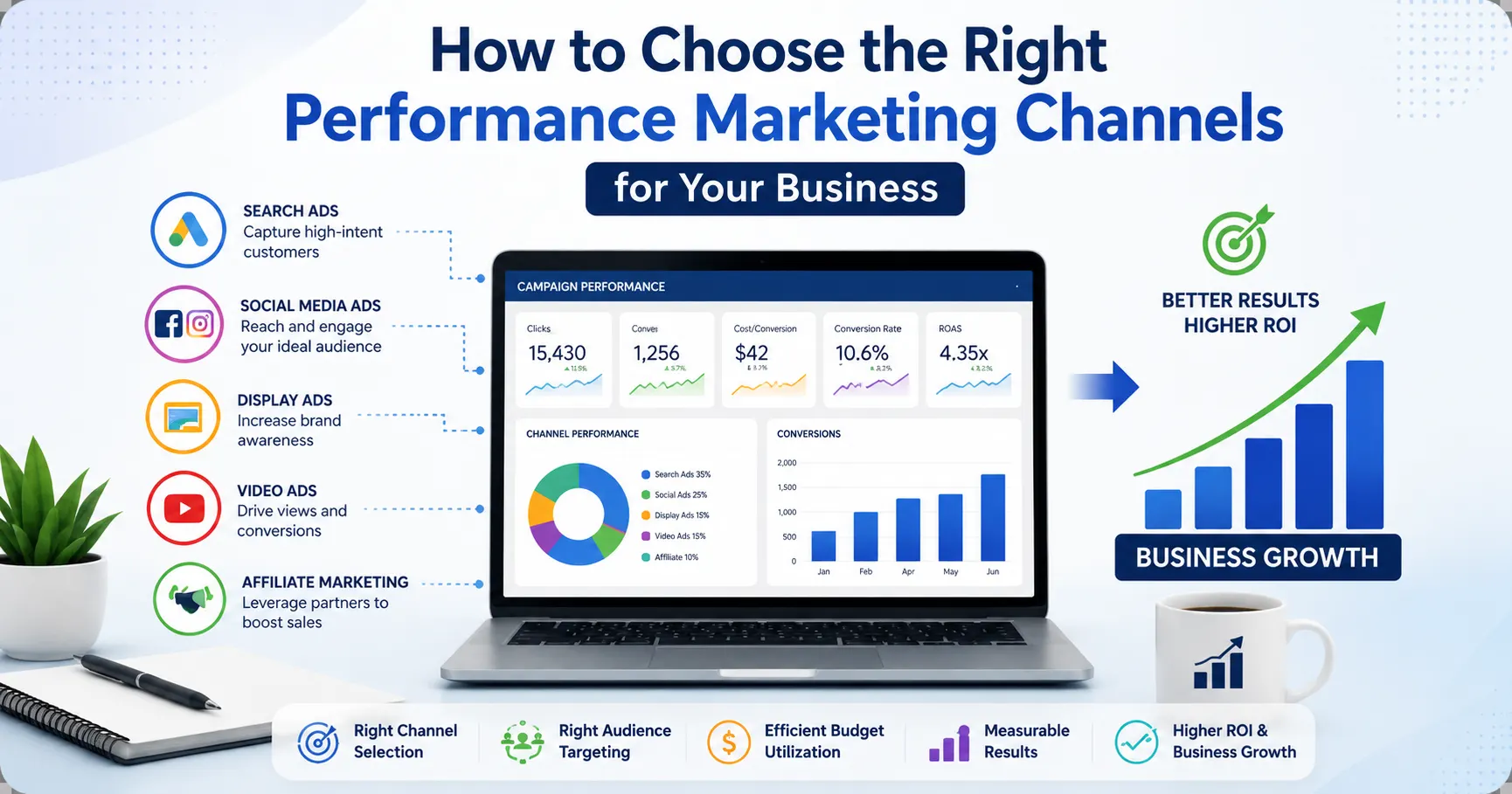
Choose the Right Channel, Not Just the Popular One
Match the channel with your business goals
Understand your target audience
Consider your marketing budget
Compare leads, conversions, and ROI
Test channels before scaling your marketing spend
What's inside
What Is Performance Marketing?
Why Choosing the Right Channel Matters
Major Performance Marketing Channels
How to Choose the Right Performance Marketing Channel
Performance Marketing Channels Compared
Choosing Channels for Different Types of Businesses
How to Test a New Marketing Channel
Common Mistakes to Avoid
Performance Marketing Channel Checklist
Frequently Asked Questions
Final Thoughts
AI summary
Performance marketing works best when businesses choose channels based on their goals, audience, budget, and customer journey. Search advertising can capture high-intent users, while social, display, video, and affiliate channels can support discovery, engagement, remarketing, and conversions. The right approach is to test relevant channels, measure conversions and customer acquisition costs, and scale the channels that consistently deliver valuable business results.
Performance Marketing: A Quick Overview
Performance marketing is a results-driven approach where campaigns are measured against actions such as leads, sales, bookings, or other defined business outcomes. The focus is on understanding which marketing activities contribute to measurable results.
Define the goal — Decide whether you need leads, sales, bookings, or traffic.
Know the audience — Understand who your customers are and where they spend time online.
Choose relevant channels — Match the channel with customer needs and intent.
Track business outcomes — Measure conversions, acquisition cost, revenue, and ROI.
Test before scaling — Start small, evaluate performance, and increase investment when results are consistent.
Why Choosing the Right Performance Marketing Channel Matters
Different performance marketing channels reach customers at different stages of the buying journey. A channel that works well for one business may not deliver the same results for another, so popularity alone should not decide where the budget goes.
The right channel depends on your business goal, target audience, customer intent, budget, and expected outcome. Choosing channels around these factors helps businesses focus their spending on opportunities that are more likely to generate valuable results.
What Is Performance Marketing?
Performance marketing is a results-focused approach to digital marketing where businesses measure their campaigns based on specific and trackable actions. These actions can include leads, sales, bookings, website conversions, app installs, or other business outcomes. Instead of focusing only on how many people see an advertisement, performance marketing helps businesses understand whether their marketing efforts are actually contributing to their business goals.
One of the biggest advantages of performance marketing is the ability to use real campaign data to evaluate what is working and what needs improvement. Businesses can analyze factors such as clicks, conversions, cost per lead, customer acquisition cost, revenue, and ROI to understand the effectiveness of their campaigns.
For example, if a business runs an online advertising campaign to generate leads, it can track how many people clicked the advertisement, how many submitted an enquiry form, and how much it cost to generate each lead. This information helps the business identify which campaigns and channels are delivering valuable results.
Performance marketing also allows businesses to test different channels, audiences, advertisements, and strategies before increasing their marketing investment. If a particular channel consistently generates quality leads or sales at an acceptable cost, the business can gradually increase its budget. If a campaign is not delivering useful results, it can be optimized, reduced, or paused.
Overall, performance marketing helps businesses make marketing decisions based on measurable results rather than assumptions. By continuously tracking, testing, optimizing, and scaling campaigns, businesses can use their marketing budget more effectively and work toward better and more sustainable ROI.
What Are the Main Performance Marketing Channels?
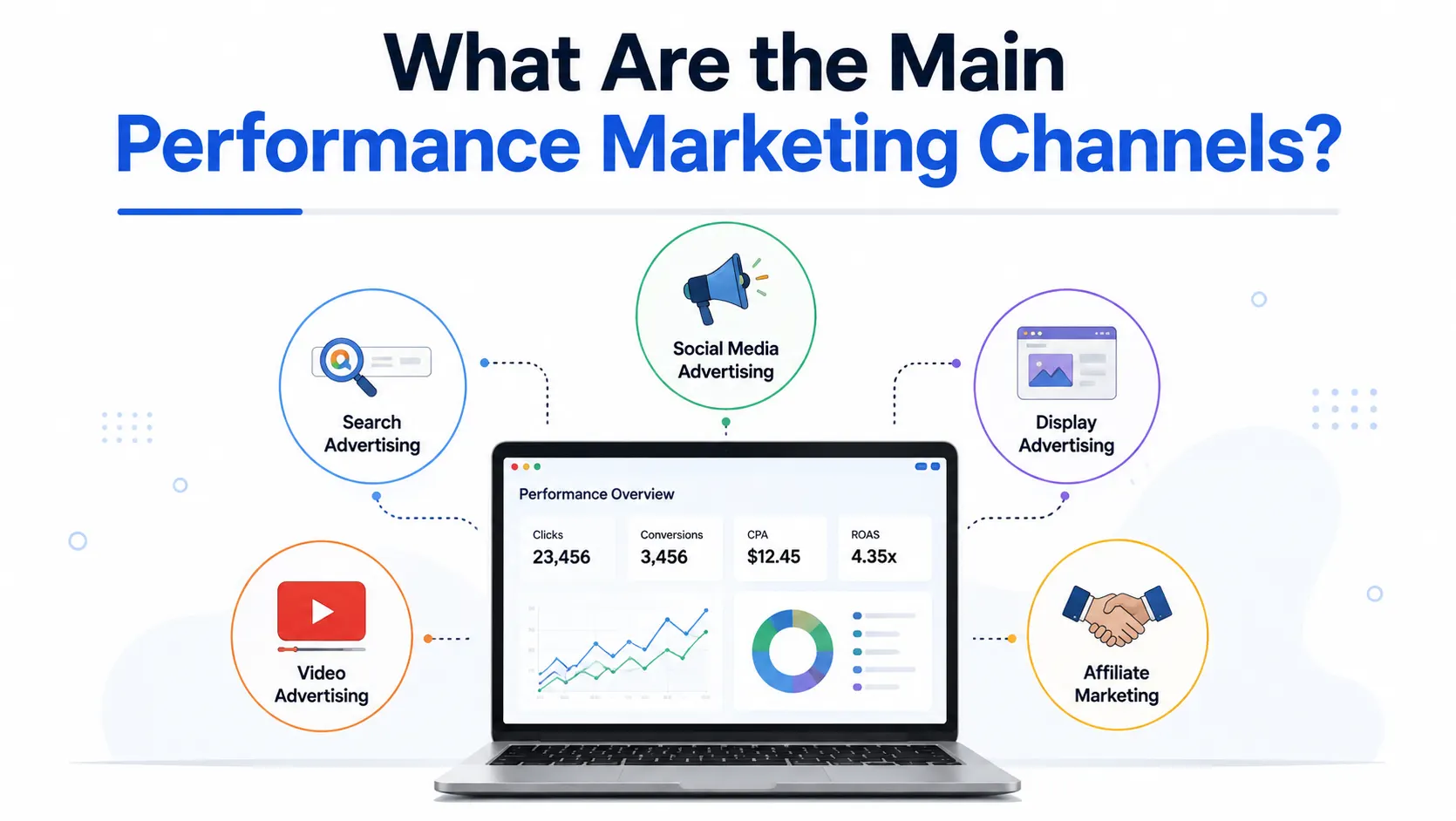
Businesses can use different performance marketing channels depending on their audience, goals, and customer journey. Each channel has a different role, so understanding its strengths helps businesses decide where to invest.
Search Engine Advertising
Search advertising reaches people who are actively searching for a product, service, or solution. Because these users often have clear intent, this channel can be effective for generating leads, sales, bookings, and other direct conversions.
Service-based businesses
Local businesses
Ecommerce
Lead generation
High-intent searches
Social Media Advertising
Social media advertising helps businesses reach audiences based on factors such as interests, demographics, and online behavior. It can support product discovery, lead generation, audience building, and remarketing.
Ecommerce brands
Consumer products
Lead generation
Product discovery
Remarketing
Display Advertising
Display advertising uses visual ads across websites and digital properties. Businesses can use Google Ads to reach relevant audiences through display campaigns, support brand visibility, and reconnect with previous website visitors through remarketing. Brand awareness
Remarketing
Audience reach
Product promotion
Video Advertising
Video advertising allows businesses to explain products, demonstrate services, educate customers, and introduce their brand through visual content. It can support both discovery and remarketing.
Product demonstrations
Customer education
Brand discovery
Remarketing
Affiliate Marketing
Affiliate marketing involves partners, publishers, or creators promoting a business's products or services in return for a commission on defined results such as sales or leads.
Ecommerce
Digital products
Subscription businesses
Partner-driven sales
Performance Marketing Channels Compared
Each performance marketing channel has a different purpose, audience, and strength. Comparing them can help businesses identify which options are most relevant to their goals.
Channel | Best For | Common Goal | Main Strength |
|---|---|---|---|
Search Advertising | High-intent users | Leads & Sales | Captures existing demand |
Social Media Advertising | Audience discovery | Leads & Sales | Audience targeting |
Display Advertising | Awareness & Remarketing | Reach & Conversions | Visual reach |
Video Advertising | Education & Discovery | Awareness & Engagement | Visual communication |
Affiliate Marketing | Partner-driven sales | Sales & Leads | Performance-based partnerships |
How to Choose the Right Performance Marketing Channel
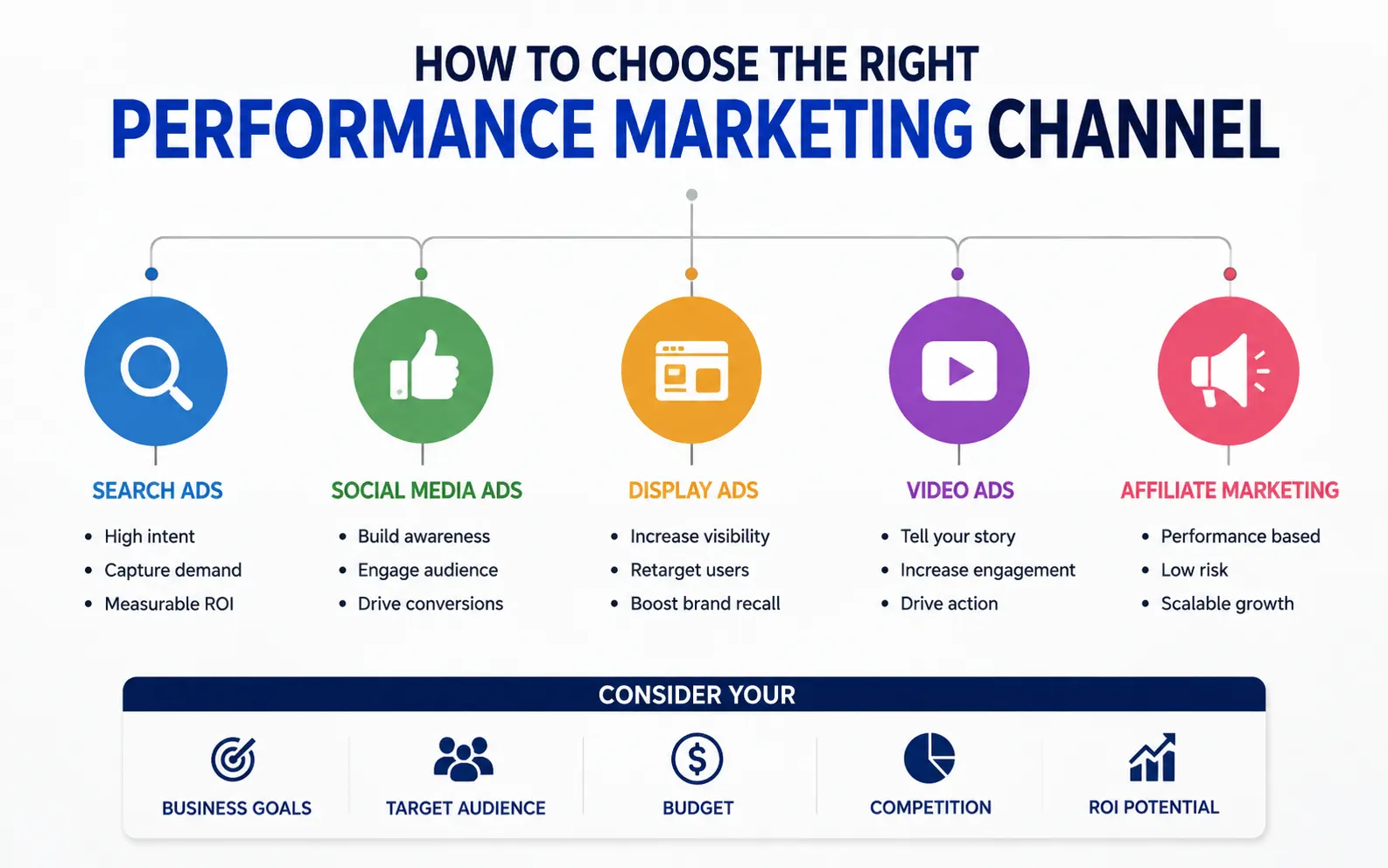
The right channel should be selected by looking at your business objective, audience, customer journey, and available budget. Instead of trying every platform, businesses can first identify where their potential customers are most likely to respond.
A practical channel-selection process can follow these steps:
Start With Your Business Goal
First, decide what you want the campaign to achieve. Your goal should guide the type of channel you test.
Lead generation — Reach potential customers who may enquire about your service.
Sales — Focus on channels that can support measurable purchases.
Bookings — Encourage customers to schedule appointments or services.
Website traffic — Attract relevant visitors to important pages.
Brand discovery — Introduce your business to new audiences.
Understand Your Target Audience
Knowing your audience helps you select channels where potential customers are more likely to engage. Consider their needs, interests, online behavior, location, and buying habits.
Consider Customer Intent
Think about what the customer is doing before they see your marketing. Someone actively searching for a solution may need a different approach from someone discovering a product for the first time.
Evaluate Your Marketing Budget
Start with a realistic test budget instead of dividing limited funds across too many channels. Compare the cost of acquiring customers or leads and increase investment only when results justify it.
Measure Business Results
Do not judge a channel only by clicks or impressions. Track meaningful outcomes such as conversions, customer acquisition cost, revenue, and ROI to understand its actual contribution.
Choosing the Right Channel for Different Types of Businesses
There is no single performance marketing channel that works best for every business. The right choice depends on the product or service, sales process, target audience, and desired customer action.
Ecommerce Businesses
Ecommerce businesses can use different channels to attract shoppers, promote products, and bring interested visitors back to complete purchases. Search and social advertising can support product discovery and sales, while display, video, and affiliate marketing can extend reach. Search Advertising — For users actively searching for products.
Search Advertising
Social Media Advertising
Display Advertising
Video Advertising
Affiliate Marketing
Service-Based Businesses
Service businesses usually focus on enquiries, calls, leads, or bookings rather than direct online purchases. Search advertising can capture people actively looking for a service, while social and display campaigns can support awareness and remarketing.
Search Advertising
Social Media Advertising
Display Advertising
Video Advertising
B2B Businesses
B2B purchases often involve longer decision-making processes and multiple people. Businesses can combine high-intent search campaigns with social, video, and remarketing to stay connected with potential customers during the buying journey.
Search Advertising
Social Media Advertising
Video Advertising
Display Advertising
Local Businesses
Local businesses need to reach customers within a specific geographic area. Search advertising can capture local demand, while social, display, and video campaigns can help maintain visibility among nearby audiences.
Search Advertising
Social Media Advertising
Display Advertising
Video Advertising
Practical Channel Selection Example
Suppose a local service business wants to generate more customer enquiries through its website. Instead of advertising on every available channel, the business can first identify where potential customers are most likely to search for the service.
Search advertising may be a strong starting point because it can reach people who are already looking for a relevant solution. Social media advertising can then be tested to reach new audiences and support remarketing. Display or video advertising may be useful later if the business wants to increase visibility or reconnect with previous visitors.
The business can compare these channels based on the results they generate during testing. If search produces qualified enquiries consistently, more budget can gradually be allocated to it. If another channel brings visitors but very few valuable actions, the campaign can be adjusted or paused.
This approach helps businesses choose channels based on actual campaign performance rather than assumptions or popularity.
Choosing Channels Based on the Customer Journey
Customers do not always make a purchase the first time they see a business. Some may discover a product, others may compare different options, and some may already be ready to take action. Performance marketing channels can be selected according to these different stages.
Awareness and Discovery
At the awareness stage, customers may not know much about the business or its offering. Social media and video advertising can help introduce products, services, or useful information to new audiences.
Consideration
During consideration, customers are researching their options and looking for more information. Search, video, and display advertising can help businesses provide relevant information and remain visible while potential customers compare solutions.
Conversion
At the conversion stage, customers are closer to taking action. Search advertising and targeted social campaigns can help capture existing demand and encourage actions such as purchases, enquiries, or bookings.
Remarketing
Some visitors may leave a website without converting. Display and social remarketing can help businesses reconnect with these users and remind them about relevant products or services.
Selecting channels according to the customer journey allows businesses to use different marketing approaches for different customer needs instead of relying on one channel for every stage.
How to Optimize a Channel After Testing
Once a performance marketing channel has been tested, the next step is to identify what is working and improve the campaign based on the available data. Optimization should focus on the parts of the campaign that have the strongest connection with your business goal.
Review Campaign Performance
Look at which audiences, advertisements, keywords, creatives, or campaign elements are producing better results. This can help you understand where the campaign is gaining traction and where changes may be needed.
Improve Underperforming Areas
Not every part of a campaign will perform equally. Businesses can adjust targeting, messaging, landing pages, or budget allocation when the data shows that an element is not contributing effectively.
Continue Testing
Optimization is an ongoing process. Testing different messages, audiences, creatives, and campaign settings can help businesses discover opportunities to improve results over time.
A channel that performs well should continue to be monitored rather than treated as permanently successful. Regular optimization helps businesses keep their marketing efforts aligned with changing customer behavior and campaign performance.
How to Decide If a Marketing Channel Is Working
Businesses can use Google Analytics to monitor website activity, conversions, and campaign performance, making it easier to understand which channels are contributing to business results.
When to Scale
If a channel consistently generates valuable conversions at an acceptable acquisition cost, the budget can be gradually increased. Instead of making sudden increases, businesses should scale while continuing to monitor performance.
When to Optimize
If a channel is generating results but performance is inconsistent, businesses can optimize the campaign before deciding to stop it. This may include adjusting targeting, creatives, messaging, landing pages, or budget allocation.
When to Pause or Change
If a channel continues to deliver poor results after sufficient testing, it may be practical to reduce the budget or pause the campaign. The budget can then be redirected toward better-performing opportunities.
Factors That Can Affect Channel Performance
Even when a channel looks suitable, its performance can change because of several campaign and business factors. Understanding these factors can help businesses interpret results more accurately and avoid making decisions based on one campaign metric.
Landing Page Experience
A strong advertisement may still produce poor results if the landing page is slow, confusing, or unrelated to the ad. The page should clearly explain the offer and make the desired action easy for visitors.
Ad Message and Creative
The message shown in an advertisement should match what the audience expects. Testing different headlines, visuals, offers, and calls to action can help identify which approach connects better with potential customers.
Audience Quality
A campaign may receive good engagement but still generate weak business results if it reaches the wrong audience. Reviewing lead quality and customer behavior can help determine whether targeting needs improvement.
Conversion Process
The path from clicking an advertisement to completing an action should be simple. Unnecessary steps, complicated forms, or unclear calls to action can reduce the number of users who convert.
How to Test a New Marketing Channel
Before investing heavily in a new performance marketing channel, businesses should run a controlled test. A focused test helps determine whether the channel can reach the right audience and produce useful results.
Define a Clear Testing Period
Set a specific period for the test and decide what results would make the campaign successful. Avoid making frequent changes, as this can make performance difficult to evaluate.
Set start and end dates
Define success metrics
Track conversions
Review performance data
Start With a Controlled Budget
Use a limited portion of the marketing budget for the initial test. This allows you to evaluate the channel without committing too much money before its performance is understood.
Set a spending limit
Monitor cost per result
Compare with existing channels
Increase the budget gradually
Measure Results Against Your Goals
After the test, compare the results with the objective you defined at the beginning. Look at whether the channel generated the desired action and whether the results justify continued investment.
Conversion volume
Conversion quality
Customer acquisition cost
Revenue
ROI
Common Mistakes to Avoid When Choosing Marketing Channels
Choosing a marketing channel without considering your actual business needs can result in wasted budget and weak campaign performance. A focused strategy helps businesses avoid unnecessary spending and make better channel decisions.
Choosing a Channel Because It Is Popular
A popular channel is not automatically the right channel for every business. Before investing, check whether it matches your audience, campaign objective, and customer journey.
Trying Too Many Channels at Once
Running several channels with a limited budget can make it difficult to collect enough data from each one. Start with the most relevant options, evaluate their performance, and expand gradually.
Ignoring the Customer Journey
Customers may interact with a business multiple times before taking action. Using the same message and approach at every stage can reduce campaign effectiveness.
Businesses should consider whether a customer is discovering, researching, comparing, or ready to purchase when selecting a channel and creating campaign messages.
Making Decisions Without Enough Data
Short-term results can sometimes be misleading. Businesses should give campaigns enough time to collect meaningful data before deciding whether to continue, improve, or pause a channel.
Performance Marketing Channel Checklist
Before choosing or scaling a performance marketing channel, businesses can use this quick checklist:
Business goal: What action do you want customers to take?
Target audience: Are your potential customers active on this channel?
Customer intent: Does the channel match their stage in the buying journey?
Budget: Can you invest enough to test the channel properly?
Tracking: Can you accurately measure conversions and results?
Performance: Is the channel producing valuable outcomes?
Scalability: Can you increase investment if results remain consistent?
A channel does not need to be perfect from the beginning. The goal is to identify channels that show measurable potential and improve them through testing and optimization.
Frequently Asked Questions
What is the best performance marketing channel for a business?
There is no single best channel for every business. The right choice depends on the business goal, target audience, customer journey, budget, and expected results.
How do I choose the right marketing channel?
Start by defining your goal, understanding your audience, evaluating customer intent, and considering your budget. Then test the most relevant channels and compare their results.
Should a business use multiple performance marketing channels?
Yes, but it is better to start with a small number of relevant channels. Once you have enough performance data, you can expand into additional channels based on the results.
How long should I test a new marketing channel?
The testing period depends on factors such as campaign objective, budget, audience size, and conversion volume. The important thing is to collect enough meaningful data before making a final decision.
Which metrics should businesses track?
Businesses should focus on metrics connected to their goals, such as conversions, customer acquisition cost, conversion rate, revenue, and ROI.
Final Thoughts
Choosing the right performance marketing channel is not about being present on every platform. It is about finding the channels that match your business goals, audience, customer journey, and budget.
Start with the most relevant options, test them with a controlled budget, and evaluate performance using meaningful business results. As you collect reliable data, you can improve your campaigns and scale the channels that consistently deliver value.
Businesses looking to improve their digital marketing strategy can also explore practical insights and services from Arena Infosolution while evaluating their performance marketing approach.
Key takeaways
Choose based on goals: Select performance marketing channels according to your business objectives.
Understand your audience: Identify where your potential customers spend time and how they make decisions.
Match the customer journey: Use channels according to whether customers are discovering, considering, converting, or returning.
Test before scaling: Start with a controlled budget and evaluate actual campaign performance.
Measure business results: Focus on conversions, customer acquisition cost, revenue, and ROI instead of clicks alone.
Conclusion
Choosing the right performance marketing channel is an important part of building an effective digital marketing strategy. The best channel is not necessarily the most popular one; it is the one that fits your business goals, audience, customer journey, and budget.
Businesses should start with relevant channels, test them with a controlled investment, and evaluate performance using meaningful results. By continuously analyzing data and optimizing campaigns, businesses can reduce wasted spending and focus more of their budget on channels that contribute to sustainable growth.
The key is to test, measure, optimize, and scale based on real results rather than assumptions.
Ready to grow with AI-powered marketing?
Book a free 30-minute strategy call with the Arena Infosolution team.
About the author
Arena Infosolution is a digital marketing company focused on helping businesses understand and improve their online marketing strategies. The team shares practical insights on SEO, performance marketing, content marketing, and digital growth to help businesses make informed marketing decisions.
Get a free growth consultation
Tell us what you're working on and a senior strategist will map your next move.