Social Media Marketing for Businesses: Complete Guide to Growing Your Business
Learn how social media marketing can help businesses build brand awareness, reach the right audience, generate leads, support sales, and achieve measurable business growth.
Introduction
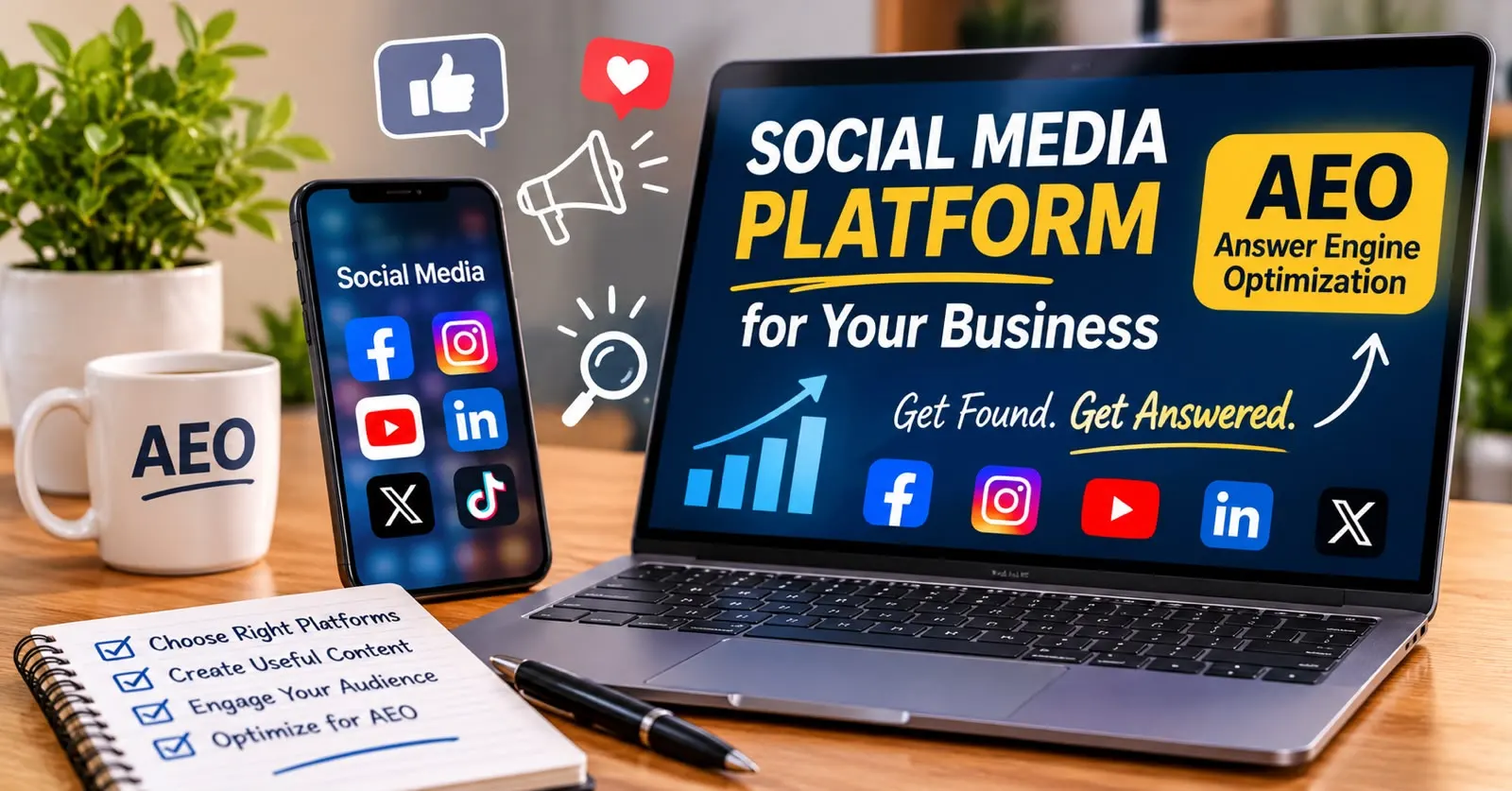
Social media has become an important channel for businesses to build brand awareness, connect with customers and promote their products or services. Platforms such as Instagram, Facebook, LinkedIn and YouTube help businesses reach potential customers, share useful content and support their marketing goals.
However, simply creating profiles and posting regularly does not guarantee results. Effective social media marketing for businesses requires understanding the target audience, choosing suitable platforms and creating relevant content. A clear approach to business brand awareness on social platforms can also help businesses build recognition and connect with the right people.
This guide explains how businesses can plan and manage their social media activities, from audience research and content planning to customer engagement, lead generation and performance measurement.
TABLE OF CONTENTS
What Is Social Media Marketing for Businesses?
Why Is Social Media Marketing Important for Businesses?
What Can Businesses Achieve Through Social Media Marketing?
How to Set Social Media Marketing Goals for Your Business
How to Identify and Understand Your Target Audience
How to Choose the Right Social Media Platforms for Your Business
How to Build a Social Media Marketing Strategy
How to Create a Social Media Content Strategy
How to Build a Social Media Content Calendar
How to Grow and Engage Your Social Media Audience
How Businesses Can Generate Leads and Sales Through Social Media
Organic Social Media vs Paid Social Media
How to Measure Social Media Marketing Success
Which Social Media Metrics Should Businesses Track?
Common Social Media Marketing Mistakes Businesses Should Avoid
A Practical Social Media Marketing Framework for Businesses
Frequently Asked Questions
Conclusion
Key Takeaways
Social media marketing is more than posting content regularly.
Businesses should connect social media activity with specific business goals.
The right platform depends on the target audience, industry and type of content.
Useful and relevant content generally performs better than constant promotional posts.
Social media can support awareness, engagement, lead generation and sales.
Organic and paid social media can work together rather than being treated as separate strategies.
Businesses should measure meaningful outcomes instead of focusing only on followers and likes.
A small, measurable social media strategy is usually better than trying to be active everywhere.
What Is Social Media Marketing for Businesses?
Social media marketing for businesses is the use of social platforms to promote products or services, build brand awareness, connect with customers and achieve business objectives.
It involves creating relevant content, interacting with audiences, sharing business information and using organic or paid campaigns to reach potential customers. Effective customer engagement on social networks helps businesses understand audience interests, respond to customer needs and build stronger relationships.
For example, a local business may use Instagram to showcase its products, LinkedIn to connect with professional audiences and YouTube to publish tutorials or product demonstrations.
What Does Social Media Marketing Include?
Content Creation: Developing posts, videos, carousels and stories.
Audience Engagement: Responding to comments, messages and customer feedback.
Brand Building: Maintaining a consistent and recognizable online presence.
Lead Generation: Encouraging potential customers to enquire or visit a website.
Paid Advertising: Running targeted campaigns to reach relevant audiences.
Performance Tracking: Monitoring reach, engagement, clicks, leads and conversions.
Why Is Social Media Marketing Important for Businesses?
Social media marketing for businesses plays an important role in improving online visibility, connecting with potential customers and building stronger brand relationships. It creates opportunities for business brand awareness on social platforms through useful content, customer interactions and targeted campaigns.
A consistent social media presence can also help businesses understand customer preferences, build trust, drive website traffic and generate enquiries. When these activities are connected to clear business objectives, social media can support long-term growth.
Key Benefits of Social Media Marketing
Build Brand Awareness: Help more people discover and recognize your business.
Reach Relevant Audiences: Connect with potential customers based on their interests and needs.
Build Trust: Share useful content, customer feedback and business updates.
Generate Leads: Encourage interested users to enquire about your products or services.
Support Sales: Help customers make informed purchasing decisions.
Improve Customer Relationships: Respond to questions, messages and feedback.
Understand Customer Needs: Learn from audience interactions and preferences.
What Can Businesses Achieve Through Social Media Marketing?
Social media marketing for businesses can support different stages of the customer journey, from helping people discover a brand to encouraging enquiries and purchases. With the right strategy, businesses can use social platforms to attract relevant audiences and improve customer acquisition through social channels.
Key Business Outcomes
Brand Discovery: Help potential customers discover your business, products or services.
Audience Interest: Share informative content, product demonstrations and updates that encourage people to learn more about your offerings.
Website Traffic: Guide interested users to relevant website pages, product listings or landing pages.
Lead Generation: Encourage potential customers to contact your business through enquiry forms, messages or calls.
Customer Acquisition: Turn interested social media users into customers through relevant content, clear offers and effective follow-ups.
Customer Retention: Maintain relationships with existing customers through regular updates, useful information and community interactions.
The results depend on factors such as audience relevance, content quality, platform selection and consistency. Businesses should connect their social media activities with measurable business objectives rather than focusing only on follower counts.
Statistics
5.81 billion
Global social media user identities6.66
Social platforms visited monthly62.8%
Instagram users researching brands and products
How to Set Social Media Marketing Goals for Your Business
Before creating content or running campaigns, businesses should define what they want to achieve through social media marketing. Clear goals help businesses choose the right activities, allocate resources and evaluate whether their efforts are producing meaningful results.
For effective social media marketing for businesses, goals should be specific, measurable and connected to overall business objectives.
Steps to Set Effective Social Media Goals
Identify Your Business Objective: Decide whether you want to increase brand awareness, generate leads, drive website traffic or improve customer retention.
Choose Relevant Metrics: Connect each goal with measurable indicators such as reach, engagement rate, website clicks, enquiries or conversions.
Set Realistic Targets: Establish achievable targets based on your current performance, audience size and available resources.
Define a Timeframe: Decide when you want to review the results, such as monthly or quarterly.
Review and Improve: Use analytics tools to evaluate performance and make adjustments based on the results.
Example of a Social Media Marketing Goal
Instead of setting a vague goal like "get more engagement," a business could aim to increase Instagram engagement by 15% over the next three months by publishing relevant content and interacting consistently with its audience.
Regularly measuring social campaign performance helps businesses understand what is working, identify gaps and make better marketing decisions.
Common Social Media Marketing Goals
Business Goal | Social Media Objective | Possible KPI |
|---|---|---|
Awareness | Reach new and relevant audiences | Reach, impressions |
Engagement | Encourage people to interact with content | Comments, shares, saves |
Traffic | Bring users to the website or landing page | Link clicks, website visits |
Leads | Generate enquiries and potential customers | Leads, form submissions |
Sales | Support conversions and purchases | Revenue, purchases |
Customer Service | Answer questions and resolve customer issues | Response time, resolved queries |
Community | Build relationships and encourage conversations | Active conversations, community participation |
Checklist
Goal-Setting Checklist
Before starting, ask:
What business problem are we trying to solve?
Who are we trying to reach?
What action should the audience take?
Which platform can support that action?
What metric will show progress?
How often will we review results?
How to Identify and Understand Your Target Audience

Understanding your target audience helps businesses create relevant content and reach people who are more likely to become customers. Effective social media audience research for brands focuses on identifying customer needs, interests, preferences and online behaviour.
Key Steps to Understand Your Audience
Study Existing Customers: Analyse their age group, location, interests and buying behaviour.
Identify Customer Problems: Understand the challenges your products or services can solve.
Analyse Competitors: Observe who engages with competitors and what content attracts attention.
Use Platform Insights: Review audience demographics, engagement and content performance.
Create Audience Personas: Summarise the characteristics of your ideal customers.
Better audience understanding helps businesses create targeted content and improve marketing decisions.
How to Choose the Right Social Media Platforms for Your Business
Choosing the right platforms helps businesses reach their target audience without wasting time and resources. Social media marketing for businesses works better when platform selection is based on customer behaviour, content type and business goals.
Platform | Useful For | Content Opportunities |
|---|---|---|
Visual brands, consumer businesses | Reels, carousels, stories | |
Communities, local businesses , broad audiences | Posts, groups, videos | |
B2B, professionals, thought leadership | Articles, posts, case studies | |
YouTube | Education, demonstrations, long-form content | Videos, tutorials, reviews |
TikTok | Short-form entertainment and discovery | Short videos, educational clips |
How to Build a Social Media Marketing Strategy
A clear strategy helps businesses plan their social media activities and stay focused on their marketing goals. Effective social media marketing for businesses requires the right combination of audience research, platform selection and content planning for business profiles.
Step 1: Define the Business Goal
Choose one or two primary goals.
Step 2: Define the Audience
Understand the people most likely to become customers.
Step 3: Select Platforms
Focus on platforms that match the audience and business model.
Step 4: Define Content Pillars
Choose a few repeatable topics around which content can be created.
For example:
Educational content
Industry insights
Customer problems
Product/service information
Case studies
Behind-the-scenes content
Step 5: Decide Posting Frequency
Choose a realistic schedule rather than an aggressive schedule that cannot be maintained.
Step 6: Create and Publish
Develop content according to the content plan.
Step 7: Engage
Reply to comments, answer messages and participate in relevant conversations.
Step 8: Measure
Review performance and identify what is working.
Step 9: Improve
Repeat successful approaches and change weak ones
How to Create a Social Media Content Strategy
A content strategy helps businesses decide what to post, who to target and how to communicate with their audience. A strong social media marketing for businesses approach focuses on creating useful, consistent and audience-focused content.
Key Elements of a Content Strategy
Educational Content: Share tips, guides and industry-related information.
Promotional Content: Highlight products, services and special offers.
Engaging Content: Use questions, polls and discussions to encourage interaction.
Trust-Building Content: Share customer reviews, testimonials and business updates.
Community Content: Create posts that encourage conversations and support online community building for businesses.
Maintain a balanced content mix instead of publishing only promotional posts.
How to Build a Social Media Content Calendar
A content calendar helps businesses organise posts, maintain consistency and plan content in advance. It makes social media marketing for businesses easier to manage and keeps content planning aligned with marketing goals.
What to Include in a Content Calendar
Date | Platform | Content Type | Topic | Goal | CTA |
|---|---|---|---|---|---|
Monday | Carousel | SEO mistakes | Education | Save this | |
Tuesday | Post | Marketing insight | Awareness | Share your view | |
Wednesday | Reel | Quick marketing tip | Engagement | Follow for more | |
Friday | Case Study | Client problem | Trust | Learn more |
Businesses can use Google Sheets, Trello or other planning tools to manage their content calendar efficiently.
How to Grow and Engage Your Social Media Audience
Growing a social media audience is not just about gaining more followers. Businesses should focus on attracting the right audience and building meaningful interactions with them.
To grow and engage your audience:
Create useful content: Share educational, informative, or problem-solving content.
Post consistently: Maintain a regular posting schedule.
Use the right formats: Try reels, videos, carousels, stories, polls, and other formats that suit your audience.
Encourage interaction: Ask questions and invite people to comment, share, or save your content.
Respond to your audience: Reply to comments and messages to build stronger relationships.
Use relevant hashtags and keywords: Help interested users discover your content.
Collaborate with others: Partnerships and relevant creators can help you reach new audiences.
Track performance: Identify which content gets the most engagement and create more of what works.
Key takeaway: Focus on relevant content, consistent communication, and genuine engagement rather than chasing follower numbers alone.
How Businesses Can Generate Leads and Sales Through Social Media
Social media becomes more valuable when attention can be converted into meaningful business actions.
A basic lead-generation journey may look like:
Social Post → Profile → Landing Page → Form → Follow-Up → Sale
But businesses can also generate leads directly through:
Direct messages
Contact buttons
Lead forms
Website links
Calls
Product pages
Appointment booking
WhatsApp conversations
Practical Example
Imagine a local service business publishes:
“7 signs that your business website needs SEO.”
The post educates the audience.
At the end, it can include a soft CTA:
“Want to check whether your website has these issues? Visit our website to learn more.”
This is more natural than turning every post into:
“BUY NOW.”
Organic Social Media vs Paid Social Media
Organic social media means using unpaid activities to reach and engage an audience.
Paid social media uses advertising budgets to reach selected audiences.
Factor | Organic Social Media | Paid Social Media |
|---|---|---|
Cost | No direct ad spend | Requires advertising budget |
Reach | Depends on content and platform distribution | Can be targeted |
Speed | Usually slower | Can generate reach quickly |
Trust | Can support long-term trust | Useful for targeted promotion |
Best For | Community and brand building | Campaigns and lead generation |
Control | Lower reach control | Greater audience targeting |
Long-Term Value | Strong when consistently maintained | Depends on continued spending |
Should a Business Choose One?
Not necessarily.
A strong strategy can combine both.
For example:
Organic: Educational content builds trust.
Paid: A high-performing offer or lead-generation campaign reaches a targeted audience.
Organic content can also help a business understand which messages resonate before investing heavily in advertising.
How to Measure Social Media Marketing Success
Social media success should be connected to business objectives.
If the goal is awareness, reach and impressions may matter.
If the goal is leads, form submissions and qualified enquiries matter more.
If the goal is sales, revenue and conversion data become more important.
A Simple Measurement Process
Goal → Metric → Tracking → Review → Improvement
For example:
Goal: Generate more enquiries.
Metric: Qualified leads from social media.
Tracking: UTM links, forms, CRM records or platform reporting.
Review: Compare monthly performance.
Improvement: Invest more effort in the content and campaigns producing better leads.
Which Social Media Metrics Should Businesses Track?
Businesses should avoid tracking every available metric.
Focus on metrics that answer useful business questions.
Metrics Table
Metric | What It Measures |
|---|---|
Reach | Unique people who see content |
Impressions | Total content displays |
Engagement Rate | Audience interaction |
Saves | Content usefulness |
Shares | Content value and relevance |
Link Clicks | Interest in visiting links |
Leads | Enquiries generated |
Conversion Rate | Visitors completing desired actions |
Cost Per Lead | Cost of generating one lead |
Revenue | Sales generated |
Response Time | Speed of customer replies |
Common Social Media Marketing Mistakes Businesses Should Avoid
Businesses can make social media marketing less effective by focusing on the wrong activities or not having a clear strategy. Avoiding these common mistakes can help improve consistency and results.
Posting without a strategy: Create content based on clear business goals.
Focusing only on followers: Engagement, leads, and conversions are often more valuable than follower count.
Posting too much promotional content: Balance promotional posts with useful, educational, and engaging content.
Being active on every platform: Focus on platforms where your target audience is actually active.
Ignoring comments and messages: Responding to customers helps build trust and relationships.
Copying competitors: Create original content that reflects your own brand and expertise.
Not tracking performance: Regularly review metrics to understand what is working.
Chasing every trend: Use trends only when they are relevant to your audience and brand.
Changing strategy too quickly: Give your content enough time and data before making major changes.
Key takeaway: A successful social media strategy requires consistency, relevant content, audience understanding, and regular performance measurement.
Checklist
Before publishing a post, ask:
Is this useful to our audience?
Does it support a business goal?
Is the message clear?
Is the format suitable for the platform?
Is there a useful CTA?
Does the content match the brand?
Can we measure its result?
A Practical Social Media Marketing Framework for Businesses
A practical social media marketing framework helps businesses plan, execute, measure, and improve their social media efforts. Instead of posting randomly, follow a simple process:
Step-by-Step Framework
Step 1: Understand the Business
Identify products, services, customers and competitive advantages.
Step 2: Define the Goal
Choose what social media should contribute to.
Step 3: Understand the Audience
Research customer needs, questions, interests and behaviour.
Step 4: Select the Platforms
Choose platforms based on audience and business requirements.
Step 5: Create Content Pillars
Select 3–5 major topics that the business can consistently discuss.
Step 6: Build a Content Calendar
Plan content formats, topics, platforms and CTAs.
Step 7: Publish Consistently
Maintain a realistic schedule.
Step 8: Engage
Respond to comments, messages and relevant conversations.
Step 9: Generate and Capture Leads
Connect social activity to websites, forms, calls, messages or other conversion points.
Step 10: Measure
Review meaningful metrics.
Step 11: Improve
Identify what performs well and improve the next cycle.
The complete process can be remembered as:
Goal → Audience → Platform → Content → Engagement → Conversion → Measurement → Improvement
Frequently Asked Questions About Social Media Marketing for Businesses
1. Why is social media marketing important for businesses?
Social media marketing helps businesses build brand awareness, reach their target audience, engage customers, generate leads, and support sales.
2. Which social media platform is best for a business?
The best platform depends on your target audience, business type, content format, and marketing goals. For example, LinkedIn can be effective for B2B businesses, while Instagram can work well for visual and consumer-focused brands.
3. How often should a business post on social media?
Businesses should focus on consistent, useful, and relevant content rather than posting as frequently as possible. Choose a posting schedule that your team can maintain consistently.
4. Can social media marketing generate leads and sales?
Yes. Businesses can generate leads through useful content, testimonials, product or service demonstrations, social media ads, and clear calls to action that encourage users to enquire or purchase.
5. How can businesses measure social media marketing success?
Businesses can track reach, engagement, website clicks, leads, conversions, and sales. The most important metrics should be selected according to the specific business goal.
Conclusion
Social media marketing for businesses is not simply about posting every day or collecting followers. A successful strategy starts with a clear business objective and connects that objective with the right audience, platform, content and measurement system.
Businesses should focus on creating useful content, building trust, engaging with their audience and making it easy for interested people to take the next step. Organic content and paid campaigns can also work together to support both long-term visibility and targeted growth.
The best approach is to start small, measure what happens and improve continuously. Instead of trying to be everywhere, businesses should focus on the right audience, the right platform and the right business goal.
About the Author
Arena Infosolution is a digital marketing and AI-powered growth partner helping businesses improve their online visibility, reach the right audience and achieve measurable growth through practical digital strategies.
Ready to grow with AI-powered marketing?
Book a free 30-minute strategy call with the Arena Infosolution team.
Get a free growth consultation
Tell us what you're working on and a senior strategist will map your next move.