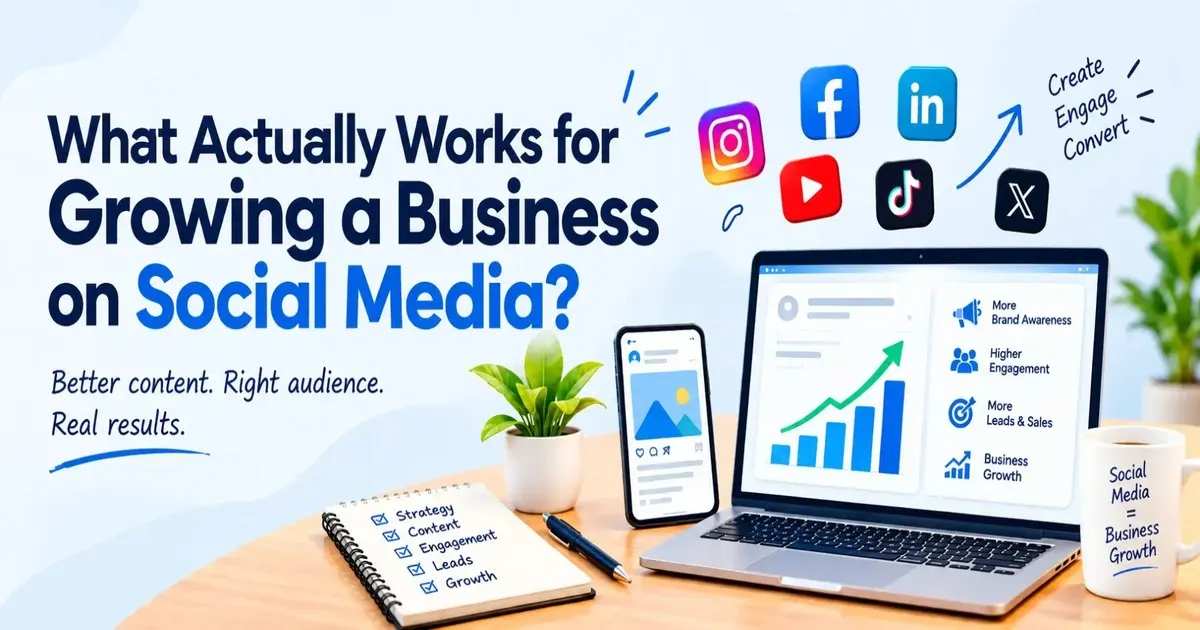
What Actually Works for Growing a Business on Social Media?
Learn what actually works for growing a business on social media, from creating useful content and choosing the right platforms to building trust, engaging customers, and measuring real business results
Introduction
Social media can help a business reach new people, build trust, communicate with customers, and generate leads. But simply posting every day does not automatically lead to business growth. Many businesses spend time creating posts without having a clear understanding of what their audience wants or how social media supports their larger business goals. In this guide, you will learn how to grow a business on social media, what type of content works, how to choose platforms, how to measure results, and which common mistakes you should avoid.
A better approach is to focus on what actually works: useful content, the right platforms, consistent communication, genuine engagement, and measurable business results. A strong social media marketing strategy should not be about getting likes alone. It should help people discover your business, understand what you offer, trust your brand, and eventually take action.
Table of Contents
AI Summary
What Is Social Media Marketing for Business
What Actually Works on Social Media
Build Trust Through Consistency
Turning Social Media Into Leads and Sales
Create a Social Media Strategy for Business
Organic Social Media Marketing vs Paid Social Media
Common Social Media Marketing Mistakes to Avoid
How to Measure Social Media Marketing Results
Frequently Asked Questions
Conclusion
About the Author
AI Summary
Growing a business on social media is not just about posting frequently or gaining followers. Businesses need to understand their target audience, choose the right platforms, create useful content, stay consistent, and build genuine engagement. A clear social media strategy should support business goals such as brand awareness, website traffic, leads, and sales. By measuring results and improving the strategy based on what works, businesses can use social media more effectively for long-term growth.
What Is Social Media Marketing for Business
Social media marketing for business is the process of using platforms like Instagram, Facebook, LinkedIn, YouTube, and TikTok to reach potential customers and build relationships with them. It is more than simply posting photos, videos, or promotional messages. A business uses social media to share useful information, answer customer questions, show its products or services, and build trust with its audience.
For example, a business can share helpful tips, explain how its service works, show customer experiences, introduce its team, or announce new products. When people find this content useful, they may visit the website, send a message, request more information, or become customers.
The main goal is to connect social media activity with real business results. These results can include brand awareness, website traffic, customer inquiries, leads, engagement, and sales.
In simple words, social media marketing helps a business reach the right people, provide value, build trust, and guide interested customers toward taking action. The focus should not be only on gaining followers, but on reaching people who are genuinely interested in the business.
There is no single type of post that works for every business. What works depends on the audience, industry, platform, offer, and business goals.
However, several principles consistently make social media marketing more useful.
What Actually Works on Social Media
What actually works on social media depends on your audience, business goals, industry, platform, and the type of content you share. There is no single strategy that works for every business. Instead of focusing only on posting frequently or getting more followers, businesses should focus on creating content that is useful to their audience and supports real business goals.
A strong social media approach starts with understanding what your customers need, what questions they ask, what problems they want to solve, and which platforms they use. This helps you create content based on your audience rather than simply copying competitors.
Create Useful Content
Useful content gives people a reason to follow and engage with your business. You can share educational tips, answers to common questions, problem-solving information, product or service details, customer stories, and behind-the-scenes content. The goal is to provide something valuable instead of making every post a sales message.
Choose the Right Platforms
Being active on every social media platform is not necessary. Focus on the platforms where your potential customers are actually active and where your content fits naturally. Choosing the right platforms allows you to spend your time and resources more effectively.
Stay Consistent and Engage
Consistency helps you maintain a regular connection with your audience. This means following a realistic posting schedule and responding to comments and messages. Listen to feedback and encourage genuine conversations rather than focusing only on likes and follower numbers.
Overall, what works on social media is a combination of understanding your audience, creating useful content, choosing suitable platforms, staying consistent, and measuring meaningful business results such as website visits, inquiries, leads, and sales.
Build Trust Through Consistency
Consistency is an important part of building trust with your audience on social media. It does not mean posting many times every day. Instead, it means regularly sharing useful content, maintaining a clear brand message, and communicating with your audience in a reliable way.
When a business regularly shares helpful information, answers customer questions, and provides relevant content, people become more familiar with the brand. This can help create a stronger connection between the business and its audience.
Consistency also means staying active in conversations. Businesses should respond to comments and messages, listen to customer feedback, and encourage meaningful discussions. This shows that the business is not only interested in publishing content but also in communicating with its audience.
The goal is to create a social media presence that people can recognize and rely on. By consistently providing useful content and engaging with customers, businesses can strengthen relationships and build trust over time.
Turning Social Media Into Leads and Sales
Turning social media into leads and sales means guiding interested people from your social media content toward taking a business action, such as visiting your website, sending a message, requesting a quote, booking a consultation, signing up, or making a purchase.
For example, a useful social media post can attract someone's attention, explain how a product or service can solve their problem, and then encourage them to visit the website or contact the business.
Attention → Interest → Action
Social media post ke baad user ko next step clear hona chahiye.
Possible CTAs:
Visit your website
Read a guide
Request a quote
Book a consultation
Send a message
Sign up
View a product
Make a purchase
Focus on the Customer Journey not everyone who sees your social media post is ready to buy immediately. Some people may only be discovering your business, while others may already be comparing options. Your content should support people at different stages of their journey. This is why businesses should not make every post a direct sales message. Useful and educational content can first build interest and trust, while clear CTAs can help interested people move toward the next step.Immediately , turning social media into leads and sales means connecting useful content with a clear business action. The goal is not simply to get more likes or followers, but to guide interested people toward meaningful actions that support the business.
Create a Social Media Strategy for Business
Creating a social media strategy means having a clear plan for how your business will use social media to reach the right people and achieve specific business goals. Instead of posting whatever comes to mind, a strategy helps you decide what to post, who to target, where to post, and what result you want from each activity.
The first step is to set clear and realistic goals. Your goal could be to increase brand awareness, bring more visitors to your website, generate leads, increase sales, or encourage more engagement. Having a clear goal makes it easier to decide what type of content to create and which results to measure.
Step 1: Set Clear Goals
Set a clear goal, such as more leads, traffic, awareness, or sales.
Website traffic
Leads
Sales
Brand awareness
Engagement
Local awareness
Step 2: Define Your Audience
Understand their needs, problems, questions, interests, buying behavior, and preferred platforms.
Step 3: Select Your Platforms
Focus on one or two important platforms at first instead of trying to manage everything at once.
Step 4: Create Content Categories
Simple pillars:
Education
Trust
Engagement
Promotion
Organic Social Media Marketing vs Paid Social Media
Organic and paid social media marketing are two different ways businesses can use social media to reach their audience and support business goals.
Organic social media marketing
Involves creating content and building engagement without relying on paid advertising.Promoting a business through regular posts, videos, stories, community engagement, and customer conversations without paying for advertising. It mainly focuses on building relationships, trust, and long-term engagement with the audience.
Examples include:
Regular posts
Videos
Stories
Community engagement
Educational content
Customer conversations
Organic social media marketing can help build long-term relationships and trust.
Paid Social Media Marketing
Paid social media marketing means using paid advertisements to reach a specific audience. Businesses can use paid social media to promote products or services, generate leads, drive website traffic, or support marketing campaigns.
It can be useful when a business wants to:
Promote a product
Generate leads
Drive website traffic
Reach a specific audience
Support a campaign
Paid advertising should not replace good content.
If your landing page, offer, or messaging is unclear, increasing the advertising budget may simply send more people to an ineffective experience.
A stronger approach is to test your message and content, understand what resonates with your audience, and then use paid promotion where it makes business sense.
Feature | Organic Social Media Marketing | Paid Social Media |
|---|---|---|
Cost | No direct advertising cost | Requires an advertising budget |
Reach | Builds reach through regular content and engagement | Reaches a targeted audience through ads |
Audience | Existing followers and organic users | Selected target audience |
Main Purpose | Builds trust and long-term relationships | Supports specific marketing goals and campaigns |
Content | Posts, videos, stories, and updates | Sponsored posts and advertisements |
Engagement | Encourages natural conversations and community engagement | Can drive targeted interactions and actions |
Business Goals | Trust, engagement, and brand communication | Traffic, leads, promotions, and campaigns |
Time | Usually focuses on long-term growth | Can support specific campaigns with a set budget |
Common Social Media Marketing Mistakes to Avoid
Social media marketing mistakes can make your efforts less effective and may prevent you from reaching your business goals. The main problem is often not a lack of posting, but posting without a clear purpose or without understanding what the audience needs. Businesses should focus on useful content, genuine engagement, and meaningful business results instead of only trying to increase followers or likes.
Posting Without a Goal
Every social media post does not need to directly sell a product or service. However, your overall content should have a clear purpose. For example, some posts may educate your audience, some may build trust, and others may encourage people to visit your website or contact your business.
Focusing Only on Followers
Followers can be useful, but they are not the only measure of social media success. A smaller audience that regularly visits your website, sends inquiries, or becomes customers can be more meaningful for a business than a large audience that never takes action.
Posting Only Promotional Content
If every post tells people to “Buy Now,” your audience may lose interest. Try to balance promotional posts with educational, helpful, and engaging content. This gives people useful information while allowing you to promote your business naturally.
Copying Competitors
Looking at competitors can help you understand the market, but copying their content can make your brand look less original. Instead, use competitor research for ideas and create your own content based on your audience's questions, needs, and problems.
Ignoring Comments and Messages
Social media is not only a place to publish content; it is also a communication channel. When people comment, ask questions, or send messages, try to respond appropriately. Regular communication can help businesses understand their audience and maintain customer relationships.
Chasing Every Trend
Not every social media trend is suitable for every business. Before using a trend, consider whether it is relevant to your audience, brand, and content strategy. Using a trend only because it is popular may not provide meaningful value to your audience.
Using Too Many Hashtags or Keywords
Keywords and hashtags should be used naturally and where they make sense. Avoid repeatedly adding the same phrases simply to increase visibility. Content should remain clear, useful, and easy to read. The same principle applies to SEO content: helpfulness should come before keyword density.
How to Measure Social Media Marketing Results
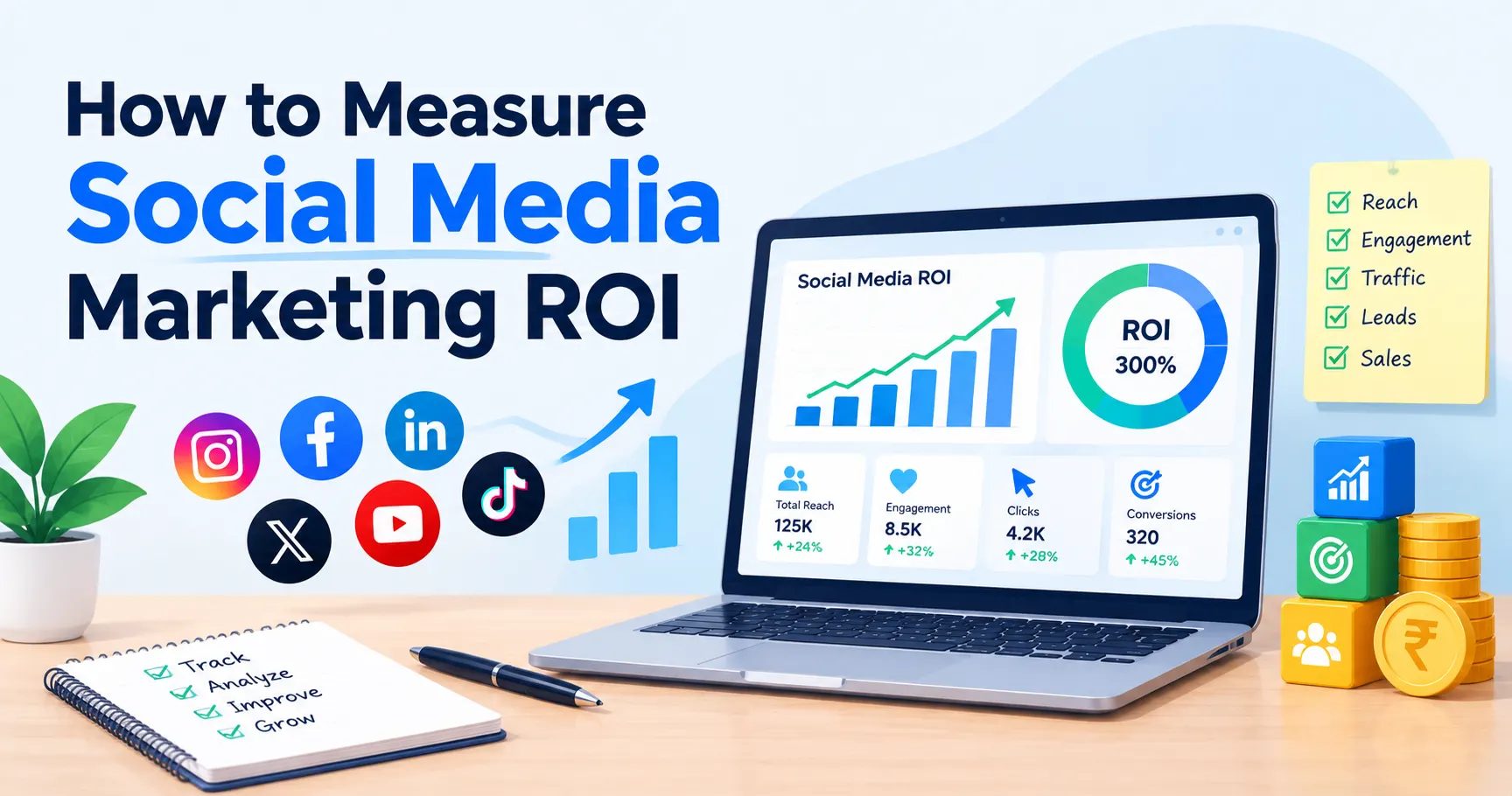
Measuring social media marketing results helps a business understand whether its social media efforts are actually supporting its goals. Instead of looking only at the number of followers or likes, businesses should track metrics that are connected to what they want to achieve, such as brand awareness, engagement, website traffic, leads, and sales.
For example, if the goal is to increase brand awareness, you can look at reach, impressions, video views, and profile visits. If the goal is to generate leads, you can track form submissions, calls, messages, consultations, or sign-ups. For sales-focused campaigns, businesses can measure purchases, revenue, conversion rate, and campaign revenue.
The important thing is to choose metrics based on the business goal. Regularly checking these results helps you understand which content and activities are working, what needs improvement, and where you should focus your future social media efforts.Simply posting regularly or gaining followers is not enough. You need to look at the actions and results that matter to your business, such as brand awareness, engagement, website traffic, leads, and sales.
Measure Brand Awareness
If your goal is to make more people aware of your business, focus on metrics such as reach, impressions, video views, and profile visits. These numbers can help you understand how many people are discovering and viewing your content.
Measure Engagement
Engagement shows how people are interacting with your content. Track comments, shares, saves, replies, and meaningful conversations. These interactions can provide a better understanding of whether your audience finds your content useful or relevant.
Measure Website Traffic
If you want social media to bring visitors to your website, monitor link clicks, website sessions, and landing-page visits. This helps you see whether your social media content is encouraging people to learn more about your business.
Measure Leads
For lead generation, track actions such as form submissions, phone calls, messages, consultations, and sign-ups. These metrics show whether social media is helping you generate potential customers.
Measure Sales
If your main goal is sales, focus on purchases, revenue, conversion rate, and campaign revenue. These metrics help connect your social media campaigns with actual business outcomes.
Overall, the best way to measure social media performance is to match your metrics with your business goals. Review the results regularly, identify what is working, and use those insights to improve your future content and strategy.
Frequently Asked Questions
1. What is the best social media platform for business?
There is no single platform that is best for every business. The right platform depends on your target audience, industry, content type, and business goals. Start with the platforms where your potential customers are most active.
2. How often should a business post on social media?
There is no universal posting frequency that works for every business. A realistic and consistent schedule is usually better than posting frequently for a short period and then stopping. Focus on maintaining quality and consistency.
3. Does having more followers mean more business?
Not necessarily. Followers can help increase reach, but business growth also depends on engagement, website visits, leads, conversions, and sales. A relevant audience is generally more useful than simply having a large follower count.
4. What type of social media content works best?
Useful educational content, problem-solving posts, customer stories, product information, behind-the-scenes content, and genuine conversations can all be effective. The best content depends on your audience and business goals.
5. Should small businesses use paid social media advertising?
Paid advertising can be useful for reaching specific audiences, generating leads, or promoting products and services. However, businesses should first make sure their messaging, offer, content, and landing pages are clear before increasing advertising spend.
Key Takeaways
Growing a business on social media is not about posting as much as possible.
Focus on these principles:
Understand your audience.
Choose platforms that match your customers.
Create useful and relevant content.
Build trust through consistency.
Respond to your audience.
Use genuine social proof.
Give people clear next steps.
Combine organic and paid strategies when appropriate.
Measure meaningful business results.
Test, learn, and improve continuously.
The goal is not simply to make your social media account look active. The goal is to make social media useful for your customers and your business.
Conclusion
Business growth on social media is more likely to come from a clear strategy than from simply posting more often. Businesses do not need to be present on every platform or create content every hour. They need to understand their audience, provide useful information, communicate consistently, and create clear connections between social media activity and business goals.
A strong social media strategy focuses on people first. When your content answers questions, solves problems, demonstrates expertise, and builds trust, it can help move people from discovering your brand to becoming interested customers.
Start with a few clear goals, choose the platforms that makemetrics sense for your audience, create helpful content, and measure what happens. Then use what you learn to improve your strategy over time.
What actually works is not doing more on social media. It is doing the right things consistently and measuring whether they help your business.
Ready to grow with AI-powered marketing?
Book a free 30-minute strategy call with the Arena Infosolution team.
About the Author
Arena Team SEO and digital marketing content team that focuses on creating simple, practical, and useful content for businesses and marketers. With expertise in SEO, content marketing, and social media marketing, the Arena Team SEO explains digital marketing topics in clear language that beginners can easily understand and apply. The team focuses on sharing helpful, actionable insights that support businesses in improving their online presence and marketing efforts.
Get a free growth consultation
Tell us what you're working on and a senior strategist will map your next move.