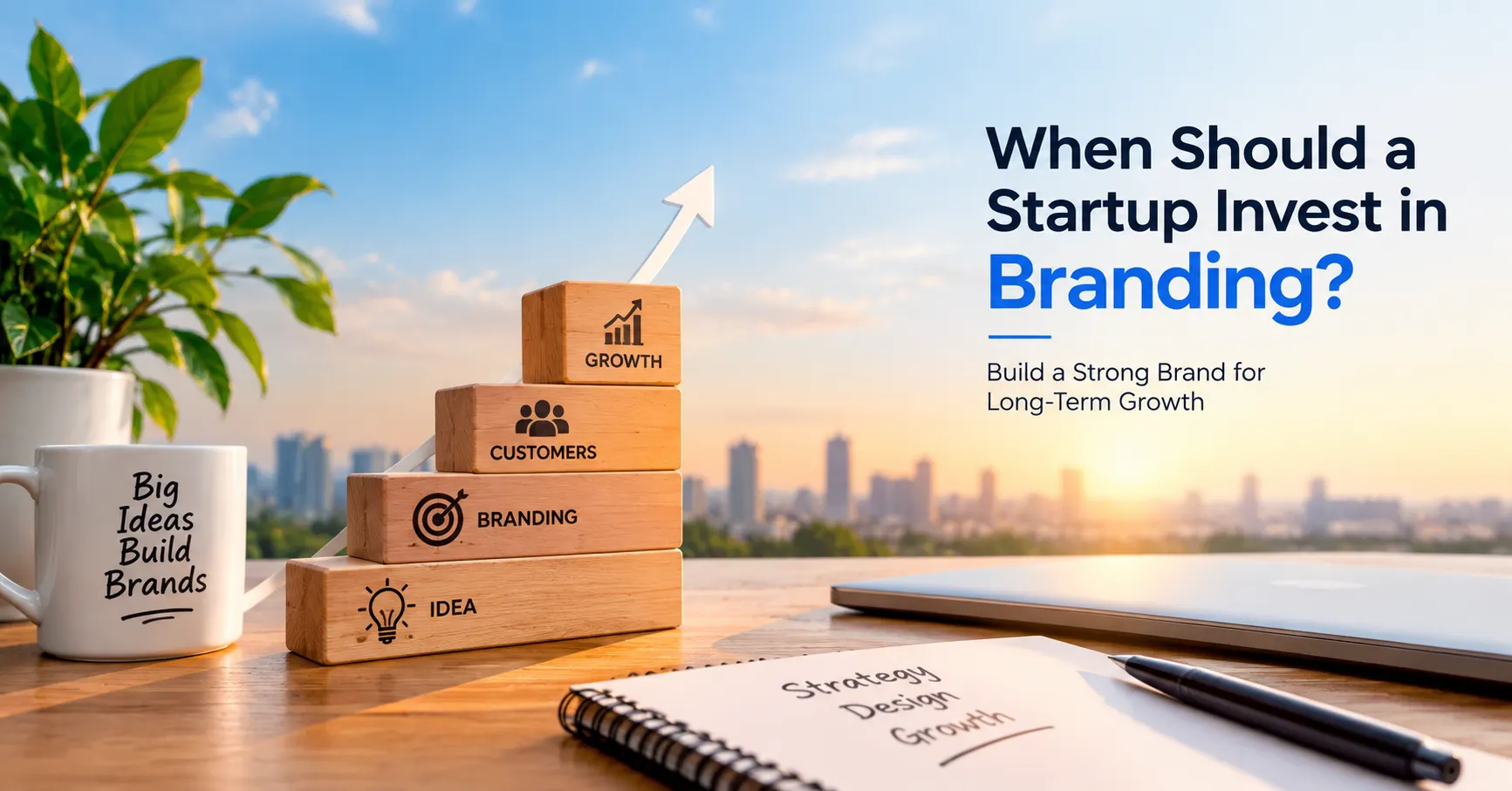
When Should a Startup Invest in Branding?
Learn when a startup should invest in branding, what to build first, and how a strong brand can support business growth, marketing, SEO, customer trust, and long-term success.
How Startup Branding Builds a Stronger Business
A startup does not need to wait to build its brand. The right branding can create a clear identity, build trust, and make the business easier to recognize.
Branding goes beyond a logo. It includes positioning, messaging, visual identity, website, content, and customer experience.
Table of Contents
What Does Branding Mean for a Startup?
When the Right Time Becomes a Brand Advantage
When Should a Startup Invest in Branding?
Startup Branding Timeline
Signs Your Startup Is Ready
What Should You Build First?
Branding vs Marketing
How Branding Supports SEO
Before vs After Strong Branding
Common Branding Mistakes Startups Should Avoid
Your checklist
Frequently Asked Questions
Key Takeaways
Final Verdict
Introduction
Starting a business means making many decisions with limited time and resources. Founders have to think about the product, customers, sales, marketing, website, employees, and business growth. Because of this, branding is often treated as something that can be done later.
But customers start forming an opinion about a business as soon as they discover it. They may see its website, social media profile, logo, advertisements, content, product presentation, or communication before they ever become a customer.
This creates an important question: When should a startup invest in branding?
The answer is not simply “from day one” or “after reaching a certain revenue.” A startup should begin building its brand early, but the size and depth of the investment should grow according to its stage, audience, competition, marketing activity, and business goals.
A new startup may only need clear positioning, messaging, and a simple visual identity. A growing startup may need a stronger brand system, consistent content, better customer experience, and a more developed digital presence.
The goal is not to spend heavily on branding as early as possible. The goal is to build the right brand foundation at the right time and strengthen it as the business grows.
AI summary
Startups should begin thinking about branding before launch, but the level of investment should match their stage and resources. Early branding should focus on positioning, audience, messaging, and consistency. As the startup gains customers, increases marketing activity, enters new markets, or scales, branding can become a larger investment. The right approach is to build a useful brand foundation early and improve it with real customer and business feedback.
What Does Branding Mean for a Startup?
Startup branding is the process of creating a clear identity and consistent experience around a business. It includes visual elements such as a logo, colors, fonts, and design, but it also includes positioning, messaging, tone of voice, customer experience, website presentation, and the ideas customers connect with the company.
A logo alone is not a brand.
For example, a startup can have a professional logo but still have weak branding if its website does not clearly explain what it offers. Another startup may have a simple visual identity but communicate its value very clearly across its website, content, social media, and customer interactions.
Good branding brings these different elements together.
What Branding Can Include
A startup's branding may include:
Brand positioning
Target audience
Value proposition
Brand messaging
Tone of voice
Logo and visual identity
Website presentation
Content style
Social media presence
Customer experience
Packaging or product presentation
Brand guidelines
A startup does not need to perfect everything immediately. It should first build the elements that are most important for its current stage.
When the Right Time Becomes a Brand Advantage
Branding is not a switch that a startup turns on after reaching a certain level of success. It should develop alongside the business. Too early, and you may build around assumptions. Too late, and customers may already know your business through an inconsistent identity.
Think of a startup in three stages:
Too Early → Right Stage → Too Late
Too Early:
The business is still testing its product, audience, and market. A complete branding investment may change quickly because the startup is still learning what works.
Right Stage:
The startup understands its audience, has a clearer offer, and is beginning to attract customers. This is a strong point to build consistent positioning, messaging, design, and customer communication.
Too Late:
The startup is already growing, but its website, social media, content, and marketing use different messages and visual styles. At this point, fixing the brand can require changing things that are already being used across the business.
The goal is not to find one perfect date for branding. The goal is to let branding mature at the same speed as the startup.
When Should a Startup Invest in Branding?
A startup should start investing in branding when it has enough clarity about its customer, offer, and market to create a consistent identity. This does not mean spending a large amount of money at the beginning. Early branding should focus on the basics that help people understand the business.
Before launch, the startup can define its target audience, positioning, value proposition, core message, and basic visual identity. Once the first customers arrive, their feedback can help improve the brand message and customer experience.
As marketing activity increases, branding becomes more important because the business starts appearing across websites, social media, search results, advertisements, emails, and other channels. A consistent identity helps connect these different touchpoints.
The key is to match branding investment with business growth. Start with the essentials, learn from real customers, and strengthen the brand when the business has clearer needs.
What Is Startup Branding?
Strong branding also gives a startup a clearer direction as it grows. It helps the business communicate what it offers, who it serves, and why customers should consider it instead of another option.
What Branding Can Include
Branding can include:
Brand positioning: How the startup wants to be understood in its market.
Visual identity: Logo, colors, typography, imagery, and design style.
Brand messaging: The key ideas and messages used to explain the business.
Tone of voice: The way the brand communicates with its audience.
Customer experience: How the brand is experienced across websites, social media, content, and other touchpoints.
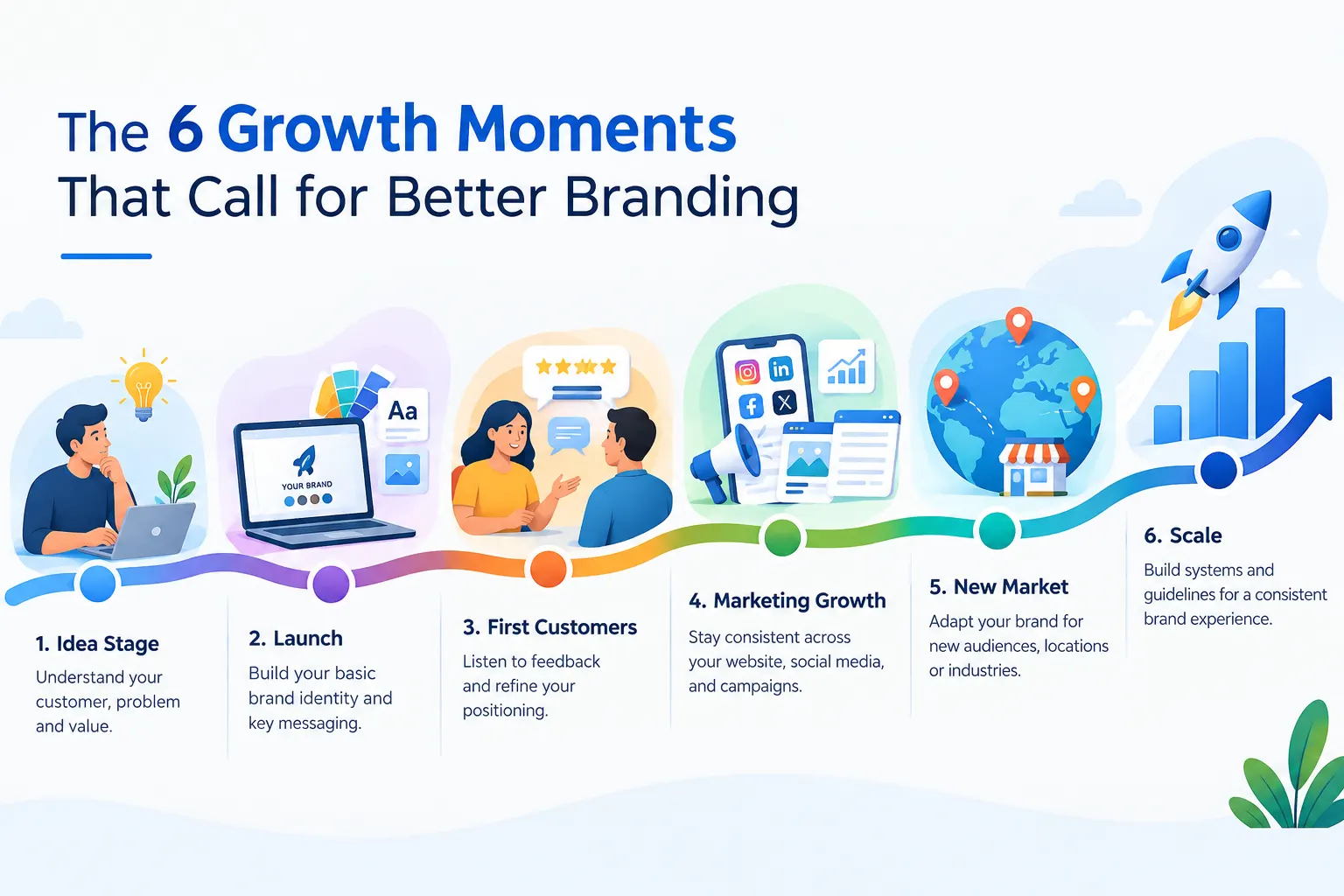
The 6 Growth Moments That Call for Better Branding
Branding can become valuable at different stages of a startup's journey. The important thing is not to invest heavily too early or wait until the business has already grown without a clear identity. The right time depends on what is happening in the business.
1. Before Launch
Before launching, a startup should create its basic brand foundation. Define the target customer, the problem you solve, your key value, and how you want people to understand the business. Then create a simple visual identity and clear messaging around it. At this stage, focus on clarity rather than perfection.
2. When You Get Your First Customers
Your first customers provide real information about how people see your business. Their questions, feedback, reviews, and reactions can show which parts of your message are working and which need improvement. Use this information to refine your positioning and make the brand more relevant to the people you want to reach.
3. When Marketing Activity Increases
As your startup begins using SEO, paid advertising, social media, email, content marketing, partnerships, or events, more people will encounter your brand across different channels. This is when consistency becomes important. Your website, campaigns, content, and social profiles should communicate the same core identity so customers can easily recognize the business.
4. When Competition Increases
When several businesses start offering similar products or services, customers need a clearer reason to remember your company. Branding can help communicate what makes your business different, who it is designed for, and what value it brings. The goal is not simply to look different, but to make your position easier to understand.
5. When Entering a New Market
Expanding into a new city, industry, audience, or country can change what customers expect from your brand. Before entering the new market, review your positioning, messaging, website, and visual identity. You may not need a complete rebrand; sometimes adapting the message to the new audience is enough.
6. When the Startup Starts Scaling
As the startup grows, more people become responsible for representing the brand. Marketing, sales, design, customer support, and external agencies may all communicate with customers. Clear brand guidelines can help everyone use the same tone, messaging, and visual identity. At this stage, branding becomes a system that keeps the growing business consistent.
The simple idea is: start with a basic brand foundation, learn from customers, strengthen consistency as marketing grows, and develop the brand further as the business scales.
Startup Branding Timeline
Idea Stage → Define → Launch → Test → Grow → Scale
Idea Stage
Focus on the customer, problem, positioning, and value proposition.
Pre-Launch
Create the basic visual identity, messaging, website direction, and communication style.
Early Customers
Use customer feedback to improve the message and positioning.
Growth Stage
Strengthen the website, content, social media, customer experience, and visual consistency.
Scaling Stage
Create clearer brand guidelines, systems, processes, and a consistent experience across teams and channels.
The important point: branding does not have to become a huge project at every stage. The investment should become more advanced as the business becomes more established.
Signs Your Startup Is Ready
A startup may be ready for stronger branding when it has a clearer understanding of its target audience, increasing marketing activity, growing competition, or a business identity that no longer matches its direction.
If the business is using SEO, social media, paid advertising, email marketing, or content across multiple channels, consistent branding becomes more important. Similarly, new products, services, audiences, or markets may create a need to review the brand.
These signs do not necessarily mean a complete rebrand is needed. They simply show that the startup may benefit from strengthening its existing brand foundation.
When Your Startup Outgrows Its First Brand
A startup may need stronger branding when the business starts changing. If your audience is clearer, marketing is growing, competition is increasing, or your current identity no longer matches the business, it may be time to improve your brand.
A simple sign is confusion. If customers cannot quickly understand what you offer, who you serve, or why they should choose you, your branding may need more clarity.
When the business grows, the brand should grow with it.
What Should a Startup Build First?
A startup does not need to build every branding element at once. The better approach is to create the foundation first and then build the visual and content layers around it. This keeps the brand clear, consistent, and easier to grow.
1. Start With Positioning
First, decide how you want the business to be understood. Clearly define who you serve, what problem you solve, what you offer, and what makes your business different. This becomes the foundation for your branding and marketing.
2. Define the Core Message
Once the position is clear, turn it into a simple message. Customers should quickly understand what the startup does and why it matters without having to search through multiple pages or complicated explanations.
3. Build the Visual Identity
With the strategy in place, create the visual identity around it. Your logo, colors, typography, imagery, and graphics should work together to make the brand recognizable and support the message you want to communicate.
4. Make the Website Consistent
Your website should bring the entire brand together. The homepage, service pages, landing pages, blogs, and calls to action should follow the same positioning, messaging, and visual style so visitors experience one clear brand.
5. Create a Content Direction
Finally, decide what the brand should be known for. Instead of publishing random content, focus on useful guides, examples, case studies, and insights related to your area of expertise. Over time, this helps build recognition, authority, and trust.
The simple order is: Positioning → Message → Visual Identity → Website → Content. This gives a startup a strong foundation without trying to build everything at once.
Branding vs Marketing
Branding and marketing are closely connected, but they have different roles.
Branding | Marketing |
|---|---|
Defines identity | Promotes the business |
Builds positioning | Reaches customers |
Creates consistency | Generates traffic and leads |
Shapes perception | Communicates offers |
Supports recognition | Drives campaigns |
A simple way to understand the relationship is:
Branding defines what the business represents. Marketing takes that message to the market. A startup does not have to choose one over the other. Both can support business growth when they work together.
How Branding Supports SEO
Branding and SEO work together because search visibility is not only about getting pages to rank. A strong brand can help create a clearer and more consistent experience for people who discover the business through search.
When your website uses consistent messaging, clear positioning, and useful content, visitors can understand your business more easily. This can support a better experience after someone clicks from a search result.
Branding also helps create consistency across your website, social media profiles, business listings, content, and other online channels. When people repeatedly see the same business name, message, and visual identity, the brand becomes easier to recognize.
A strong brand can also support content marketing. Instead of publishing unrelated topics, a startup can create content around the subjects it wants to be known for. This gives its website a clearer content direction and helps build useful resources for its audience.
Branding does not replace technical SEO, keywords, quality content, links, or other search optimization work. Instead, it supports the trust and recognition that can make the overall search journey more consistent.
Before vs After Strong Branding
Before
Unclear positioning
Different messages across platforms
An inconsistent visual identity
A website that is difficult to understand
Random content topics
Confusing customer communication
After
Consistent messaging
Recognizable visual identity
Better website communication
Focused content direction
More consistent customer experience
Clear positioning
The purpose is not to make a startup look bigger than it is.
The purpose is to make the business easier to understand, recognize, and remember.
How Much Should a Startup Invest in Branding?
Branding investment should match the startup's current stage rather than follow a fixed budget. A business that is still testing its idea may only need clear positioning, messaging, and a simple visual identity. Spending heavily before understanding the market can lead to unnecessary changes later.
As the startup gains customers and begins marketing more actively, branding needs can become broader. The business may invest in a stronger website, professional design, content development, photography, brand guidelines, packaging, or other customer-facing elements. The purpose is not to spend more simply because the business is growing, but to solve the branding needs that appear at each stage.
A useful way to think about the investment is foundation first, development second, refinement third. Build the essentials when the business is new, strengthen the system when customer activity increases, and refine the brand when the business enters new markets or scales.
Common Branding Mistakes Startups Should Avoid
Branding mistakes often happen when startups focus on appearance before understanding what the brand actually needs. A logo, colors, and design are important, but they should come after a clear understanding of the target audience, market position, and business message. Without this foundation, even a well-designed brand can feel unclear.
Another common problem is copying competitors too closely. Researching competitors can help a startup understand the market, but using a similar identity, messaging, or visual style can make the business difficult to distinguish. A stronger approach is to learn from the market while creating a brand that has its own clear personality and value.
Startups can also weaken their brand by changing it too frequently. As the business grows, some changes are necessary, but constantly changing the logo, colors, messaging, or overall style can make recognition harder. Branding should evolve when the business changes—not simply because the brand needs to look different.
Relying too heavily on social media is another mistake. Platforms such as Instagram and LinkedIn can help build visibility, but they cannot replace clear website messaging, strong positioning, useful content, and a consistent customer experience. Every important brand touchpoint should communicate the same core identity.
Expert tip
Build the strategy before the design.
Define your target audience, positioning, and core message before investing heavily in visual design.
Start small and improve as you grow.
Your first brand does not need to be perfect. Build the essentials first and strengthen them as you gain customers and market experience.
Use customer feedback.
Customer questions, reviews, and reactions can reveal whether your brand message is clear or needs improvement.
Keep every channel consistent.
Your website, social media, content, advertising, and customer communication should reflect the same core identity.
Review your brand as the business changes.
When your audience, products, services, or market changes, review your positioning and messaging to keep the brand relevant.
Verdict: The screenshot format is correct, but shortening the text slightly will make the section look more professional, clean, and easier to read.
Your checklist
Define the target audience
Identify the problem you solve
Create clear positioning
Write a simple value proposition
Define your core message
Create a consistent visual identity
Keep your website messaging clear
Maintain consistency across social media
Create focused content
Add relevant trust elements
Review customer feedback
Update branding as the business grows
Frequently asked questions
Should a startup invest in branding from day one?
A startup should think about branding from the beginning, especially its audience, positioning, and core message. However, it does not need a large branding budget immediately. The investment can increase as the startup gains customers and grows.
How much should a startup spend on branding?
There is no single amount that works for every startup. The budget should depend on the business stage, available resources, market, competition, and growth plans. Early startups can focus on essential branding before investing in advanced brand development.
Is branding more important than marketing?
Branding and marketing have different purposes. Branding helps establish identity and positioning, while marketing helps communicate with and reach customers. A startup can use both together rather than treating them as competing priorities.
Can a startup build a brand with a small budget?
Yes. A startup can begin with clear positioning, strong messaging, consistent design, a professional website, and useful content. A large budget is not required to create a clear brand foundation.
When should a startup rebrand?
A startup may consider rebranding when its audience, products, market, or business direction changes significantly, or when the existing identity no longer represents the company clearly.
Key takeaways
Start early: Think about branding before launch.
Build the basics first: Focus on audience, positioning, and messaging.
Invest as you grow: Increase branding investment when the business gains traction.
Stay consistent: Keep your website, content, and social presence connected.
Use real feedback: Let customers help shape the brand.
Think beyond the logo: Branding includes the complete customer experience.
Final verdict
There is no single perfect moment when every startup should invest in branding. The practical approach is to start with clarity and build with growth.
Before launch, establish the basic foundation. After getting customers, use their feedback to refine the brand. When marketing and competition increase, strengthen consistency. When the business scales, build systems that keep the brand clear across teams and channels.
A startup does not need to become a big company before it starts acting like a recognizable brand. Start small. Stay clear. Build consistently. Let the brand grow with the business.
About the author
Arena InfoSolution shares practical insights on SEO, digital marketing, content strategy, branding, and online business growth. Its approach focuses on useful, search-friendly content that helps businesses improve their online presence, communicate clearly with their audience, and build a stronger digital foundation.
Want this done for your business?
Get a free growth consultation
Tell us what you're working on and a senior strategist will map your next move.