How AI is Transforming Digital Marketing in 2026: Complete Guide for Businesses & Marketers
Artificial Intelligence is reshaping digital marketing faster than ever. Discover how AI tools, automation, personalization, and predictive analytics are helping businesses and marketers succeed in 2026.
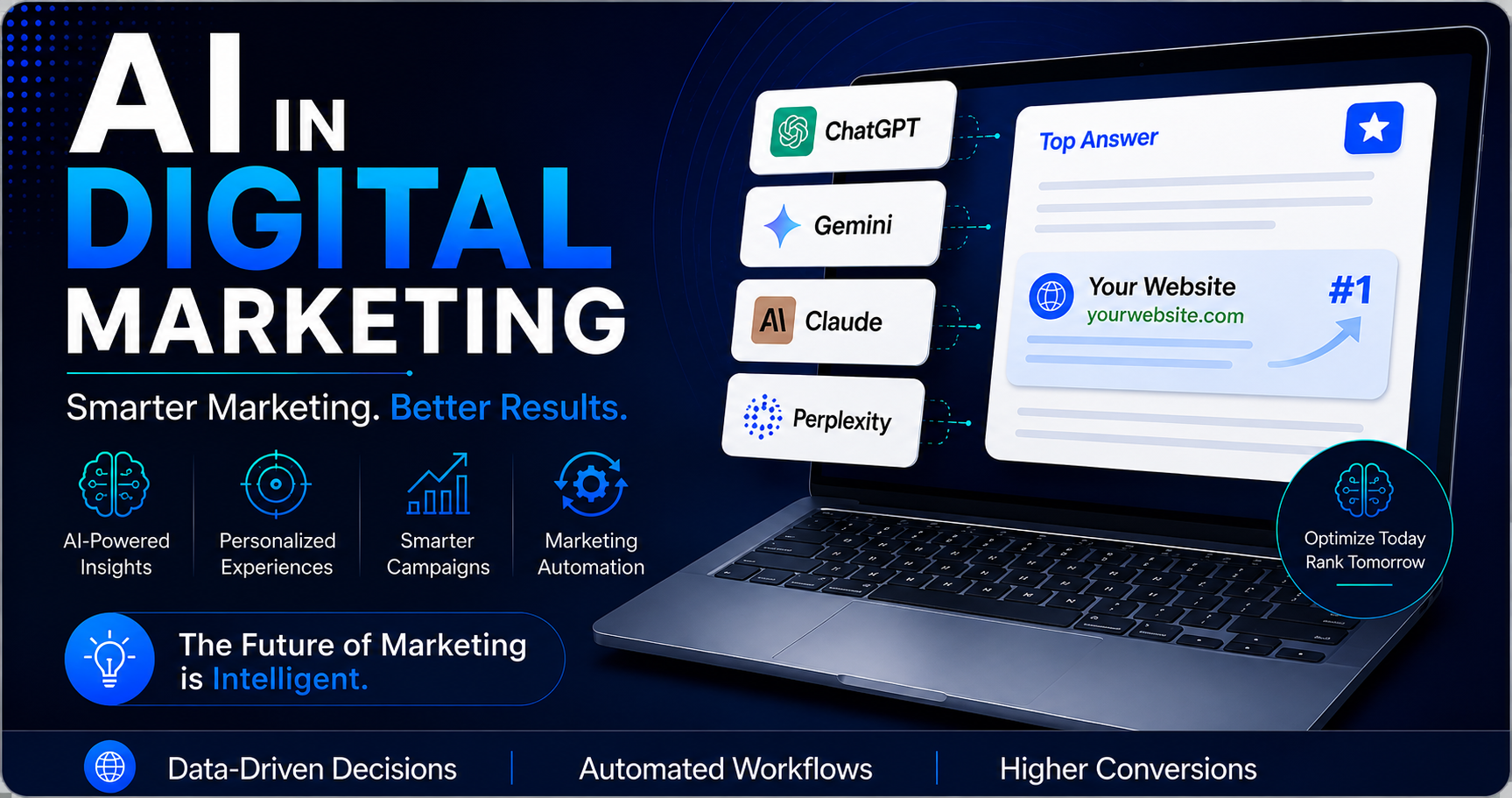
How AI is Transforming Digital Marketing in 2026: Complete Guide for Businesses & Marketers
Artificial Intelligence (AI) is no longer a futuristic concept—it has become an essential part of modern digital marketing. From creating content and managing advertising campaigns to improving customer experiences and analyzing large amounts of data, AI is helping businesses make smarter and faster marketing decisions.How AI is Transforming Digital Marketing in 2026: Complete Guide for Businesses & Marketers
In 2026, digital marketing is evolving rapidly. Businesses of all sizes are using AI-powered tools to automate repetitive tasks, personalize customer interactions, improve search visibility, and increase marketing performance. At the same time, marketers are learning how to combine AI with human creativity to deliver better results.
In this guide, you'll learn how AI is transforming digital marketing, the most valuable AI applications, the best AI tools available today, the challenges businesses should be aware of, and practical strategies to stay competitive in an AI-driven world.
Quick Summary
In Short
AI automates repetitive marketing tasks.
AI helps create high-quality content faster.
AI improves SEO and AI Search visibility.
AI enables personalized customer experiences.
AI optimizes advertising campaigns and improves ROI.
Businesses using AI strategically can gain a significant competitive advantage.
What is AI in Digital Marketing?
AI in Digital Marketing refers to the use of Artificial Intelligence technologies to automate, optimize, and improve marketing activities such as content creation, search engine optimization (SEO), paid advertising, email marketing, customer support, and data analysis.
Artificial Intelligence allows marketers to process massive amounts of customer data and identify patterns that would be difficult or impossible for humans to detect manually. Instead of relying only on guesswork, businesses can use AI to make data-driven decisions that improve marketing performance.
Today, AI is used throughout the customer journey. It helps businesses write content, recommend products, personalize websites, predict customer behavior, answer customer questions through chatbots, and optimize advertising campaigns in real time.
For example, an e-commerce business can use AI to recommend products based on a customer's previous purchases, while a digital marketing agency can use AI to generate content ideas, analyze campaign performance, and automate reporting.
The goal of AI is not to replace marketers—it is to help them work more efficiently, make better decisions, and deliver more personalized customer experiences.
Artificial Intelligence in Marketing is helping businesses improve efficiency, personalization, and customer engagement.
Key Applications of AI in Digital Marketing:
Marketing Area | How AI Helps |
|---|---|
Content Marketing | Generates blog ideas, outlines, and marketing copy |
SEO | Assists with keyword research, content optimization, and search analysis |
Paid Advertising | Optimizes bidding, targeting, and campaign performance |
Email Marketing | Personalizes emails and improves open rates |
Customer Support | Provides instant responses through AI-powered chatbots |
Analytics | Identifies trends and predicts customer behavior |
Why AI is Transforming Digital Marketing in 2026
80%+
Businesses are using AI to improve marketing efficiency.
3x Faster
AI helps marketers create content and campaigns more efficiently.
24/7
AI-powered automation and chatbots support customers around the clock.
AI is transforming digital marketing because it enables businesses to work faster, personalize customer experiences, analyze data more effectively, and make smarter marketing decisions while reducing manual effort.
Consumer expectations have changed dramatically over the past few years. Customers now expect personalized recommendations, faster responses, relevant content, and seamless digital experiences across every platform.
Meeting these expectations manually is becoming increasingly difficult. This is where AI provides a significant advantage.
Instead of spending hours analyzing spreadsheets or creating repetitive marketing content, businesses can use AI to automate routine tasks and focus on strategy, creativity, and customer relationships.
Several factors are driving AI adoption in digital marketing in 2026:
Growing demand for personalized customer experiences
Increasing volume of marketing data
Rising competition across digital platforms
Improved accessibility of AI-powered tools
Greater focus on productivity and operational efficiency
AI is also changing the way businesses approach search. With the rise of AI-powered search experiences and answer engines, marketers are increasingly optimizing content not only for traditional search engines but also for AI-driven platforms. This makes high-quality, well-structured, and trustworthy content more important than ever.
Top Ways AI is Transforming Digital Marketing in 2026
Artificial Intelligence is no longer limited to large enterprises. Today, businesses of all sizes use AI to improve efficiency, reduce manual work, and deliver better customer experiences. From content creation to customer support, AI is helping marketers make faster and smarter decisions while saving both time and money.
Here are some of the biggest ways AI is transforming digital marketing in 2026.
1. Personalized Customer Experience
Modern consumers expect personalized experiences when interacting with a brand. AI analyzes customer behavior, interests, browsing history, and purchase patterns to deliver relevant product recommendations, personalized emails, and targeted advertisements.
This level of personalization helps businesses improve customer satisfaction, increase engagement, and boost conversion rates.
2. Smarter Content Creation
Creating high-quality content consistently can be challenging. AI-powered tools such as ChatGPT, Gemini, and Jasper help marketers generate blog ideas, social media captions, email campaigns, and marketing copy in less time.
While AI speeds up content creation, human creativity remains essential for adding originality, brand voice, and real-world experience.
Expert tip
Use AI to speed up your workflow, but always add human expertise before publishing content.
3. Better Advertising Performance
AI has transformed online advertising by helping marketers optimize campaigns automatically. Platforms like Google Ads and Meta Ads use AI to identify the right audience, adjust bids, and improve campaign performance based on real-time data.
This enables businesses to achieve better results while making more efficient use of their advertising budgets.
4. Marketing Automation
AI-powered marketing automation simplifies repetitive tasks such as email campaigns, lead nurturing, customer segmentation, and follow-up messages.
Instead of spending hours on manual processes, businesses can focus on strategy, creativity, and building stronger customer relationships.
Key Benefits of AI in Digital Marketing:
Benefit | Business Impact |
|---|---|
Personalized Marketing | Improves customer engagement and loyalty |
Faster Content Creation | Saves time and increases productivity |
Better Ad Optimization | Improves return on advertising spend |
Marketing Automation | Reduces repetitive manual work |
Data-Driven Decisions | Helps marketers make smarter business decisions |
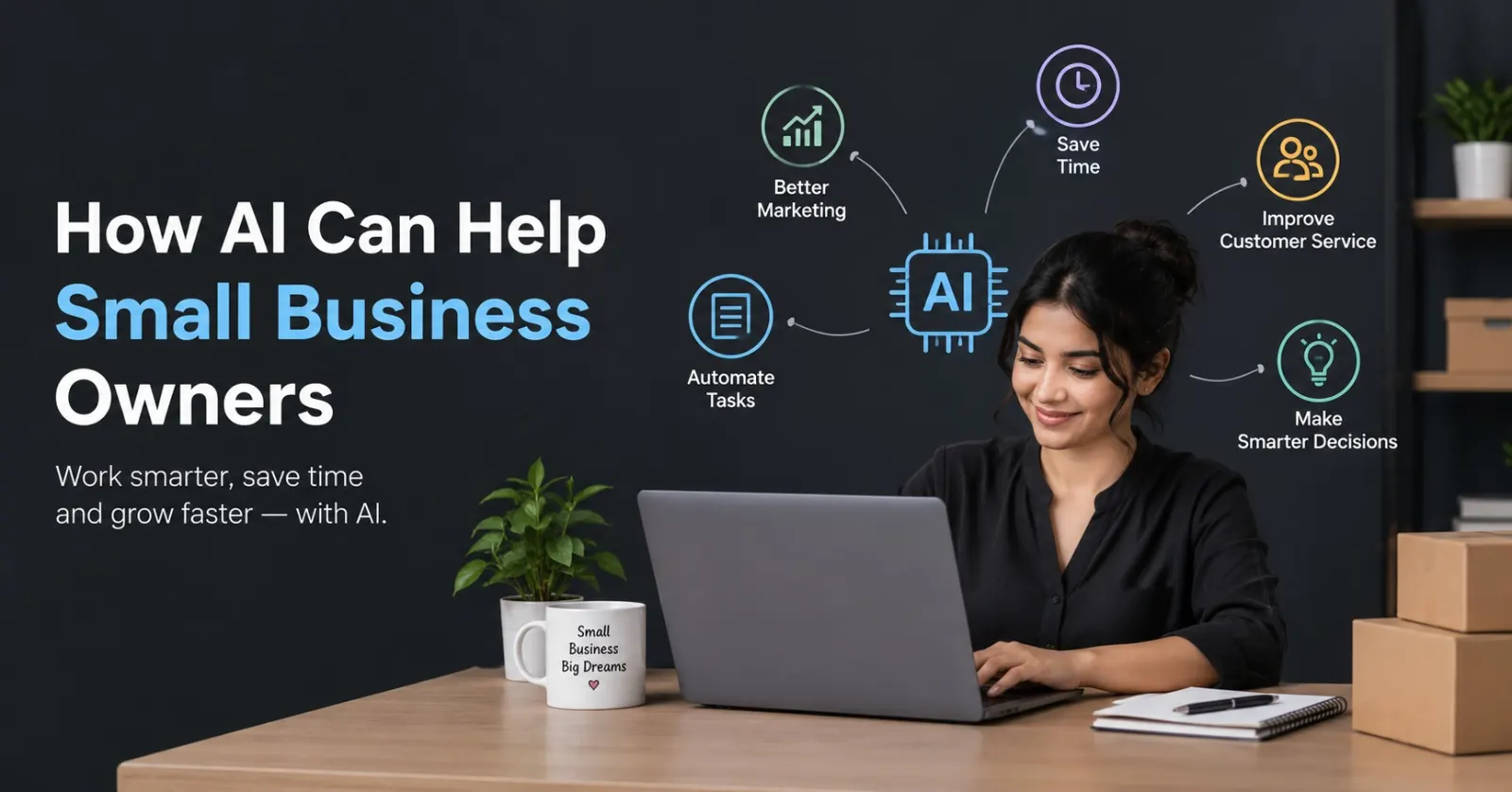
AI for Business enables companies to automate operations, improve marketing performance, and make smarter decisions.
Quick Tip: Businesses that combine AI with human creativity consistently achieve better marketing results than those relying only on automation.
Top AI Tools Every Digital Marketer Should Know in 2026
Artificial Intelligence has introduced a wide range of tools that help businesses improve productivity, create better content, automate marketing tasks, and analyze customer data. Choosing the right AI tools can save hours of manual work while improving overall marketing performance.
Below are some of the most popular AI tools used by marketers in 2026.
AI Tool | Primary Use |
|---|---|
ChatGPT | Content writing, brainstorming, customer support |
Google Gemini | Research, content generation, data analysis |
Canva AI | Social media creatives and marketing designs |
Grammarly | Grammar improvement and content refinement |
HubSpot AI | CRM, email marketing, lead management |
Jasper AI | Marketing copy and blog writing |
Businesses should select AI tools based on their marketing goals rather than using every available platform. A combination of the right tools and a clear strategy delivers better long-term results.
Challenges of Using AI in Digital Marketing.
Pros
Faster content creation
Better personalization
Saves time
Improves productivity
Cons
Needs human review
Can generate incorrect information
Privacy concerns
Less originality
Although AI offers many advantages, it also comes with certain challenges. Businesses should understand these limitations before relying completely on AI-powered systems.
Some common challenges include:
AI-generated content may lack originality and human emotions.
Incorrect prompts can produce inaccurate or misleading information.
Data privacy and security remain important concerns.
Overdependence on automation can reduce creativity.
AI still requires human review before publishing important content.
The most successful businesses use AI as an assistant rather than a replacement for human expertise.
The Future of AI in Digital Marketing
The future of AI in digital marketing looks extremely promising. As AI technology continues to evolve, businesses will be able to deliver more personalized experiences, automate complex workflows, and make faster business decisions using predictive analytics.
In the coming years, marketers can expect AI to play a bigger role in voice search, visual search, generative AI content, customer service chatbots, predictive marketing, and campaign optimization. Companies that adopt AI responsibly while maintaining human creativity will have a significant competitive advantage.
Instead of replacing marketers, AI will continue to enhance their skills, allowing them to focus on strategy, creativity, relationship building, and business growth.
Following the latest AI Marketing Trends helps businesses stay ahead of the competition.
Key Takeaways
AI is transforming every aspect of digital marketing in 2026.
AI improves personalization, automation, content creation, and advertising performance.
Businesses should combine AI with human creativity for the best results.
Choosing the right AI tools is more important than using many tools.
The future belongs to marketers who learn to work alongside AI rather than compete with it.
Frequently asked questions
Is AI replacing digital marketers?
No. AI is not replacing digital marketers; it is transforming the way they work. AI can automate repetitive tasks, analyze data, and generate content, but human creativity, strategic thinking, and relationship-building remain essential for successful marketing.
What are the best AI tools for digital marketing?
Some of the most popular AI tools include ChatGPT, Google Gemini, Canva AI, HubSpot AI, Jasper AI, Grammarly, and Adobe Firefly. Each tool serves different purposes, such as content creation, design, customer engagement, and marketing automation.
How does AI improve digital marketing?
AI improves digital marketing by analyzing customer data, personalizing user experiences, automating repetitive tasks, optimizing advertising campaigns, and helping marketers create high-quality content more efficiently.
Can small businesses use AI for marketing?
Yes. AI has become more accessible and affordable than ever before. Small businesses can use AI tools for content creation, email marketing, customer support, social media management, and campaign optimization without requiring a large budget.
What is the future of AI in digital marketing?
The future of AI in digital marketing includes smarter automation, predictive analytics, hyper-personalization, AI-powered search experiences, voice search optimization, and improved customer engagement. Businesses that embrace AI responsibly will be better positioned for long-term success.
Final Thoughts
Ready to grow with AI-powered marketing?
Book a free 30-minute strategy call with the Arena Infosolution team.
Artificial Intelligence is reshaping the future of digital marketing by enabling businesses to work smarter, create better customer experiences, and make informed decisions through data. From content creation and marketing automation to personalized advertising and predictive analytics, AI has become an essential part of modern marketing strategies.
However, AI should not replace human expertise. The most successful marketers use AI to enhance their creativity, improve efficiency, and focus on strategic decision-making. Businesses that adopt AI while maintaining authenticity and a customer-first approach will be better equipped to thrive in the competitive digital landscape of 2026 and beyond.
Whether you are a student exploring digital marketing, a business owner looking to grow your brand, or a marketing professional aiming to stay ahead of industry trends, understanding AI is no longer optional—it is becoming a competitive advantage.
Every organization should build a strong AI Marketing Strategy to achieve sustainable business growth.
Ready to Learn AI-Powered Digital Marketing?
At Arena Infosolution, we help students, professionals, and business owners develop practical digital marketing skills while exploring the latest AI tools and industry trends. Staying updated with emerging technologies is the key to building successful marketing strategies in today's digital world. Learn more about our AI & Marketing Automation services.
About the author
Arena Infosolution Editorial Team creates practical, research-backed content on Digital Marketing, AI, SEO, Performance Marketing, and Generative Engine Optimization (GEO) to help businesses and professionals stay ahead in the digital world.
Get a free growth consultation
Tell us what you're working on and a senior strategist will map your next move.