AEO vs SEO vs GEO: What Is the Difference?
SEO, AEO, and GEO are changing the way businesses improve their online presence. Explore their differences, understand how each strategy works, and discover how to reach more audiences through search engines and AI-powered platforms.
Introduction
The way people search for information online is changing. Earlier, most users depended on traditional search engines like Google and Bing to find websites, read blogs, and compare information. Today, many people also use AI-powered platforms such as ChatGPT, Gemini, and Perplexity to get quick answers and recommendations.
This change has introduced three important terms in digital marketing: SEO, AEO, and GEO. All three aim to improve online visibility, but each one focuses on a different type of search experience.
Search Engine Optimization (SEO) helps websites appear in traditional search results. Answer Engine Optimization (AEO) focuses on providing clear answers to users' questions. Generative Engine Optimization (GEO) focuses on improving a brand's chances of being mentioned or referenced in AI-generated responses.
Understanding AEO vs SEO vs GEO can help businesses, marketers, and website owners prepare for changing online search behaviour.
In this guide, we will explain what SEO, AEO, and GEO mean, their main differences, their benefits, and how businesses can use all three strategies together.
Understanding AEO vs SEO vs GEO helps businesses learn how Search Engine Optimization, Answer Engine Optimization, and Generative Engine Optimization improve online visibility across traditional search engines and AI-powered platforms.
Understanding AEO vs GEO differences also helps businesses prepare for the growing use of AI-powered search platforms.
Table of Contents
What Is SEO (Search Engine Optimization)?
What Is AEO (Answer Engine Optimization)?
What Is GEO (Generative Engine Optimization)?
AEO vs SEO vs GEO: Key Differences
How Are SEO, AEO, and GEO Connected?
Benefits of Combining SEO, AEO, and GEO
,How to Optimize Your Website for All Three
Common Mistakes to Avoid
Which Strategy Should Your Business Focus On?
Key Takeaways
Frequently Asked Questions
Conclusion
What Is SEO (Search Engine Optimization)?
Search Engine Optimization (SEO) is the process of improving a website so that it can appear higher in organic search engine results. It helps businesses attract visitors who are searching for information, products, or services related to their industry.
For example, when someone searches for "best digital marketing agency in Jaipur" on Google, several websites appear. Businesses use SEO techniques to improve their chances of appearing in these search results.
The main goal of SEO is to make a website easier for search engines to discover, understand, and show to relevant users.
Key Elements of SEO
1. Keyword Research
Keyword research means finding the words and phrases people use when searching online. Businesses use relevant keywords naturally in website content, headings, page titles, and descriptions.
2. On-Page SEO
On-page SEO focuses on optimizing individual website pages. It includes title tags, meta descriptions, headings, internal links, image alt text, and useful content.
3. Technical SEO
Technical SEO improves the technical performance of a website. It includes website speed, mobile-friendliness, crawlability, indexing, and proper website structure.
4. Off-Page SEO
Off-page SEO includes activities performed outside a website to build its reputation and authority. Quality backlinks, genuine brand mentions, and online reputation are important parts of this process.
Benefits of SEO
Helps websites improve their visibility in search engine results.
Brings relevant organic traffic to a website.
Builds brand awareness and online credibility.
Helps businesses reach people searching for their services.
Supports long-term digital marketing growth.
SEO remains an important foundation for businesses that want to build a strong online presence.
For more information, read Google's SEO Starter Guide.
What Is AEO (Answer Engine Optimization)?
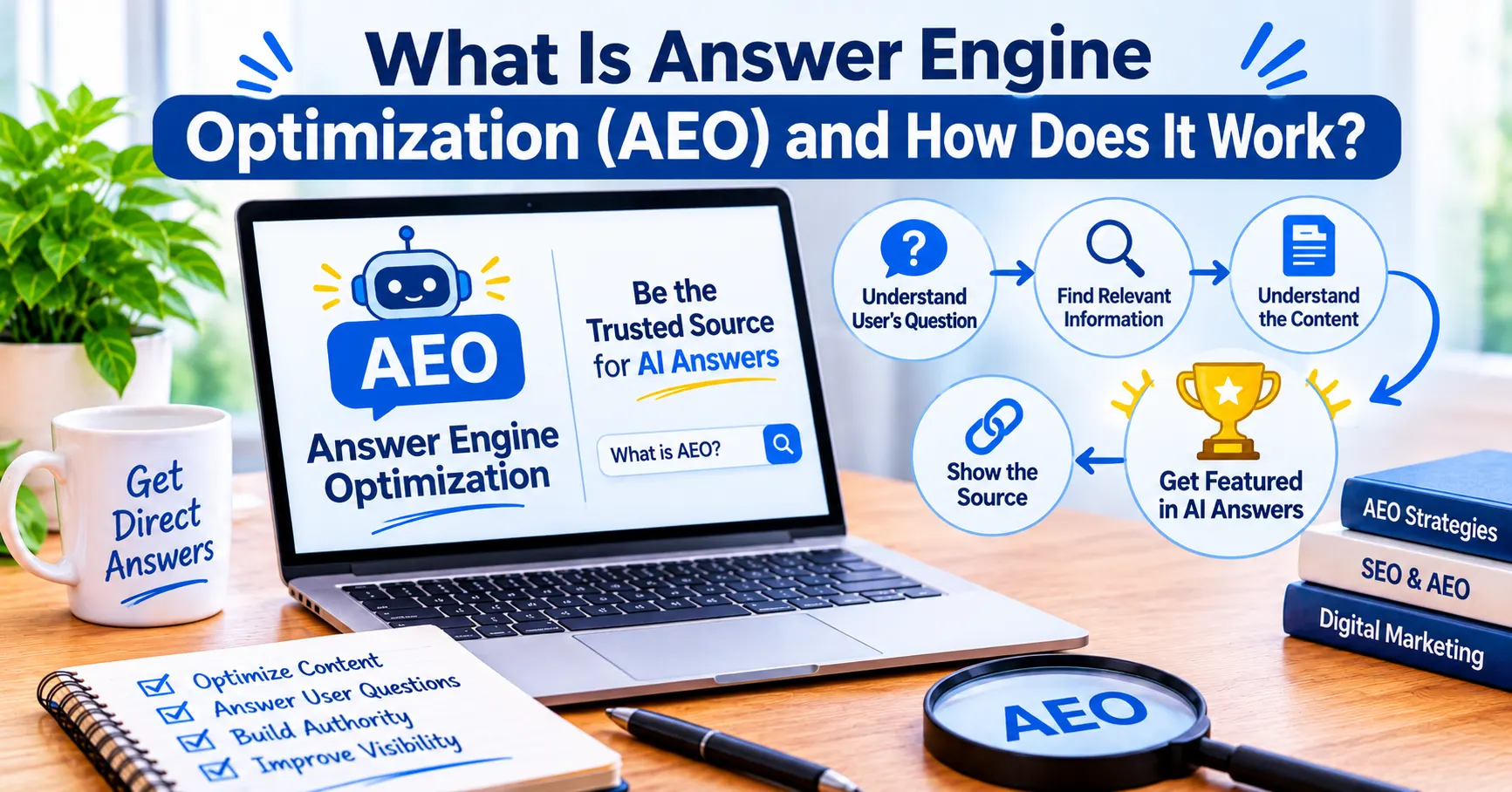
Answer Engine Optimization (AEO) is the process of creating and organizing website content so that search engines and answer-focused platforms can understand it and use it to provide direct answers to users' questions.
Traditional search results usually show a list of website links. Answer-focused experiences aim to provide quick and relevant information in response to a user's question.
For example, when someone searches "What is digital marketing?" an answer-focused search feature may display a short explanation directly on the search results page.
Answer Engine Optimization helps businesses create clear and informative content that provides direct answers to users' questions on search engines and AI-powered platforms.
Key Elements of AEO
1. Question-Based Content
Users often search online by asking questions. Creating content around questions such as "What is SEO?" or "How does email marketing work?" helps address their search intent.
2. Clear and Direct Answers
Provide a useful answer immediately after a relevant heading. Simple explanations help readers understand information quickly.
3. FAQ Sections
Frequently Asked Questions (FAQs) cover common questions related to a topic. They help readers find specific information without reading the entire article.
4. Structured Content
Use clear headings, short paragraphs, bullet points, and relevant tables. A well-organized page makes information easier to read and understand.
5. Structured Data
Structured data helps search engines understand information on a webpage. However, adding schema markup does not guarantee that a page will appear as a featured snippet or AI answer.
Benefits of AEO
Makes content more useful for direct-answer experiences.
Helps businesses address specific customer questions.
Improves the organization and clarity of website information.
Supports visibility in answer-focused search experiences.
Can help content become a useful information source.
AEO is useful for businesses that want to answer customer questions and make their information easier to discover.
What Is GEO (Generative Engine Optimization)?
Generative Engine Optimization (GEO) is the practice of improving a brand's visibility in responses created by AI-powered search and answer platforms.
Traditional search engines usually display a list of website links. Generative AI platforms can collect information from different sources and create a summarized response for users.
For example, if someone asks an AI platform to recommend a digital marketing agency, it may generate a response mentioning different businesses or referencing relevant websites.
GEO focuses on helping AI systems understand a business, recognize its expertise, and consider its content as a useful source when generating responses.
Key Elements of GEO
1. High-Quality and Original Content
Publish original, informative, and well-researched content that provides real value to readers. Avoid simply repeating information available on other websites.
2. Brand Authority
Build your online reputation through consistent branding, genuine customer reviews, expert contributions, and relevant mentions on trustworthy websites.
3. Clear Brand Information
Your website should clearly explain what your business does, which services it offers, who it serves, and what makes it different.
4. Reliable Information and Sources
Use accurate facts, trustworthy references, original research, and relevant examples. Reliable information makes your content more useful and credible.
5. Content for AI Search
Organize information with descriptive headings, direct explanations, useful comparisons, and answers to common questions.
Benefits of GEO
Creates more opportunities for brands to be discovered through AI-powered platforms.
Supports brand recognition across AI-generated responses.
Helps businesses build credibility through useful information.
Encourages brands to maintain a clear and consistent online presence.
Helps businesses prepare for changing search behaviour.
GEO is becoming an important consideration for brands that want to reach audiences using AI-powered search experiences.
AEO vs SEO vs GEO: Key Differences
SEO, AEO, and GEO share a common goal of improving online visibility, but their main focus and methods are different.
The difference between SEO and GEO is mainly related to how content is discovered through traditional search engines and AI-generated responses.
Here is a simple comparison to understand the difference between all three:
Comparison | SEO | AEO | GEO |
|---|---|---|---|
Full Form | Search Engine Optimization | Answer Engine Optimization | Generative Engine Optimization |
Main Goal | Improve search visibility and rankings | Provide useful direct answers | Improve visibility in AI-generated responses |
Main Focus | Website pages and search results | Questions and answers | Brand and content visibility in AI |
Platforms | Google, Bing | Answer features, featured snippets, voice search | ChatGPT, Gemini, Perplexity |
Content Style | Helpful, relevant, keyword-focused | Clear and answer-focused | Informative, credible, and easy to understand |
Key Metrics | Rankings, clicks, organic traffic | Answer visibility and relevant appearances | AI mentions, citations, and referral traffic |
Understanding the Difference with an Example
Imagine you own a digital marketing agency and want more people to discover your business online.
SEO: You optimize your website for keywords such as "digital marketing agency in Jaipur" so that it can appear in Google's organic search results.
AEO: You publish helpful answers to questions such as "What services does a digital marketing agency provide?" so your content can serve answer-focused search experiences.
GEO: You create reliable service pages, informative blogs, and useful business information to improve the chances of your agency being mentioned or cited in relevant AI-generated responses.
This example shows that each strategy supports online visibility in a different way.
How Are SEO, AEO, and GEO Connected?
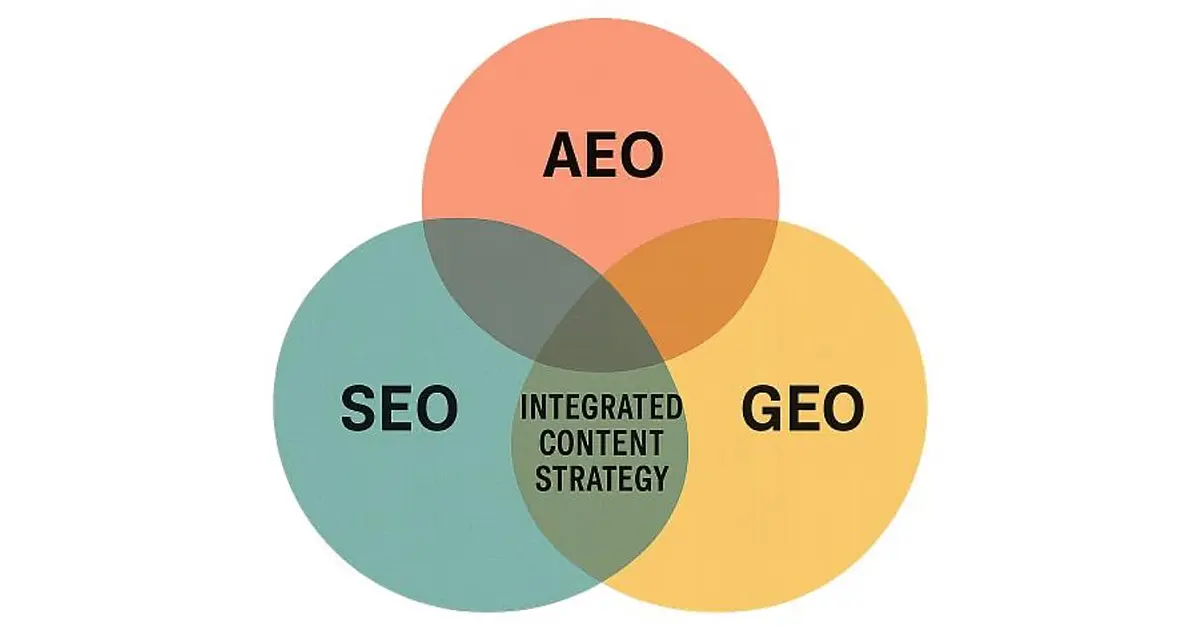
SEO, AEO, and GEO are not completely separate marketing strategies. They share several important practices and can work together to improve a website's overall online presence.
Traditional SEO vs AI search highlights the importance of optimizing content for both traditional search results and AI-powered experiences.
SEO provides a strong foundation through keyword research, technical optimization, website structure, and quality content. AEO builds on this foundation by making information easier to understand and use as direct answers. GEO focuses on how businesses and their content can become visible in AI-generated responses.
For example, a well-optimized website with helpful content, clear headings, and reliable information can support both traditional search visibility and AI-powered discovery.
Google explains that its AI search experiences build on existing SEO fundamentals. This means businesses do not need to forget traditional SEO when working on AI search visibility.
The best approach is to create helpful content that serves real users instead of focusing only on search engines or AI platforms.
You can explore Google's guidance on AI Features and Your Website to understand how its AI search experiences work.
Benefits of Combining SEO, AEO, and GEO
Using SEO, AEO, and GEO together can help businesses build a more complete online presence.
Here are some important benefits:
1. Better Online Visibility
Your business can work towards being discovered through traditional search results, answer-focused experiences, and AI-powered platforms.
2. More Opportunities to Reach Customers
Different people use different search methods. Some search on Google, while others ask questions through AI platforms. A combined approach helps businesses prepare for these different ways of finding information.
3. Improved Content Quality
These strategies encourage businesses to create clear, informative, and well-organized content that answers real customer questions.
4. Stronger Brand Credibility
Accurate information, useful resources, genuine reviews, and a consistent online presence help businesses build trust.
5. Better Long-Term Preparation
Online search behaviour continues to evolve. Understanding all three strategies helps businesses adapt their digital marketing activities as search experiences change.
How to Optimize Your Website for SEO, AEO, and GEO
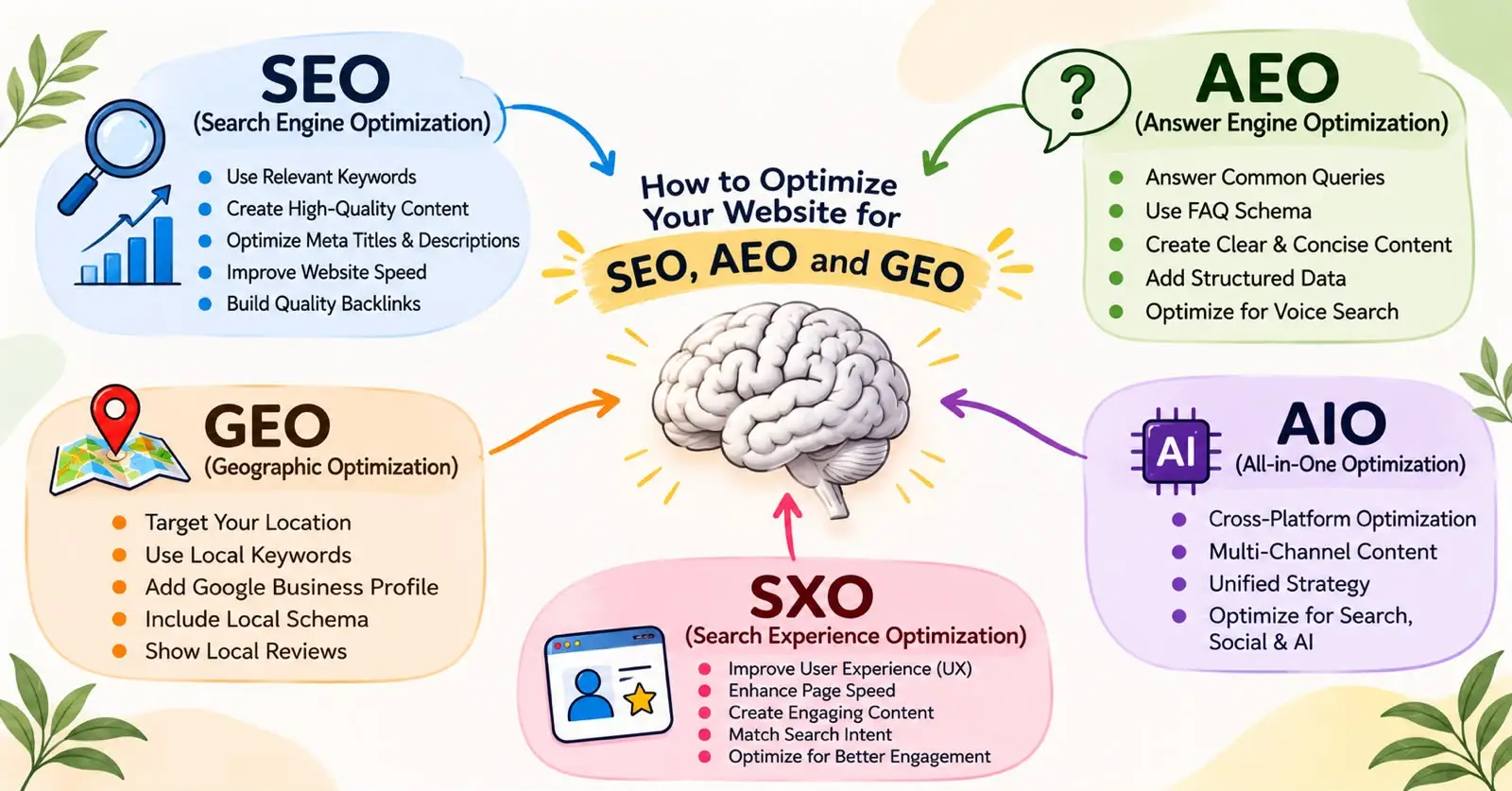
Businesses do not need three completely separate websites or content strategies to work on SEO, AEO, and GEO. A well-planned approach can support all three.
Following effective SEO AEO GEO strategies can help businesses improve their online visibility and connect with customers across different search platforms.
Here are seven practical steps to follow:
1. Understand Your Target Audience
Before creating content, understand what your target audience wants to know. Research their questions, problems, interests, and search behaviour.
For example, a small business owner may search for:
How can I promote my business online?
Which social media platform is best for my business?
How much does digital marketing cost?
These questions can help you create relevant content that matches user intent.
2. Use Relevant Keywords Naturally
Keyword research helps you understand how people search for information.
Choose a primary keyword for each blog and include relevant secondary keywords naturally throughout the content. Avoid repeating the same keyword unnecessarily.
Use keywords in suitable places, such as:
Blog title
Introduction
Main headings
Body content
Meta description
Image alt text
The main purpose should always be to create useful content rather than simply adding more keywords.
3. Create Helpful and Informative Content
Good content is the foundation of effective SEO, AEO, and GEO.
Write articles that explain topics clearly, solve common problems, and provide useful information. Add relevant examples, statistics when properly sourced, and practical suggestions.
Avoid copying information from other websites. Original insights and meaningful explanations can make your content more valuable.
4. Organize Content with Clear Headings
A well-structured blog makes information easier to read.
Use one clear H1 heading for the main title and organize the article with relevant H2 and H3 headings.
Keep paragraphs short and use bullet points when they make information easier to understand.
This structure helps readers find the information they need and makes the page easier for search systems to interpret.
5. Improve Your Website's Technical Performance
A website should be easy to access, navigate, and use on different devices.
Focus on:
Improving page loading speed.
Making the website mobile-friendly.
Fixing broken links.
Creating a clear URL structure.
Checking indexing and crawlability.
Using relevant internal links.
Technical improvements support the overall search experience.
6. Build Trust and Online Authority
Businesses should provide accurate information and maintain a consistent online presence.
Publish helpful blogs, display genuine customer reviews, keep business information updated, and earn relevant mentions from trustworthy websites.
For GEO, it is particularly useful to establish a clear and credible brand presence across relevant online sources.
7. Update Content Regularly
Online information and customer expectations change over time. Review older blogs and update outdated details, broken links, examples, and statistics.
Regular content updates help keep information accurate and useful.
However, updating a page should always provide real value rather than changing dates without making meaningful improvements.
Common Mistakes to Avoid in SEO, AEO, and GEO
While improving website visibility, businesses sometimes focus too much on optimization techniques and forget about the actual reader.
Here are some common mistakes to avoid:
1. Keyword Stuffing
Repeating keywords too many times can make content difficult to read. Use primary and secondary keywords naturally.
2. Publishing Low-Quality Content
Content that provides little value or repeats information already available online may not satisfy users. Focus on useful explanations and original insights.
3. Ignoring User Search Intent
A blog should answer what users actually want to know. Understand the purpose behind a search before writing content.
4. Using Unverified Information
Incorrect facts and unsupported claims can reduce the credibility of your website. Always check information before publishing it.
5. Ignoring Technical SEO
Even good content can face visibility problems if search engines cannot properly access or understand a website.
6. Expecting Guaranteed AI Citations
No AEO or GEO technique can guarantee that an AI platform will mention or cite a particular website. Focus on quality, relevance, and credibility instead.
Which Strategy Should Your Business Focus On?
Choosing between SEO, AEO, and GEO depends on your business goals and target audience. However, businesses should not treat these strategies as competitors.
SEO should be your foundation: If you want to improve website visibility, attract organic traffic, and reach people searching for your products or services, start with SEO.
AEO can support answer visibility: If your audience frequently searches for specific questions, create clear and helpful answers that address their needs.
GEO can support AI discovery: If you want your business to become more visible in AI-powered platforms, focus on building brand authority and publishing reliable, informative content.
The best approach is to combine all three strategies into one well-planned digital marketing strategy. Start with strong SEO basics, organize your content for clear answers, and build a trustworthy brand presence online.
Key Takeaways
SEO, AEO, and GEO all help businesses improve their online visibility, but they focus on different search experiences.
Here are the main points to remember:
SEO helps websites improve their visibility in organic search results.
AEO focuses on making content useful for direct answers.
GEO focuses on improving brand visibility in AI-generated responses.
All three strategies benefit from helpful, accurate, and well-organized content.
Keyword research, technical SEO, and website structure remain important.
Businesses should focus on user experience rather than relying on shortcuts.
AI mentions and citations cannot be guaranteed through any specific optimization technique.
As online search continues to evolve, businesses that create useful content and maintain a strong online presence will be better prepared to reach their audiences.
Frequently Asked Questions (FAQs)
1. What is the main difference between AEO, SEO, and GEO?
SEO focuses on improving website visibility in traditional search engines. AEO focuses on providing clear answers to user questions, while GEO focuses on improving visibility in AI-generated responses.
2. Is SEO still important with the growth of AI search?
Yes. SEO remains important because search engines and AI-powered search experiences still rely on accessible, relevant, and helpful website content.
3. Is AEO better than SEO?
AEO is not necessarily better than SEO. Both serve different purposes. SEO helps improve organic search visibility, while AEO focuses on answer-based experiences.
4. What is the purpose of Generative Engine Optimization?
The purpose of GEO is to improve a brand's chances of being discovered, mentioned, or cited in responses generated by AI-powered platforms.
5. Can small businesses use SEO, AEO, and GEO together?
Yes. Small businesses can combine all three strategies by creating useful website content, answering customer questions, improving technical SEO, and building a trustworthy online presence.
6. How can I measure the success of SEO, AEO, and GEO?
SEO performance can be measured through keyword rankings, organic traffic, clicks, and conversions. AEO and GEO can be evaluated through answer visibility, AI citations, brand mentions, and referral traffic from AI platforms. Measurement options may vary between platforms.
Conclusion
AEO, SEO, and GEO are important parts of modern digital marketing. Each strategy helps businesses improve their visibility in different ways, whether through search engine rankings, direct answers, or AI-generated results.
Understanding the difference between AEO vs SEO vs GEO allows businesses to make better decisions for their online growth.
By focusing on quality content, user experience, and brand credibility, businesses can build a strong online presence and adapt to the changing world of search.
About the author
Arena Infosolution Team shares informative content about digital marketing, SEO, social media marketing, and online business growth. With a focus on the latest digital trends and practical strategies, the team helps businesses understand online marketing and improve their digital presence.
Want this done for your business?
Get a free growth consultation
Tell us what you're working on and a senior strategist will map your next move.