
Brand Strategy vs Brand Identity vs Brand Positioning
Understand the difference between brand strategy, brand identity, and brand positioning, and learn how each helps build a strong and memorable brand.

A strong brand is not built by a logo alone—it is built by a clear strategy, a unique position, and a consistent identity.
Many businesses use the terms brand strategy, brand identity, and brand positioning together, but they all have different roles. Brand strategy gives a business direction, brand positioning helps it create a clear place in the market, and brand identity shows how the brand looks and communicates.
When these three elements work together, a business can create a brand that is clear, consistent, and easier for customers to recognize and remember.
In this blog, we will understand how brand strategy, identity, and positioning are connected, what role each one plays, and how they work together to build a strong brand..
Introduction
Building a strong brand is not only about creating a nice logo, choosing good colours, or making attractive posts. A brand needs a clear idea of what it stands for, who it wants to reach, and how it wants people to see it. This helps a business create a clear and consistent image in the market.
This is where brand strategy, brand identity, and brand positioning come in. These three are connected, but they are not the same. Brand strategy gives the brand a clear direction, brand identity shows how the brand looks and communicates, and brand positioning helps people understand what makes the brand different.
Understanding these three concepts is important for any business that wants to build a strong and recognizable brand. In this blog, we will look at the difference between them with simple explanations and examples.
Table of contents
What Is Brand Strategy?
What Is Brand Identity?
What Is Brand Positioning?
Brand Strategy vs Brand Identity vs Brand Positioning
Why Is Branding Important?
How Are Brand Strategy, Identity, and Positioning Connected?
Why Are Brand Strategy, Identity, and Positioning Important?
How to Build a Strong Brand Identity for Your Business
Common Mistakes to Avoid
A Simple Brand Building Process
Why Brand Consistency Matters
Brand Clarity Checklist
Frequently Asked Questions
Key Takeaways
Conclusion
AI summary
Brand strategy, brand identity, and brand positioning are different but connected parts of building a strong brand. Brand strategy gives the business a clear direction, brand identity defines how the brand looks and communicates, and brand positioning shows how the brand wants to be seen in the market. Understanding these differences helps businesses create a clear, consistent, and memorable brand.
What Is Brand Strategy?
Brand strategy is a long-term plan that helps a business build a clear and strong brand. It gives the brand a direction and helps the business decide what it wants to achieve, who it wants to reach, and what it wants people to remember about it Brand strategy is a long-term plan that helps a business decide what its brand stands for, who it wants to reach, and how it wants to grow In simple words, it gives a brand clear direction. It helps a business decide its target audience, goals, values, message, and what it wants customers to remember about the brand.
A good brand strategy starts with understanding the target audience, brand goals, values, purpose, and market. It helps a business make better decisions about its message, content, marketing, and overall brand communication.
For example
If a skincare brand wants to become known for simple and beginner-friendly skincare, its brand strategy may focus on educating customers, using easy language, and creating products that are easy to understand.
Brand strategy is not only about marketing or selling products. It helps bring different parts of the brand together and keeps the brand moving in the same direction. When a business has a clear strategy, it becomes easier to create a brand that people can understand, trust, and remember.
What Is Brand Identity?
Brand identity is how a business presents itself to its audience. It includes the visual and communication elements that help people recognize a brand.
In simple words, brand identity is how a brand looks and sounds. It can include the logo, colours, fonts, images, packaging, website design, and the way the brand communicates with customers.
For example
A skincare brand may use simple packaging, soft colors, clear fonts, and friendly language to create a simple and approachable identity.
A consistent brand identity helps people recognize and remember the brand more easily.
What Does Brand Identity Include?
Brand identity includes all the visual and communication elements that help people recognize and understand a brand. It is not limited to the logo. It covers everything a business uses to present itself, from its colors and fonts to its images, packaging, website, and communication style.
These elements work together to create a consistent look and feel for the brand. When a business uses them consistently across its website, social media, advertisements, and other platforms, customers can recognize the brand more easily.
Brand identity can include:
Logo
Brand colours
Typography
Packaging
Photography style
Brand voice
Tagline
Graphic elements
Website design
Social media style
For example a skincare brand targeting young beginners may use simple colours, clean packaging, friendly language, and educational visuals.
Brand Identity Is More Than a Logo
One common misunderstanding is that brand identity means only the logo.
A logo is just one part of brand identity.
The way a brand writes captions, designs its website, chooses colours, presents products, and communicates with customers can also become part of its identity.
What Is Brand Positioning?
Brand positioning is about how a business wants people to think about and remember its brand. It helps a brand create a clear place in the market and show customers why they should choose it over other similar brands.
In simple words, brand positioning answers one important question:
“What should people think of when they hear about our brand?”
For example, many brands may sell the same type of product, but each brand can focus on something different. One skincare brand may be known for affordable products, another for premium ingredients, and another for simple skincare for beginners. This difference helps customers understand what each brand stands for.
What Does Brand Positioning Include?
Brand positioning is the way a business wants customers to see and remember its brand in the market. It helps a business create a clear place in the customer's mind and communicate what makes the brand different from other similar brands.
In simple words, brand positioning answers an important question: “What should people think of when they hear about our brand?”
For example, one skincare brand may want to be known for affordable skincare, while another may focus on premium products. Another brand may position itself as a simple and beginner-friendly skincare brand. Although they may sell similar products, each brand wants customers to remember it for something different.
A brand usually considers these important areas when creating its positioning:
Target customers – Who does the brand want to reach?
Customer needs – What problem or need does the brand solve?
Market category – What type of product or service does the brand offer?
Key benefits – What main value does the brand provide?
Differentiation – What makes the brand different from others?
Competitors – What other choices do customers have?
Brand promise – What can customers expect from the brand?
Simple Example of Brand Positioning
Imagine three skincare brands selling moisturizers.
Brand A focuses on affordable skincare for students.
Brand B focuses on premium skincare with high-quality ingredients.
Brand C focuses on simple skincare for people who are new to skincare.
All three brands sell moisturizers, but they are trying to create a different image in the customer's mind.
This is the basic idea of brand positioning. It helps a business clearly communicate who it is, who it serves, and what makes it different.
Area | Brand Strategy | Brand Identity | Brand Positioning |
|---|---|---|---|
Main focus | Overall brand direction | Brand presentation | Place in customer's mind |
Main question | What should the brand achieve? | How should the brand look and communicate? | How should customers perceive the brand? |
Includes | Purpose, audience, values, goals | Logo, colors, voice, design | Differentiation, audience, value, market |
Time focus | Long-term direction | Consistent brand expression | Market perception |
Main purpose | Guides decisions | Creates recognition | Creates a clear market position |
Why Is Branding Important?
Branding is important because it helps a business create a clear identity and build a connection with its audience. It gives people an idea of what the business represents, what it offers, and how it is different from other businesses.
Branding is more than just a logo, colors, or attractive designs. It includes the way a business communicates, the visual style it uses, the values it represents, and the experience it gives to customers. When these elements work together, they create a clear and consistent image of the brand.
For example
Imagine two skincare brands selling similar products. One brand uses a consistent logo, colors, packaging, friendly language, and simple visuals across its website and social media. The other keeps changing its designs and communication style. The first brand may be easier for customers to recognize and remember because its branding feels more consistent.
Why Strong Branding Matters for Every Business

How Does Branding Help a Business?
1. Builds Brand Recognition
Consistent colors, logos, fonts, and visuals help people recognize the brand more easily.
2. Creates Trust
A clear and consistent brand can make a business appear more reliable and professional.
3. Shows What the Brand Stands For
Branding helps communicate the business's values, personality, and purpose.
4. Helps the Brand Stand Out
A unique and clear identity can help a business look different from competitors.
5. Makes the Brand Memorable
When people repeatedly see and experience a consistent brand, it becomes easier for them to remember it.
In simple words, branding helps a business become recognizable, understandable, and memorable while creating a consistent experience for its audience.
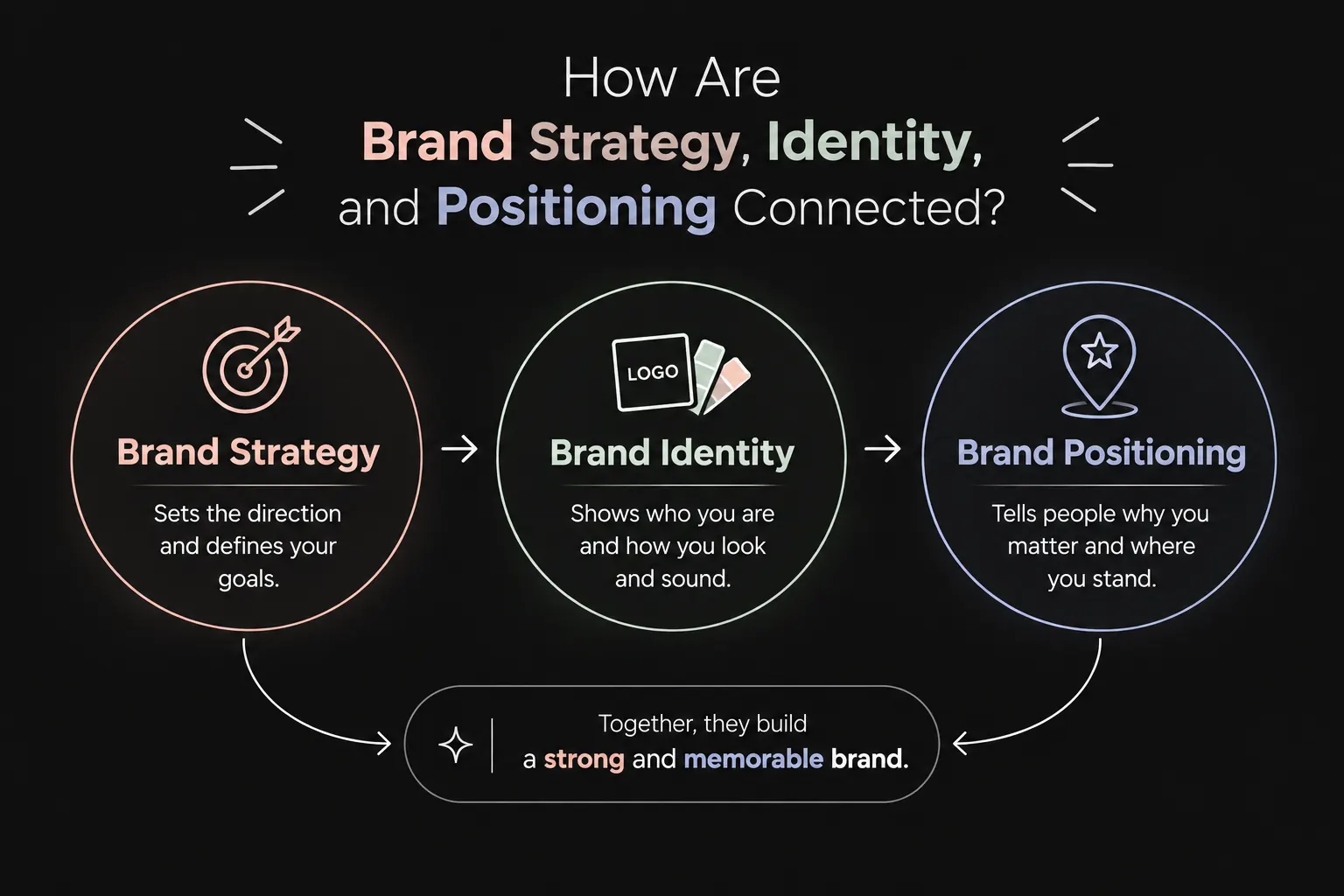
How Are Brand Strategy, Identity, and Positioning Connected?
Brand strategy, brand positioning, and brand identity are different, but they work together to build a strong brand. They should not be treated as three separate things because each one supports the other.
A simple way to understand their connection is:
Brand Strategy → Brand Positioning → Brand Identity → Customer Experience
Brand strategy comes first because it gives the business a clear direction. It helps the business decide what it wants to achieve, who it wants to reach, and what it wants its brand to stand for.
Brand positioning uses this direction to decide how the brand should be seen in the market. It helps the business explain what makes it different and why it is relevant to its target customers.
Brand identity then brings this idea to life. The brand uses its logo, colors, fonts, visuals, tone, and communication Style to show its personality and positioning.
Finally, the customer experience is shaped by everything people see, hear, and experience from the brand. This can affect how customers actually remember and think about the brand.
Simple Example
Imagine a skincare brand that wants to make skincare easy for beginners.
Brand Strategy:
The brand focuses on making skincare simple and easy to understand.
Brand Positioning:
The brand wants to be known as a beginner-friendly skincare brand.
Brand Identity:
It uses simple packaging, clear language, soft visuals, and educational content.
Customer Experience:
Customers find the products easy to understand and the brand easy to connect with.
So, the three elements work like parts of the same process. Strategy gives the direction, positioning creates the place, and identity shows it to the audience. Together, they help create a clear and consistent brand experience.
Stage | Branding Element | Main Question |
|---|---|---|
Direction | Brand Strategy | Where are we going? |
Difference | Brand Positioning | Why should customers notice us? |
Expression | Brand Identity | How will we show and communicate it? |
Perception | Customer Experience | What do people actually remember about us? |
Why Are Brand Strategy, Identity, and Positioning Important?
Brand strategy, Brand identity, and Brand positioning each have a different job, but together they help a business build a clear and strong brand.
A business may have a beautiful logo, but if it does not know who it wants to reach or what it wants to be known for, its branding can feel unclear. In the same way, a business may have a good strategy, but if it does not communicate that idea clearly, customers may not understand the brand.
Using all three helps a business stay clear about what it stands for, who it wants to reach, and how it wants to be remembered.
1. Creates Clear Direction
Brand strategy gives a business a clear path to follow. It helps the business decide its purpose, target audience, values, and long-term goals. This makes it easier to make branding and marketing decisions.
2. Makes the Brand Easy to Recognize
Brand identity helps people recognize a business through its visual and communication style. Using consistent colors, fonts, designs, language, and other brand elements can make the brand more familiar to its audience.
3. Keeps Brand Communication Consistent
When strategy, positioning, and identity work together, a business can communicate the same basic message across different platforms. The website, social media, advertisements, packaging, and other marketing materials can feel like they belong to the same brand.
4. Makes Marketing Decisions Easier
A clear brand foundation can make everyday marketing decisions simpler. Businesses can use their strategy and positioning to decide what content to create, what message to share, and how to present their products or services.
5. Builds a Clear Customer Experience
Customers interact with a brand in many ways, from visiting its website to seeing social media posts or using its products. When the brand has a clear direction and consistent identity, these interactions can feel more connected and easier for customers to understand.
Why Does This Matter?
Clear Direction – Helps the business know where it wants to go.
Better Recognition – Helps people easily recognize the brand.
Clear Difference – Shows what makes the brand different.
Consistent Image – Keeps the brand look and message consistent.
Better Marketing – Makes marketing and content decisions easier.
Customer Connection – Helps the brand connect better with its audience.
How to Build a Strong Brand Identity for Your Business
A strong brand identity helps a business create a clear and recognizable image in the market. It is not only about creating a logo; it includes everything that shows how a brand looks, feels, and communicates with its audience.
This topic explains how businesses can build a strong identity by first understanding their target audience and brand personality, and then choosing the right logo, colors, fonts, images, packaging, and brand voice. It also focuses on using these elements consistently across the website, social media, advertisements, and other marketing materials.
For example, if a skincare brand wants to look simple, friendly, and natural, it can use soft colors, clean packaging, simple fonts, natural images, and easy language. When these elements are used consistently, customers can recognize the brand more easily.
In simple words, this topic is about creating a brand that looks consistent, communicates clearly, and stays memorable for customers.
Common Mistakes to Avoid
Focusing only on the logo — A logo is only one part of a brand identity.
Trying to target everyone — A brand should clearly understand and focus on its target audience.
Changing the brand style too often — Using different colors, fonts, and messages can make the brand difficult to recognize.
Ignoring competitors — Understanding competitors helps a brand find what makes it different.
Not keeping the brand consistent — The same brand message and identity should be used across different platforms.
A Simple Brand Building Process
Brand strategy, positioning, and identity work better when they are developed in a clear order. Businesses can follow these simple steps to build a more consistent brand.
Step 1: Understand Your Audience
Start by understanding who your customers are, what they need, and what problems they want to solve.
Step 2: Define Your Brand Strategy
Decide your brand purpose, values, goals, target audience, and overall direction.
Step 3: Understand Your Market
Look at your competitors and understand what they offer, how they communicate, and where your brand can be different.
Step 4: Define Your Brand Positioning
Decide what you want your brand to be known for and how you want customers to see it.
Step 5: Create Your Brand Identity
Choose the visual and communication elements that represent your brand, such as colors, fonts, logo, images, and brand voice.
Step 6: Keep Everything Consistent
Use the same brand identity and core message across your website, social media, packaging, content, and advertisements.
Step 7: Check Customer Perception
Pay attention to customer feedback and interactions to see whether people understand your brand in the way you intended.
Why Brand Consistency Matters
Once you have defined your brand strategy, positioning, and identity, the next step is to make sure they are used consistently. A consistent brand helps customers recognize your business across different platforms and understand what the brand stands for.
For example, your website, social media, advertisements, and packaging should follow the same basic visual style, tone, and brand message. This creates a more connected experience for your audience.
Regularly reviewing your branding can also help you find areas that need improvement and make sure your brand still matches your business goals.
Brand Clarity Checklist
Is our target audience clearly defined?
Is our brand purpose clear?
Are our brand values defined?
Is our positioning easy to explain?
Do we know what makes our brand different?
Does our visual identity match our brand direction?
Is our brand voice consistent?
Does our website reflect our positioning?
Does our social media communicate the same message?
Can a customer understand what our brand stands for?
Frequently Asked Questions
1.Is brand strategy the same as brand identity?
No. Brand strategy defines the overall direction of the brand, while brand identity defines how the brand presents itself through visuals, language, and other recognizable elements.
2.What is the main difference between brand identity and brand positioning?
Brand identity focuses on how a brand presents itself, while brand positioning focuses on the place the brand wants to occupy in the minds of its target customers.
3.Which comes first: brand strategy or brand identity?
Brand strategy generally provides the foundation for later branding decisions. Once the strategic direction is clear, businesses can develop an identity that supports it.
4.Can a small business have a brand strategy?
Yes. A brand strategy does not have to be complicated. A small business can start by defining its target audience, purpose, values, goals, and desired market position.
5.Is a logo part of brand positioning?
A logo is primarily part of brand identity. However, visual identity can support positioning by communicating the personality and qualities a brand wants customers to associate with it.
Key takeaways
Brand strategy gives the brand a clear direction.
Brand positioning defines what the brand wants to be known for.
Brand identity shows how the brand looks and communicates.
All three elements should work together.
A clear strategy helps create a strong brand identity.
Positioning helps the brand create a clear place in the market.
Conclusion
Building a strong brand is not just about having a good logo or attractive designs. Brand strategy, brand positioning, and brand identity each have a different role, but they work together to create a clear and consistent brand.
Brand strategy gives the business direction, brand positioning helps define what the brand wants to be known for, and brand identity shows that idea through visuals and communication. When these three elements are aligned, a business can create a brand that is easier for customers to recognize, understand, and remember.
A strong brand takes time to build. By understanding the target audience, defining a clear direction, creating a unique position, and maintaining a consistent identity, businesses can build a stronger connection with their audience.
Ready to grow with AI-powered marketing?
Book a free 30-minute strategy call with the Arena Infosolution team.
About the author
Arena Infosolution SEO and digital marketing enthusiast who enjoys creating simple, useful, and easy-to-understand content about branding, marketing, and online growth. Through research and practical learning, the author aims to help readers understand marketing concepts and apply them effectively to their businesses.
Get a free growth consultation
Tell us what you're working on and a senior strategist will map your next move.