How to Build Brand Awareness for a Small Business
Learn practical ways to build brand awareness for your small business — from defining your brand identity and understanding your audience to using local SEO, social media, and consistent branding to help customers recognize, remember, and trust you.
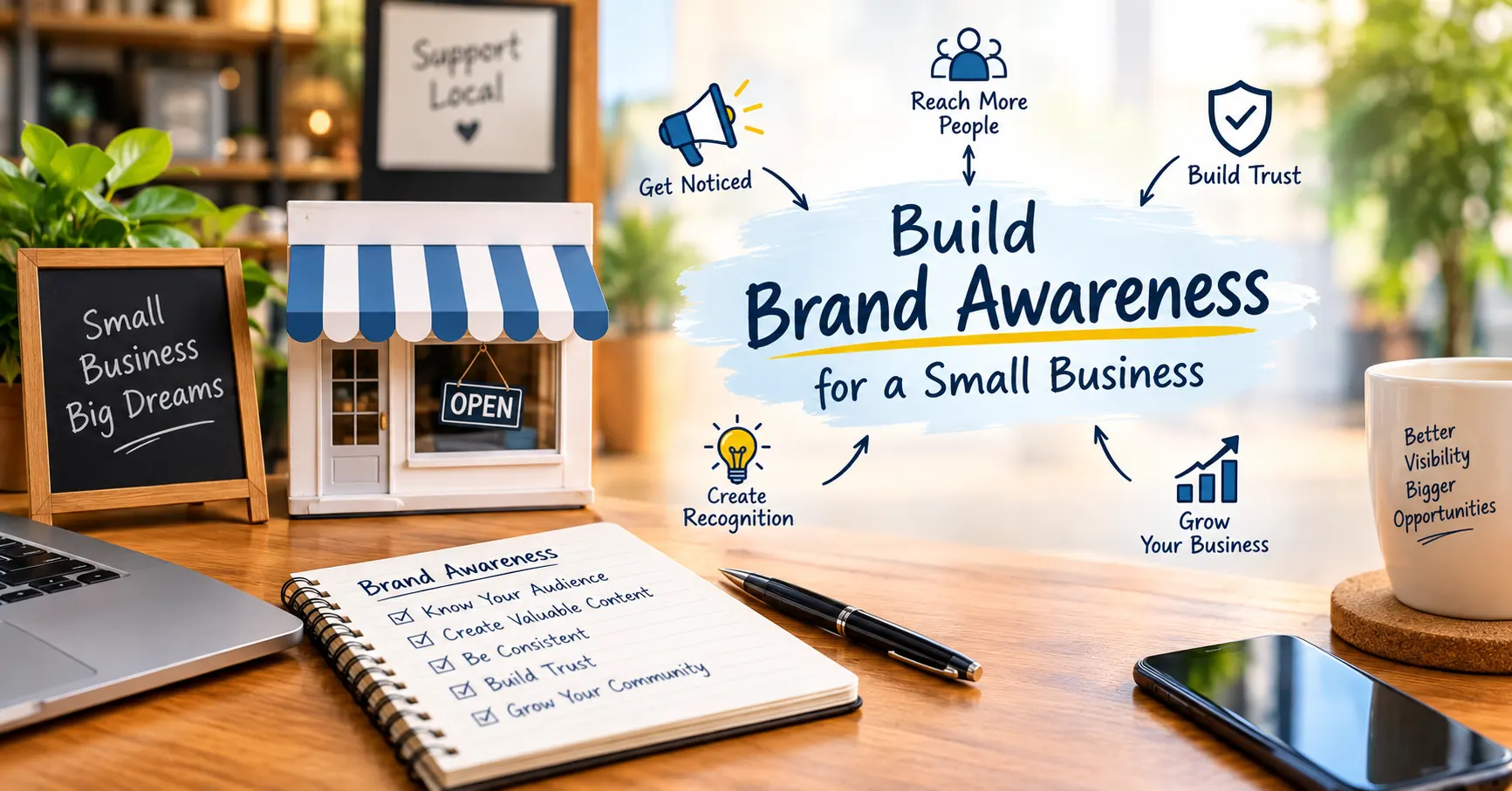
Want more people to recognize, remember, and trust your small business?
This guide explains practical ways to build brand awareness for a small business, from defining your brand identity and understanding your audience to using local SEO, social media, content marketing, customer reviews, partnerships, and consistent branding.
Introduction
For a small business, getting noticed can be just as challenging as delivering a great product or service. You may offer something valuable, but if people don’t recognize your business or remember your name when they need what you sell, turning attention into customers becomes difficult. This is where brand awareness for small businesses becomes important. The goal isn’t simply to get more people to see your brand—it’s to make your business familiar, recognizable, and trustworthy enough that customers think of you when they are ready to buy.
AI summary
Brand awareness for a small business means making your business recognizable and memorable to the right customers. Small businesses can build awareness through consistent branding, local SEO, social media, useful content, customer reviews, partnerships, and strategic advertising. Consistent communication helps customers recognize, remember, and trust your brand over time.
Table of Contents
Section one What Is Brand Awareness?
Why Brand Awareness Matters for Small Businesses
Define Your Brand Before Promoting It
Understand Your Target Audience
Create a Clear and Memorable Brand Message
Build a Consistent Visual Identity
Optimize Your Online Presence
Use Local SEO to Increase Brand Visibility
Build Brand Awareness Through Social Media
Create Useful and Relevant Content
Use Customer Reviews to Build Trust
Partner With Other Local Businesses
Use Paid Advertising Strategically
Encourage Word-of-Mouth Marketing
Brand Awareness Tips for Small Businesses
Participate in Local Events and Communities
Measure Brand Awareness
Common Brand Awareness Mistakes to Avoid
Key Takeaways
FAQs
Conclusion
What Is Brand Awareness?
Brand awareness refers to how familiar people are with a business and how easily they can recognize or remember it. It includes more than simply knowing a business name. Customers should ideally understand what the business offers and associate it with a particular product, service, problem, or experience.
For a small business, brand awareness means that when a customer needs something you provide, your business comes to mind as one of the possible options.
For example, imagine someone in Jaipur needs a digital marketing service. If they have repeatedly seen your business on Google, Instagram, local listings, or useful blog content, they may already recognize your name when they start looking for a service provider.
This shows an important difference:
Visibility means people see you. Brand awareness means they remember you.
Brand awareness usually develops through repeated and consistent interactions with a business. These interactions can happen through search engines, social media, websites, advertisements, reviews, recommendations, events, and customer experiences.
Why Brand Awareness Matters for Small Businesses
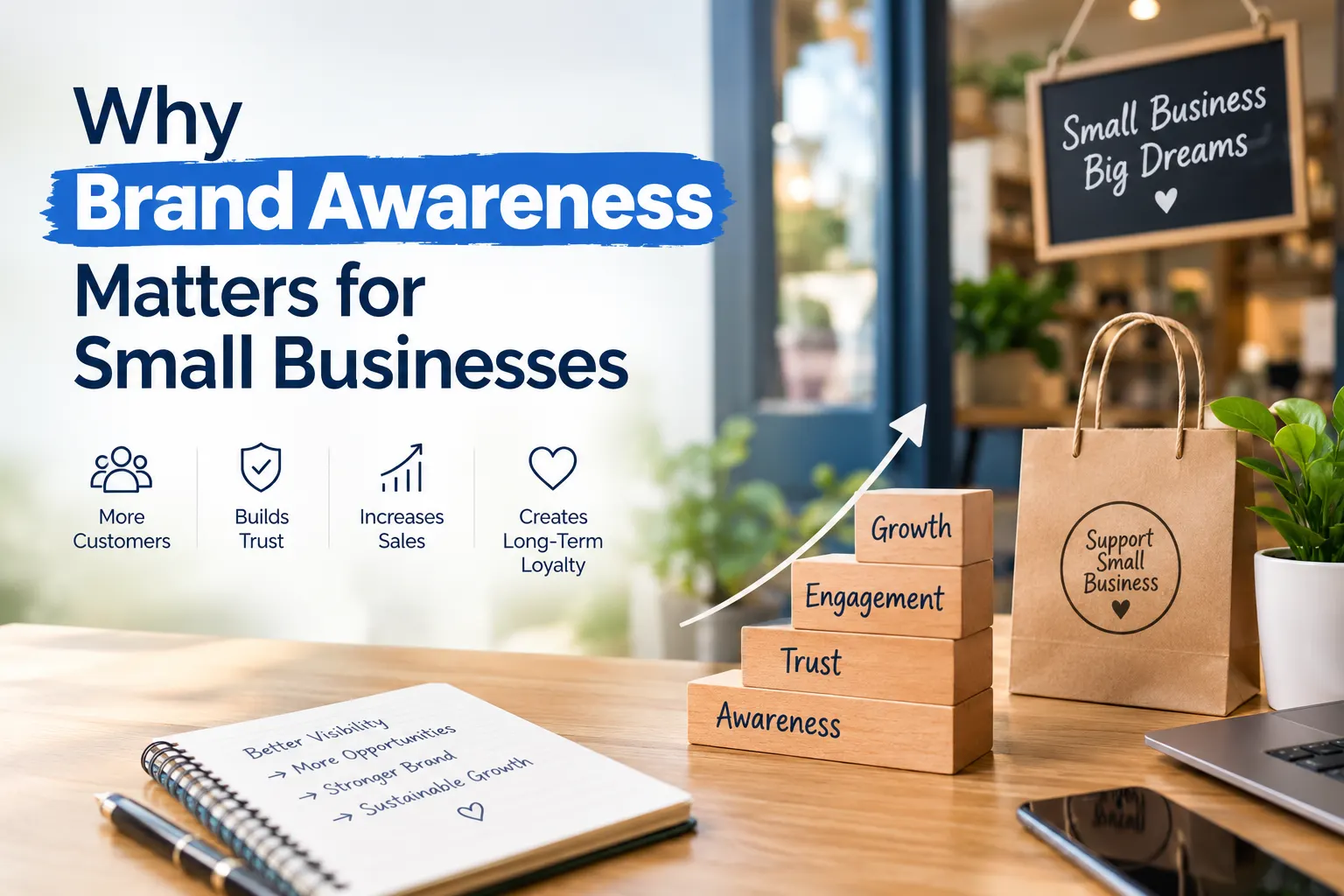
Strong small business brand awareness can help customers recognize your business when they are comparing different products or services.
This makes brand awareness especially useful.
1. It Helps Customers Recognize Your Business
When customers repeatedly see the same business name, logo, colors, messaging, or content style, the business can become easier to recognize.
2. It Builds Familiarity
Customers may hesitate to purchase from a business they have never heard of. Familiarity with a brand can give potential customers more information to consider when comparing options.
3. It Supports Long-Term Growth
Not every person who sees your business will buy immediately. Someone may discover your business today and become a customer weeks or months later.
Brand awareness keeps your business in their consideration set.
4. It Can Support Word-of-Mouth
People are more likely to recommend a business they remember when someone asks them for a relevant product or service.
5. It Helps You Build a Position in the Market
A small business does not need everyone to know its name.
Instead, it should focus on becoming recognizable among the people who are most likely to become customers.
Define Your Brand Before Promoting It
One common mistake is starting marketing activities without first deciding what the brand actually represents.
If your business talks about different things every week, uses different messaging across platforms, and tries to target everyone, customers may struggle to understand what makes you relevant.
Start by answering these questions:
What does your business offer?
Who is your target customer?
What problem do you solve?
What makes your business different?
What should customers remember about you?
What type of experience do you want customers to associate with your brand?
For example, a bakery could simply say:
We sell bakery products.
But it could communicate its positioning more clearly as:
“Fresh custom cakes for birthdays and small celebrations.”
The second statement gives customers a more specific reason to remember the business.
Quick Tip :
Write a one-sentence description of your business that a customer can understand without knowing anything about your industry. If the sentence is filled with complicated marketing terms, simplify it.
Understand Your Target Audience
Brand awareness works better when your message reaches the right people.
A common mistake is trying to make a business visible to everyone. This can waste time and money because not everyone is a potential customer.
Start by understanding your target audience.
Consider:
Age group
Location
Profession
Interests
Buying behavior
Budget
Common problems
Products or services they currently use
Where they search for information
For example, a local salon in Jaipur may primarily target customers living or working within a specific area rather than people across India.
A B2B company may instead focus on business owners, managers, or purchasing teams.
Understanding your audience also helps you choose the right marketing channels.
A younger audience may spend more time on short-form video platforms, while professionals may discover businesses through Google, LinkedIn, industry websites, or referrals.
Create a Simple Customer Profile
You can create a basic customer profile like this:
Audience: Local small-business owners
Location: Jaipur
Problem: Difficulty getting customers online
Need: Digital marketing support
Search behavior: Google, social media, referrals
Decision factors: Reviews, pricing, trust, service quality
This gives your brand awareness strategy a clear direction.
Create a Clear and Memorable Brand Message
Your brand message should quickly communicate what your business does and who it helps.
We provide quality services
We are the best in the industry
We offer solutions for everyone
It can include:
Logo
Brand colors
Fonts
Photography style
Graphic design style
Social media templates
Website design
Packaging
Business cards
For example, if your website uses a professional blue-and-white design while your social media uses completely different colors and fonts in every post, customers may find it harder to connect the two experiences.
Consistency does not mean every post needs to look exactly the same.
Instead, your designs should share recognizable elements.
Quick Tip :
Create a simple brand guideline containing your logo, primary colors, secondary colors, fonts, image style, and basic design rules. Even a one-page guideline can make your marketing more consistent.
Optimize Your Online Presence
Customers can discover small businesses through many different channels.
They may find you through:
Google Business Profile
Social media
YouTube
Blog articles
Online directories
Customer reviews
Recommendations
Advertisements
Your information should remain accurate and consistent across these channels.
A basic online presence can include:
A professional website or landing page
Google Business Profile for eligible local businesses
Relevant social media profiles
Accurate contact information
Business reviews
Clear product or service descriptions
Your website should quickly answer four questions:
Who are you? What do you offer? Who do you help? How can customers contact you?
Avoid making visitors search through several pages to understand what your business does.
Use Local SEO to Increase Brand Visibility
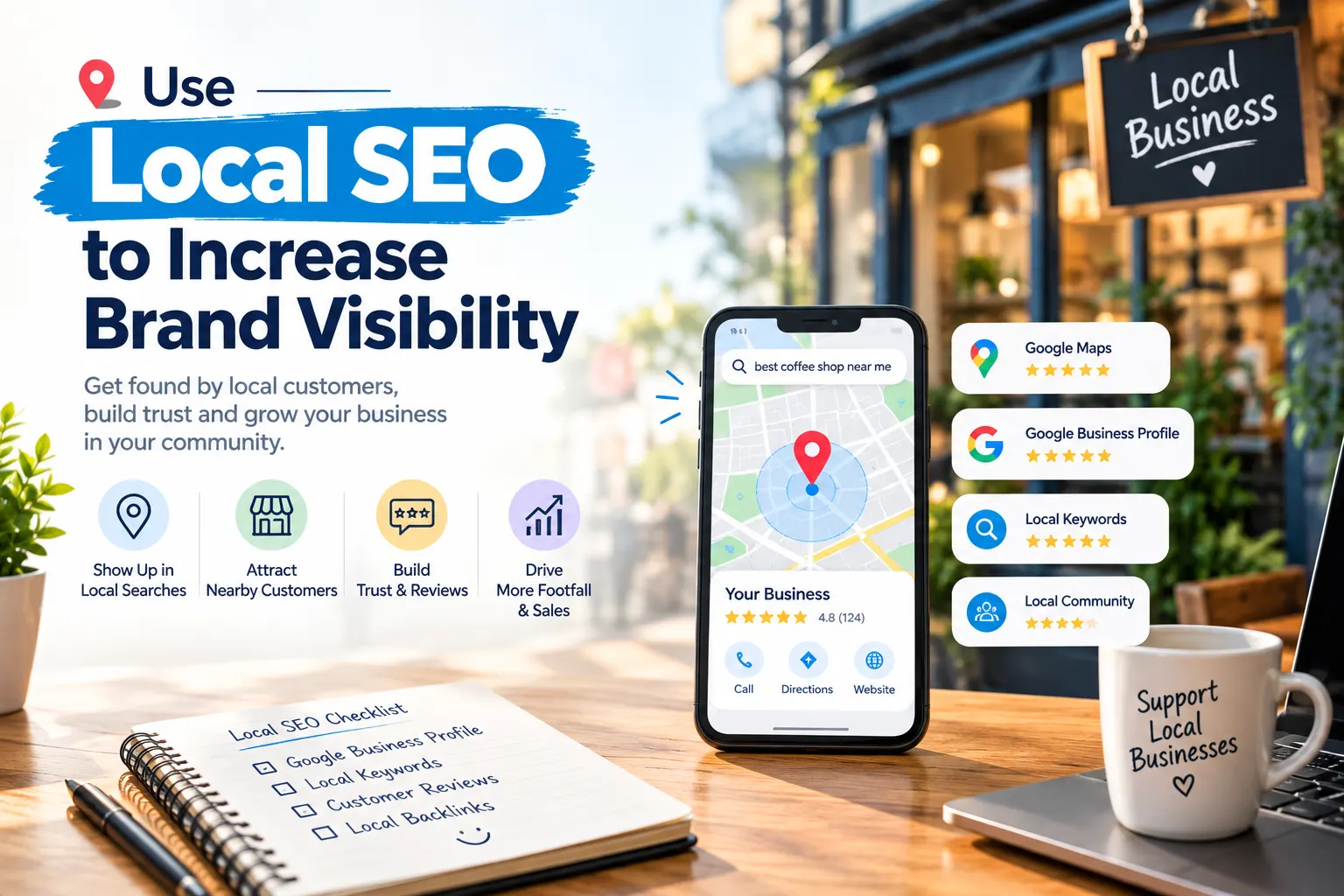
Local SEO is especially useful for improving local brand awareness because it helps people discover your business when they search for products or services in their area. Local SEO can also improve brand visibility for small businesses by helping relevant customers discover the business in local search results.
Local SEO helps businesses become more visible when people search for products and services in a specific location.
Examples include:
Digital marketing agency in Jaipur
Salon near me
Best bakery in Jaipur
AC repair service in Jaipur
Start by making sure your Google Business Profile contains accurate business information.
This can include:
Business name
Address
Phone number
Business category
Opening hours
Services
Photos
Customer reviews
Your website can also support local visibility by creating useful content relevant to your target location.
For example, a Jaipur interior design company could publish:
How Much Does Home Interior Design Cost in Jaipur?
This topic can attract people who are researching a service the company provides.
Local SEO is not only about getting clicks. Repeated visibility in relevant searches can also help potential customers become familiar with your business.
Build Brand Awareness Through Social Media
Social media gives small businesses an opportunity to communicate with potential customers regularly.
However, simply posting every day does not automatically build brand awareness.
Your content should support your brand positioning and give people a reason to follow or remember your business.
Educational Content
Share information that helps your audience.
Examples include:
Tips
How-to guides
Checklists
Mistakes to avoid
Industry explanations
Quick solutions
Product or Service Content
Explain what you offer, how it works, and who it is designed for.
Behind-the-Scenes Content
Show your team, process, workspace, production process, or daily operations.
Customer Content
Share genuine reviews, testimonials, or customer-generated content when you have permission.
Brand Stories
Explain your business journey, values, process, or reason for starting the company.
A consistent posting schedule is generally more practical than posting heavily for a short period and then disappearing.
Quick Tip
Before publishing a social media post, ask: If someone sees this without knowing my business, will they understand what my business is about?
If the answer is no, the content may not be supporting your brand clearly.
Create Useful and Relevant Content
Content marketing can help small businesses increase awareness while answering questions that potential customers are already asking.
Instead of making every piece of content promotional, focus on solving real problems.
For example, a skincare business could publish:
How to Build a Basic Skincare Routine
Common Skincare Mistakes
How to Choose a Face Cleanser
A tax consultant could publish:
What Is GST?
How to Prepare for Tax Filing
“Common Tax Filing Mistakes for Small Businesses
A digital marketing business could publish:
How to Improve Website Speed
What Is Local SEO?
How to Create a Google Business Profile
The content should have a natural connection to your products or services.
Content Creates Multiple Brand Touchpoints
A customer might:
Find your blog through Google.
Visit your website.
Follow your social media account.
See your content again.
Read your reviews.
Contact your business later.
Each interaction provides another opportunity to become familiar with your brand.
Use Customer Reviews to Build Trust
Customer reviews can play an important role when people are deciding whether to contact a small business.
Potential customers often want to understand what previous customers experienced.
After providing a good service or completing a purchase, you can ask customers to leave an honest review.
For example:
Partner With Other Local Businesses
Partnerships can help small businesses reach new audiences without relying entirely on paid advertising.
Look for businesses that serve a similar audience but do not directly compete with you.
For example:
Salon + Makeup Artist
Both businesses can refer relevant customers to each other.
Wedding Photographer + Event Planner
They can collaborate on wedding-related services and recommendations.
Cafe+ Local Bookstore
They could organize a joint event or promotional activity.
Web Development Company + Digital Marketing Company
They can provide complementary services to the same business customers.
The key is finding an audience overlap.
A partnership becomes more useful when customers of one business could genuinely benefit from the other.
Use Paid Advertising Strategically
Paid advertising can increase your brand's exposure, but simply spending money does not guarantee strong brand awareness.
Small businesses should first define:
Target audience
Location
Campaign objective
Budget
Key message
Creative
Measurement method
Depending on your business, you might use:
Google Ads
Meta Ads
YouTube Ads
Local advertising
Sponsored content
Retargeting
Not every advertisement needs to focus exclusively on immediate sales.
Some campaigns can introduce your business to a relevant audience and communicate what you offer.
For example, a newly opened local restaurant might use advertising to introduce its location, cuisine, atmosphere, and signature dishes to people nearby.
Expert tip : Before increasing your advertising budget, check whether someone seeing the advertisement can understand what your business does within a few seconds. More impressions will not solve unclear messaging.
Encourage Word-of-Mouth Marketing
Word-of-mouth marketing happens when customers recommend a business to other people.
It can be especially valuable for small businesses because recommendations often come with an existing level of trust between people.
Start by providing an experience customers are comfortable recommending.
This can include:
Clear communication
Reliable delivery
Good customer service
Quality products
Transparent pricing
Quick problem resolution
Personalized service
You can also introduce a referral program where appropriate.
For example:
Refer a friend and receive ₹500 off your next service.
However, the incentive should not encourage misleading recommendations.
The foundation of word-of-mouth marketing should remain a positive customer experience.
Brand Awareness Tips for Small Businesses
If you are wondering how to increase brand awareness, start by focusing on consistent branding, useful content, local SEO, social media, customer reviews, and a clear message.
These brand awareness tips for small businesses can help you build recognition without requiring a large marketing budget.
Then use a bullet list:
Keep your brand messaging consistent.
Optimize your Google Business Profile.
Publish useful content regularly.
Engage with customers on social media.
Encourage reviews and referrals.
Participate in Local Events and Communities
Strategy | Main Goal | Example for a Small Business |
|---|---|---|
Local SEO | Reach customers in your area | Appear in local Google Search results |
Google Business Profile | Improve local visibility | Add business details, photos, services, and reviews |
Social Media Marketing | Increase brand visibility | Share useful content on Instagram and Facebook |
Content Marketing | Build trust and expertise | Publish helpful blogs, guides, and videos |
Customer Reviews | Build credibility | Encourage genuine customer feedback |
Email Marketing | Stay connected with customers | Send newsletters, updates, and useful offers |
Online marketing is important, but local businesses can also build awareness through offline activities.
Depending on your industry, you could participate in:
Local exhibitions
Workshops
Business networking events
College events
Trade shows
Local markets
Industry events
Community activities
For example, a fitness trainer could conduct a free beginner fitness workshop.
A bakery could participate in a local food event.
A digital marketing consultant could conduct a basic SEO workshop for local business owners.
These activities can create direct interactions with potential customers and provide an opportunity to introduce your business in a more personal way.
The goal is not to attend every event.
Choose events where your target customers are likely to be present.
Measure Brand Awareness
Brand awareness can be difficult to measure because recognition happens in people's minds.
However, several metrics can provide useful signals.
1. Branded Searches
Monitor searches for your business name or branded terms.
For example:
ABC Digital Jaipur
is different from someone searching only:
digital marketing agency Jaipur.
Growing branded searches can indicate that more people are specifically looking for your business.
2. Direct Website Traffic
Direct traffic can show how many visitors access your website without an identifiable referring source, although analytics attribution is not always perfect.
3. Social Media Reach
Track how many people see your content.
Reach measures exposure, but it should not be treated as proof of awareness by itself.
4. Engagement
Look at:
Comments
Shares
Saves
Mentions
Profile visits
These can show how people interact with your content.
5. Referral Traffic
Monitor traffic coming from other websites, social platforms, partners, or referral sources.
6. Customer Surveys
Ask new customers:
How did you hear about us?
Track responses over time.
This can help you understand whether customers are discovering your business through Google, social media, referrals, events, advertisements, or other channels.
Expert tip
Do not track 20 metrics just because analytics tools provide them. Choose a small group of metrics that directly connect to your brand awareness goals and review them consistently.
Common Brand Awareness Mistakes to Avoid
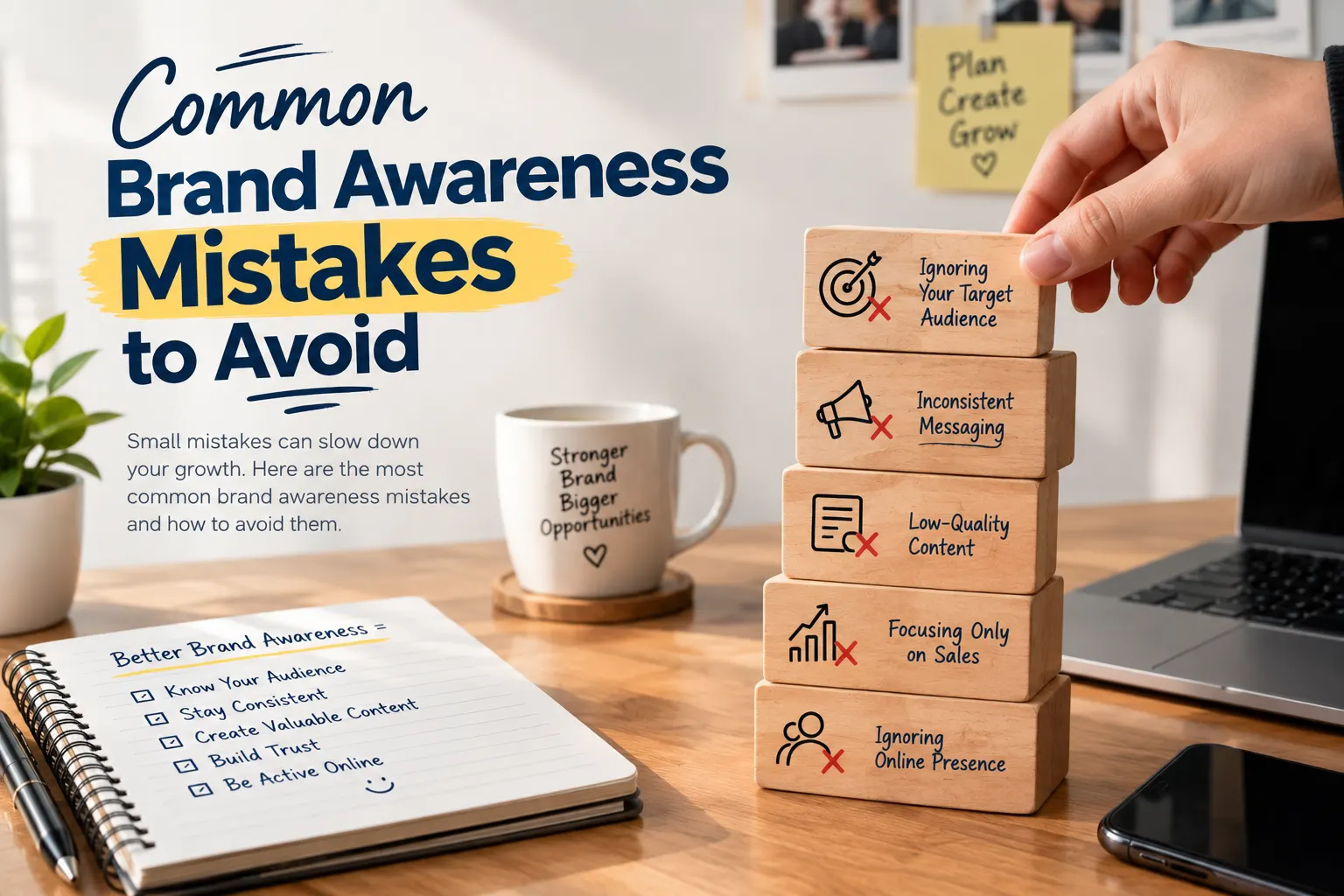
Trying to Reach Everyone
Trying to appeal to everyone can make your brand message unclear.
A focused audience makes it easier to create relevant content and communication.
Changing Your Brand Constantly
Frequently changing your logo, colors, messaging, or positioning can make your business harder to recognize.
Focusing Only on Followers
A large follower count does not automatically mean strong brand awareness or business growth.
The relevance and quality of your audience matter.
Posting Without a Strategy
Random posts may create activity without creating a clear association with your brand.
Copying Competitors
Your competitor's marketing strategy may depend on their audience, budget, reputation, or market position.
Copying their content does not guarantee the same results
Ignoring Customer Reviews
Potential customers often check reviews before contacting a business.
Ignoring reviews can mean missing an important part of your online reputation.
Making Every Post Promotional
If every post asks customers to buy something, people may stop engaging with your content.
Educational, informative, entertaining, and community-focused content can provide variety.
Using Too Many Channels
Trying to maintain every social media platform, email, blog, video channel, and advertising platform can spread a small team too thin.
Focus on the channels that are most relevant to your audience.
Key takeaways
Brand awareness means becoming recognizable and memorable to the right audience.
Define your brand positioning before spending heavily on promotion.
Understand your target customers and their problems.
Create a clear brand message that explains what you offer.
Keep your visual identity consistent across marketing channels.
Maintain accurate and professional online business information.
Use local SEO if your business serves a specific geographical area.
Use social media to provide useful and relevant content consistently.
Create content around real customer questions and problems.
Encourage genuine customer reviews.
Use email marketing to maintain relationships with interested audiences.
Partner with complementary local businesses.
Use paid advertising with a clear audience, objective, and budget.
Encourage word-of-mouth by providing a customer experience worth recommending.
Participate in relevant local events and communities.
Measure branded searches, direct traffic, reach, engagement, referrals, and customer feedback.
Avoid trying to be everywhere at once.
Do not expect brand awareness to develop overnight.
Focus on consistent communication and repeated exposure to the right audience.
Frequently asked questions
What is brand awareness for a small business?
Brand awareness for small business means making sure your target customers recognize your business, remember what you offer, and understand why they should choose you over competitors.
How can a small business build brand awareness?
A small business can build awareness through consistent branding, SEO, social media, content marketing, reviews, partnerships, advertising, and referrals.
How long does it take to build brand awareness?
The time required varies depending on the market, audience, competition, consistency, and marketing channels used.
Is social media necessary for brand awareness?
Social media can be useful for brand awareness, but businesses can also build awareness through SEO, content, reviews, referrals, partnerships, and offline marketing.
Does SEO help build brand awareness?
Yes, SEO can increase brand visibility when potential customers search for information, products, or services related to your business.
How does local SEO help small businesses?
Local SEO can help small businesses become more visible to customers searching for relevant products or services in a specific location.
Conclusion
Building brand awareness for a small business is not about making your business visible to everyone. It is about becoming recognizable to the people who are most likely to need your products or services.
Start by defining your target audience, positioning, message, and visual identity. Then create consistent touchpoints through your website, local SEO, social media, useful content, customer reviews, email marketing, partnerships, advertising, and word-of-mouth.
You do not need to use every marketing channel at the same time. Focus on the platforms where your customers are already looking and create useful, consistent communication that reinforces what your business represents.
Ready to grow with AI-powered marketing?
Book a free 30-minute strategy call with the Arena Infosolution team.
About the author
Arena Infosolution SEO Team — SEO specialists focused on brand visibility, local SEO, content marketing, and online growth. The team creates practical, research-based content to help small businesses build brand awareness, reach the right audience, and improve their online presence.
Get a free growth consultation
Tell us what you're working on and a senior strategist will map your next move.